Einkaufswagen
0
Hilfe zur Optimierung des Raumklimas




Many Danish schools struggle with high CO2 levels and challenging indoor climates, which affect both students' concentration and well-being. As a facility manager, your role is central to creating a healthy learning environment, where systematic monitoring and knowledge of indoor climate parameters provide a solid foundation for improvements. By focusing on correct sensor selection, continuous data collection, and involving both technical staff and teachers, you will gain valuable tools to enhance both learning and health in the classrooms.
| Key Point | Explanation |
|---|---|
| 1. Prepare thoroughly before monitoring | Identify measurement points and map challenges to ensure effective indoor climate monitoring. |
| 2. Install sensors strategically | Choose sensor locations that ensure accurate data collection by avoiding direct impacts. |
| 3. Analyze data systematically | Document changes and compare data to make data-driven decisions on indoor climate improvements. |
| 4. Implement data-based improvements | Prioritize the most pressing issues and involve relevant stakeholders to ensure successful implementation. |
| 5. Evaluate and adjust continuously | Conduct regular measurements and adjust initiatives based on data to maintain an optimal indoor climate. |
When you start the process of improving air quality in schools, the first step is thorough preparation and systematic planning. Indoor climate mapping requires a strategic approach that will form the foundation for your continued efforts.
To effectively prepare for air quality monitoring, the following key steps are recommended:
It is crucial to focus on specific parameters such as CO2 level, humidity, temperature, and noise level. By systematically collecting data, you can create a detailed overview of the classroom's indoor climate and identify concrete potential for improvement.
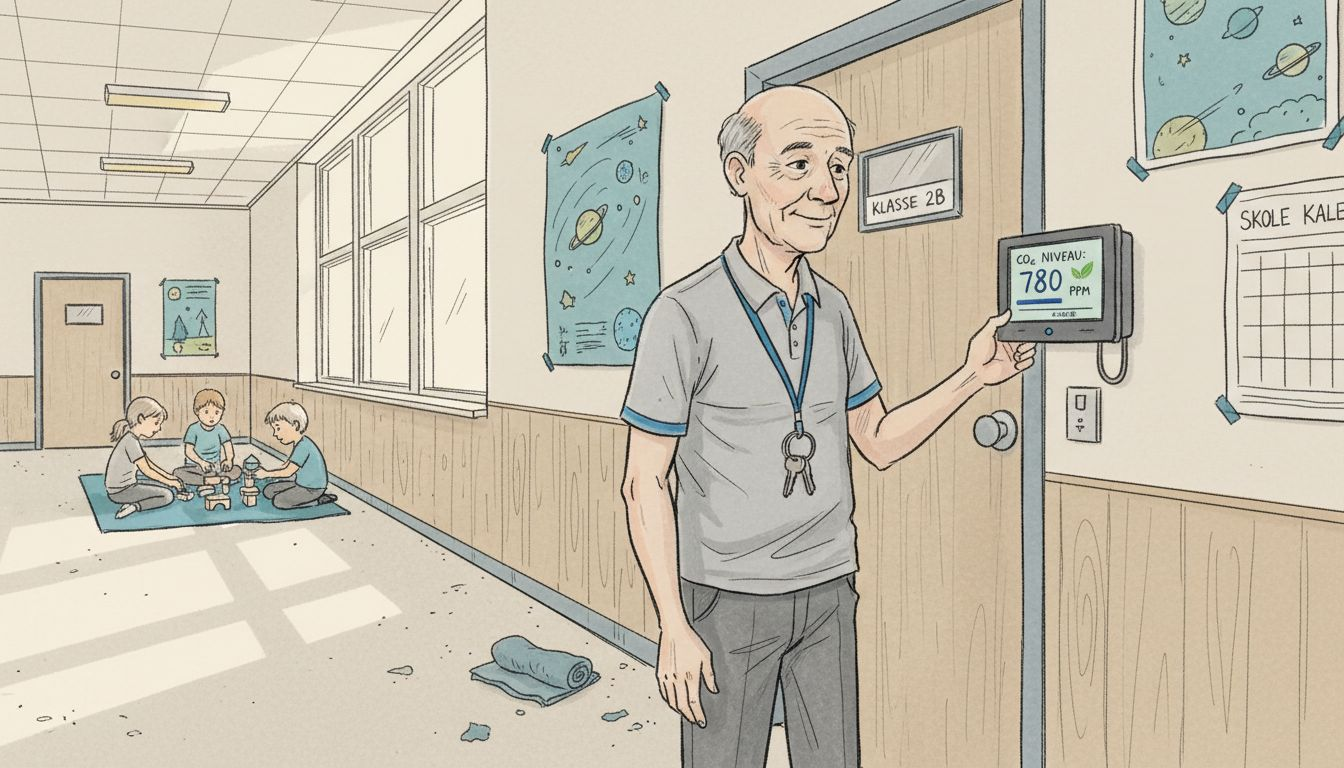
Here is an overview of key parameters for monitoring indoor climate in schools:
| Parameter | Importance for the learning environment | Typical units of measurement | Ideal level in a classroom |
|---|---|---|---|
| CO2 level | Affects concentration | ppm (parts per million) | Below 1000 ppm |
| Temperature | Comfort and attention | °C | 20-22 °C |
| Humidity | Reduces discomfort and illness | % relative humidity | 40-60% |
| Noise level | Affects focus and calm | dB (decibel) | Below 35-40 dB |
When conducting your initial mapping, it is important to involve both technical staff and teachers. This ensures a thorough and nuanced approach to indoor climate measurements.
Correct monitoring is the key to creating a healthy and productive learning environment.
Professional tip: Choose sensors with continuous data collection and reporting functions for the most effective monitoring.
When installing sensors for indoor climate measurement, correct placement and setup are crucial for reliable results. IoT sensor technology requires precise implementation to ensure optimal data collection and analysis.
The following guidelines are essential for correct sensor installation:
It is important to consider the sensors' placement in relation to ventilation systems, windows, and doors. Sensors should be mounted to provide an accurate picture of general air quality without being affected by specific local conditions.
Technical staff should work closely with teachers to ensure optimal placement and minimize disruption to the learning environment.
Accurate sensor placement is crucial for reliable indoor climate monitoring.
Professional tip: Calibrate the sensors regularly and document their placement to ensure consistent data collection.
When you start with systematic analysis of indoor climate data, it's about transforming raw data into meaningful insights. Municipal pilot projects show the importance of strategic data analysis for continuous improvement of school indoor climates.
Follow these key steps in the data analysis process:
It is crucial to focus on specific parameters such as CO2 level, temperature, humidity, and ventilation efficiency. A systematic approach ensures that you can track changes and make data-driven decisions about indoor climate improvements.
Collaborate across technical staff, management, and teachers to ensure a holistic interpretation of the data. This creates a common basis for implementing effective solutions.
Consistent and thorough data analysis is the key to a better indoor climate.
Professional tip: Use standardized analysis templates and automated reporting tools to simplify and streamline your data processing.
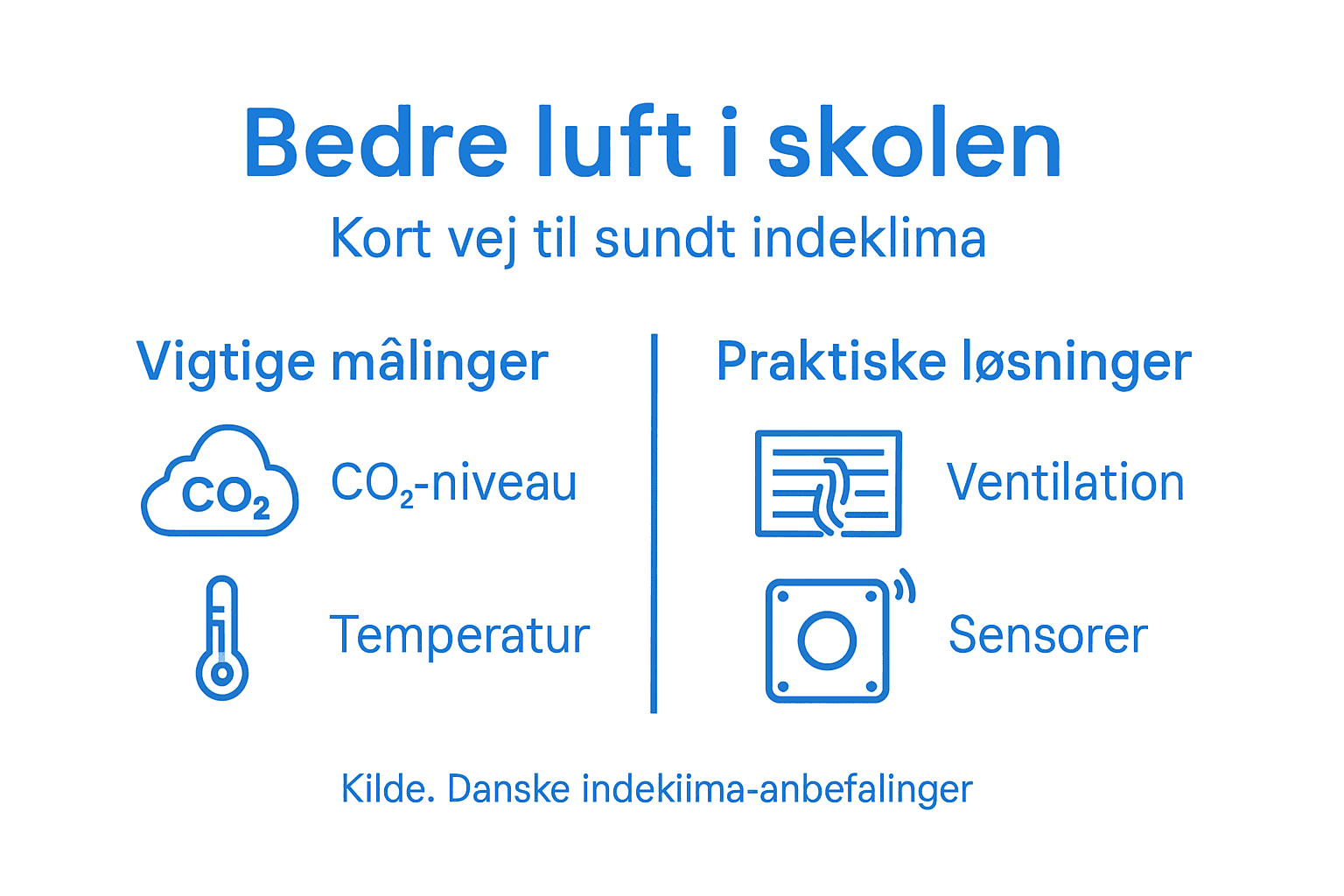
Once you have collected and analyzed indoor climate data, the next critical phase is to translate the results into concrete improvements. Inspirational catalogs from municipal projects show the way to effective indoor climate measures that can enhance students' well-being and learning.
Follow these key implementation strategies:
It is about being systematic and targeted. Focus on specific areas such as ventilation, temperature regulation, lighting conditions, and acoustics. Each improvement should be based on the concrete data you have collected.
Interdisciplinary collaboration is crucial for successful implementation. Create a shared understanding of the desired improvements and their potential impact on the learning environment.
Data-based improvements ensure an optimal indoor climate for students.
Professional tip: Document all changes thoroughly and save historical measurement data to continuously evaluate your efforts.
After implementing indoor climate measures, it is crucial to continuously evaluate and adjust your efforts. Pilot projects demonstrate the importance of systematic follow-up to ensure sustained improvements in school air quality.
Follow these key control strategies:
A continuous and thorough evaluation process is key to maintaining a healthy indoor climate. Focus on parameters such as CO2 level, temperature, humidity, and ventilation efficiency. Be aware of less obvious changes that can affect air quality.
The following table compares continuous indoor climate control before and after implementation:
| Phase | Data Collection | Effect on the learning environment | Recommended interval |
|---|---|---|---|
| Before improvements | Baseline data collected | Unidentified problem areas | Initial/annual |
| After improvements | Follow-up measurements | Targeted improvements visible | Quarterly/ongoing |
Collaborate across professional groups to ensure a holistic approach to indoor climate optimization. Involve technical staff, teachers, and management in the evaluation process.
Continuous adjustment is crucial for an optimal learning environment.
Professional tip: Establish a regular routine of quarterly reviews of indoor climate data and allocate time for strategic planning of improvements.
Problems with poor air quality such as high CO2 levels, insufficient ventilation, and a poor indoor climate negatively affect students' concentration and well-being. The article emphasizes the importance of systematic monitoring and continuous data analysis to identify and improve the air environment in schools. Do you lack reliable sensors and user-friendly equipment to help you monitor precisely these parameters in real-time?
With Skyen sensors and measurement solutions, you get precisely the tool designed to monitor CO2, temperature, humidity, noise level, and TVOC in schools, among other things. Our advanced sensor package enables easy installation and continuous data collection, so you can document the effect of your indoor climate measures and ensure a safe learning environment. Visit aabn.io today and discover how you can effectively prevent poor air and create better conditions for learning in your school.
Prepare for monitoring by identifying relevant measurement points and selecting reliable air quality sensors. Start the processes within 30 days to ensure a clear picture of the indoor climate.
The most important parameters include CO2 level, temperature, humidity, and noise level. Measure these factors regularly to ensure a healthy learning environment.
Install the sensors strategically, avoid direct sunlight, and ensure free air circulation. Check the placement to obtain accurate measurements in all classrooms within a week.
To effectively analyze indoor climate data, identify key measurement areas and document patterns over time. Compare data before and after any changes to assess improvements.
Prioritize the most pressing improvements, which may include ventilation and temperature regulation. Implement changes continuously to create rapid improvements in the learning environment.
Check the effect by conducting regular measurements and comparing the results with previous data. Perform these evaluations quarterly to adjust strategies and ensure an optimal indoor climate.