Einkaufswagen
0
Hilfe zur Optimierung des Raumklimas




When talking about CO₂ levels in indoor environments, it is crucial to understand the legal framework and limit values that are set to protect our health and well-being. Denmark has some of Europe's most progressive requirements for indoor climate, especially when it comes to institutions and workplaces.
The regulation of CO₂ in indoor environments is anchored in several different laws and executive orders. The Building Regulations (BR18) form the basis for the construction requirements, while the Danish Working Environment Authority's guidelines specify the requirements for the working environment. For schools and daycare institutions, special rules apply under the executive orders of the Ministry of Education.
In Denmark, we operate with different limit values depending on the use of the building:
The maximum permitted CO₂ level is 1000 ppm above the outdoor air level. With a typical outdoor concentration of 400 ppm, this means that the level must not exceed 1400 ppm. At this level, ventilation or increased ventilation must be initiated.
The Danish Working Environment Authority recommends that the CO₂ concentration be kept below 1000 ppm above the outdoor air level. For sedentary work, this means:
- Below 1400 ppm: Acceptable level
- 1400-2000 ppm: Increased ventilation should be taken.
- Above 2000 ppm: Unsatisfactory level requiring immediate action
Correct measurement of CO₂ is essential to ensure compliance with the limit values. Here are the official requirements for measurements:
Precision of the measuring equipment:
The measurement uncertainty must not exceed ±50 ppm at 1000 ppm.
The sensor must be calibrated according to the manufacturer's instructions.
Documentation for calibration must be available.
Location of meters:
At normal head height (1.1-1.7 meters above floor)
Away from direct exhaled air
Not in direct sunlight or near heat sources
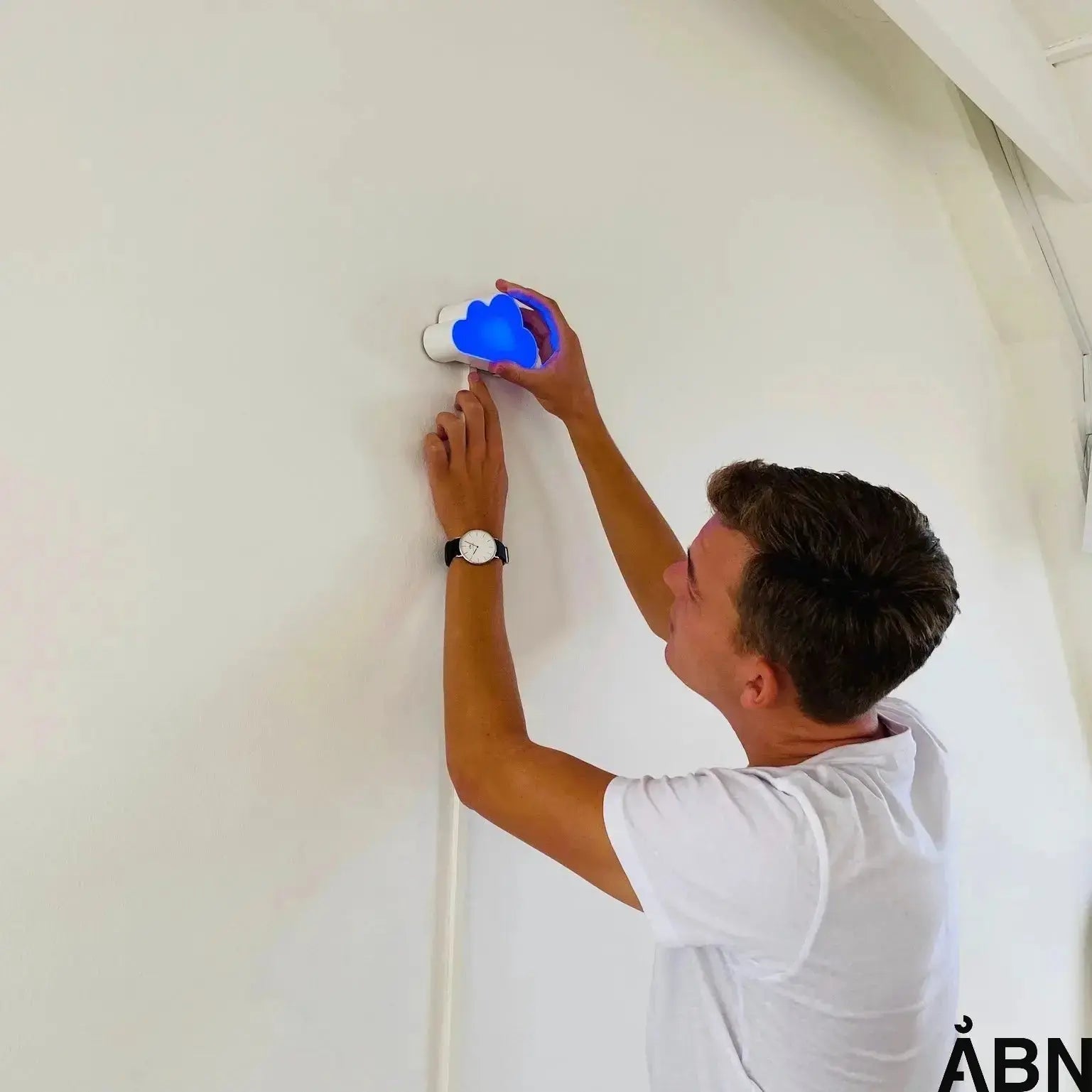
Modern sensor technology such as SKYEN enables continuous monitoring of CO₂ levels, which provides several benefits:
Real-time data allows for immediate action
Historical data can be used to identify patterns
Automatic alarms can warn when limit values are exceeded
Documentation of the indoor climate over time
The legislation takes into account special situations:
Temporary exceedances:
Short-term exceedances may be accepted for special events
There must be a plan for rapid normalization
The violations must be documented.
Buildings with special conditions:
Buildings worthy of preservation may have relaxed requirements
Technical rooms may have different limit values.
Special workplaces may have stricter requirements
When limit values are exceeded, legislation requires a systematic approach:
Documentation of the exceedance
Identification of the cause
Preparation of action plan
Implementation of improvements
Follow-up measurements
Documentation of effect
Danish legislation regarding CO₂ and indoor climate is constantly evolving:
Increasing focus on energy efficiency and indoor climate
Increased requirements for documentation and monitoring
Integration of smart building technology
Harmonization with EU standards
Different authorities are responsible for different aspects of CO₂ regulation:
The municipalities:
Building permits and inspections
Supervision of schools and institutions
The Danish Labour Inspectorate:
Workplace control
Issuance of injunctions in case of violations
Sources:
- Building Regulations 2018 (BR18)
- The Danish Working Environment Authority's guidance A.1.2 on indoor climate
- DS 3033 Voluntary classification of indoor climate quality
- Ministry of Education's executive order on the supervision of the quality of primary and lower secondary schools
This article has been prepared as part of ÅBN's knowledge articles on indoor climate in Denmark, based on the latest research and current regulations.