Einkaufswagen
0
Hilfe zur Optimierung des Raumklimas




More than half of Danish schoolchildren experience challenges with headaches and fatigue during the school day. When air quality, temperature, and noise levels fluctuate, both concentration and motivation among students decline. As an environmental coordinator, you know how critical a healthy indoor climate is for both well-being and the learning environment. This guide provides concrete solutions that make it easier to translate indoor climate data into practice and improve daily life for everyone at school.
| Point | Details |
|---|---|
| Importance of Indoor Climate | A good indoor climate is crucial for students' learning and well-being, as it can increase the effectiveness of their studies and social interactions. |
| Critical Parameters | Air quality, temperature, light, and sound are the most important factors affecting students' physical and mental well-being. |
| Systematic Monitoring | Regular measurements of the indoor climate can identify problems and enable targeted improvements. |
| Data and Action | Implementing modern measurement technology helps schools transform data into actionable decisions to improve the learning environment. |
Indoor climate is a complex concept that encompasses the physical conditions and atmospheric conditions experienced by children and adults indoors in the school environment. It includes central parameters such as air quality, temperature, noise level, lighting, and humidity, which directly affect students' health, learning, and well-being.
According to DCUM's analysis of school indoor climate, these factors are crucial for the overall school environment. A good indoor climate is not just about physical settings, but also about creating optimal conditions for learning and social interaction. Poor indoor climate can lead to significant challenges – research shows that inadequate air quality can reduce students' learning outcomes by up to 10%.
The primary components of a school's indoor climate include:
Pro-tip: Conduct regular indoor climate measurements to identify and improve specific environmental parameters that affect students' well-being and learning.
The indoor climate in schools consists of four central parameters that are crucially important for students' learning, health, and general well-being. Documentation from Realdania shows how these components collectively affect the educational environment.
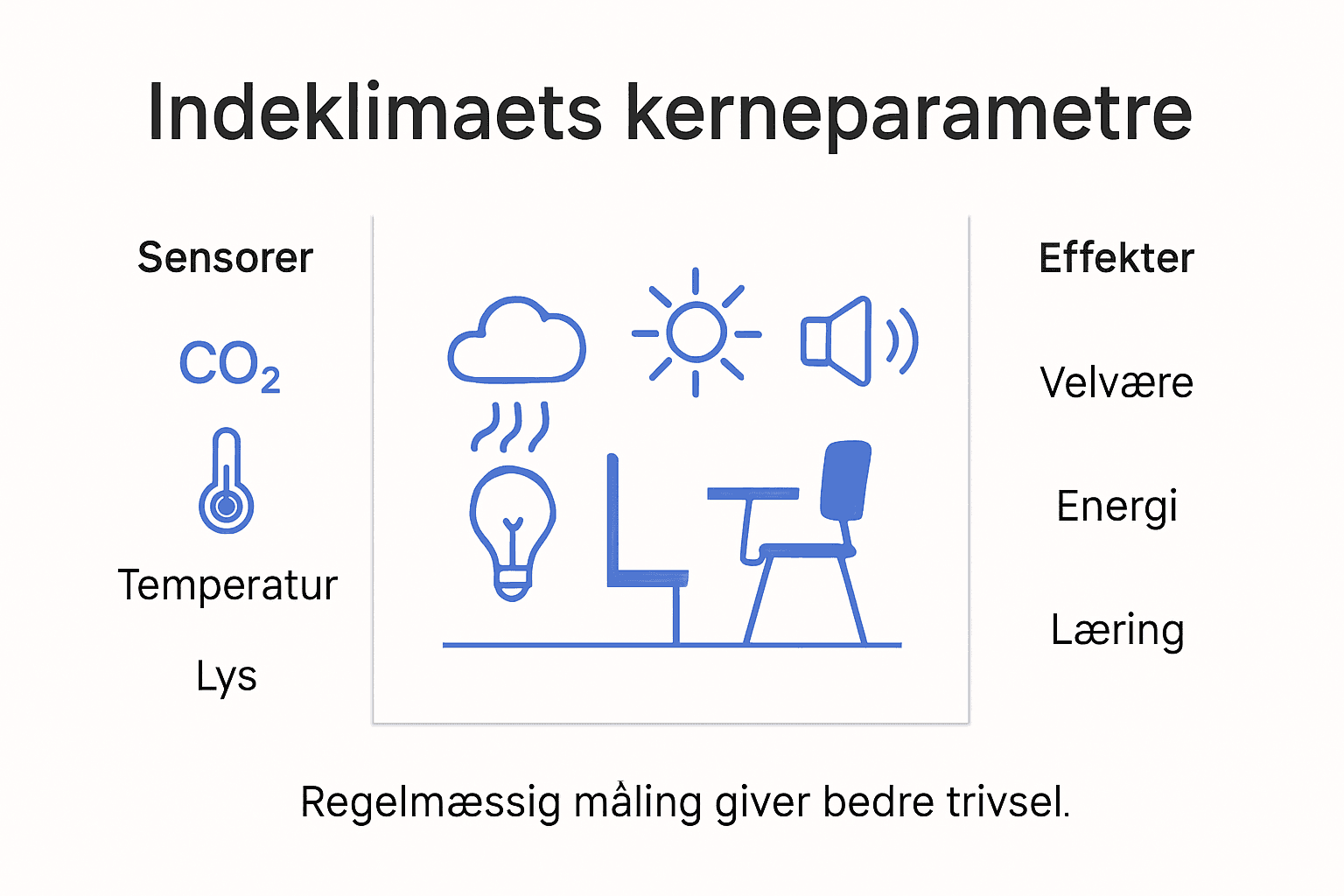
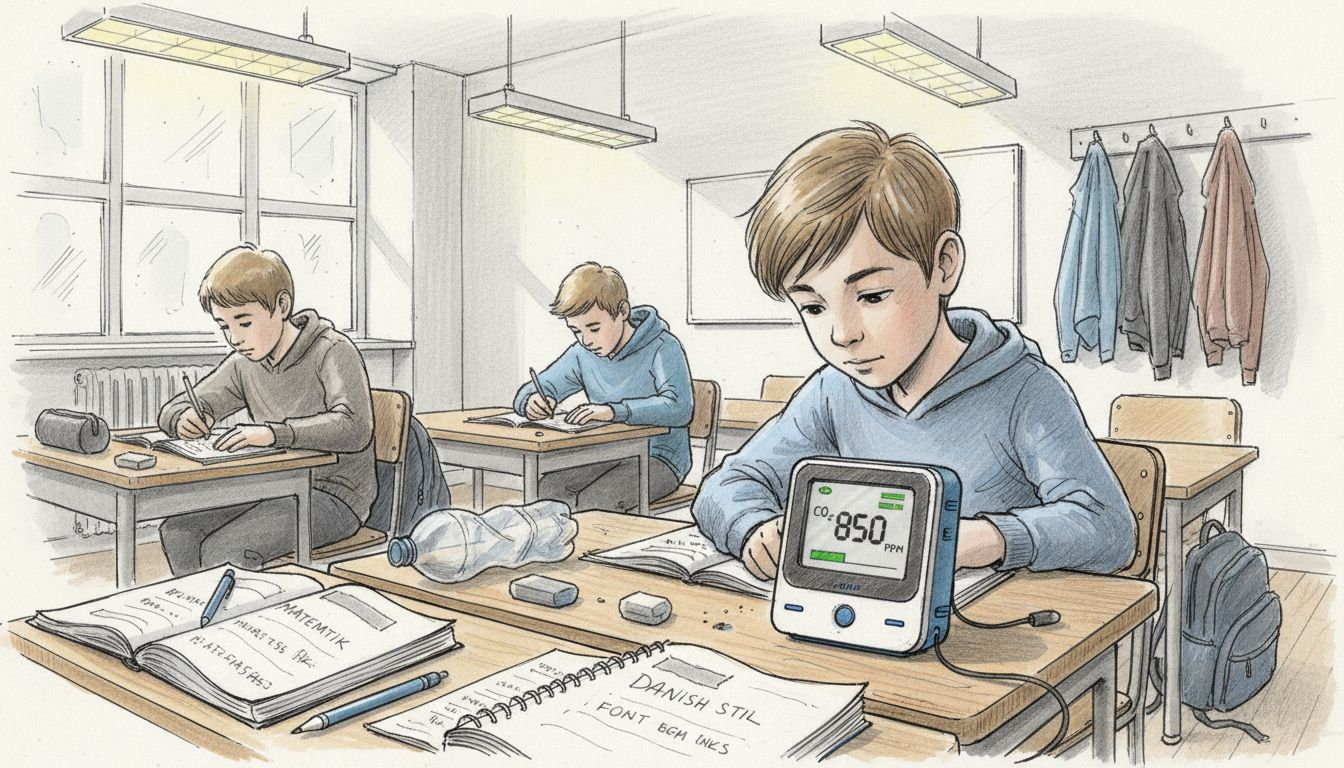
CO₂ level is the first critical parameter, directly indicating air quality. High CO₂ concentrations can lead to fatigue, headaches, and reduced concentration. The recommendation is to keep the level below 1000 ppm to ensure optimal air quality and student well-being.
Air quality is about more than just CO₂ levels. It includes air circulation, the absence of harmful particles and chemicals, and the efficiency of the ventilation system. Poor air quality can lead to health problems such as asthma and allergies, directly impacting students' health and learning opportunities.
Light plays a crucial role in the learning environment. Both daylight and artificial lighting affect students' mood, energy levels, and concentration. Optimal lighting reduces eye strain and improves general well-being in the classroom.
Sound conditions are the fourth central parameter. A quiet environment is crucial for learning, as high noise levels can disrupt concentration and communication. Good acoustic conditions promote students' ability to hear and understand lessons.
Pro-tip: Install CO₂ meters in classrooms to continuously monitor and improve air quality, which can directly increase students' learning capacity.
Research reports from emu show that Danish schools struggle with complex indoor climate challenges that directly affect students' learning and health. These problems manifest through several critical dimensions, which together constitute a significant pedagogical and health issue.
CO₂ levels and ventilation are the most prominent challenge. High carbon dioxide concentrations lead to noticeable symptoms such as fatigue, headaches, and reduced concentration. Many classrooms have inadequate air exchange, meaning CO₂ levels quickly rise above the recommended 1000 ppm, especially in crowded rooms with many students.
Temperature and humidity constitute another significant problem. Classrooms are either too hot, causing drowsiness and inattention, or too cold, reducing students' physical and mental performance. Poor regulation of temperature and humidity can also promote the spread of airborne diseases.
Noise and acoustic conditions are also critical. High noise levels disrupt concentration and hinder communication between students and teachers. Poor acoustic design in classrooms can lead to students missing up to 50% of verbal information, directly compromising learning outcomes.
Finally, lighting conditions pose an often overlooked but crucial challenge. Insufficient or incorrect lighting can cause eye strain, headaches, and reduced performance. The lack of natural daylight or poorly designed artificial lighting affects students' circadian rhythm and general well-being.
Pro-tip: Conduct systematic indoor climate measurements quarterly to identify and solve specific problems before they escalate.
Research from Realdania documents that the indoor climate has a direct and measurable impact on children's health, learning, and general well-being. A poor indoor climate is not just an environmental problem, but a significant barrier to optimal education and personal development.
The physiological aspect is crucial. Air quality immediately affects children's nervous system and cognitive functions. High CO₂ levels reduce oxygen supply to the brain, directly leading to reduced concentration, increased fatigue, and decreased mental performance. This can result in up to a 10% reduction in learning potential during a school day.
Health consequences are equally concerning. A poor indoor climate increases the risk of respiratory illnesses, allergies, and other chronic health problems. Children spend up to 80% of their waking hours in the school environment, which underscores the importance of ensuring optimal atmospheric conditions for their physical and mental development.
The psychosocial dimensions are no less important. Indoor climate affects students' social interactions and general well-being. Unpleasant temperature conditions, noisy environments, or poor lighting can create stress, reduce motivation, and inhibit the social learning that is so crucial in educational environments.
Below is an overview of how indoor climate parameters affect different aspects of students' school day:
| Indoor Climate Parameter | Physical Effect | Mental Effect | Social Effect |
|---|---|---|---|
| CO₂ level | Fatigue, headache | Reduced concentration | Less motivation |
| Air quality | Allergies, asthma | Weakened focus | Absence due to illness |
| Temperature | Discomfort, low energy | Inattention | Stress in class |
| Light conditions | Eye strain | Decrease in energy | Less social interaction |
| Sound conditions | Headache | Disrupted learning | Poor communication |
Pro-tip: Implement continuous measurements and adjustments of the indoor climate to proactively improve learning conditions for students.
Realdania's strategic project review shows that implementing modern measurement technology requires a systematic and holistic approach. Successful indoor climate optimization is not just about installing sensors, but about creating an integrated system that enables continuous improvement and action.
Data collection technologies play a central role. Advanced sensors can measure key parameters such as CO₂ level, temperature, humidity, noise, and light intensity with high precision. These digital solutions allow schools to transform invisible environmental conditions into concrete, actionable data that can be used to improve learning conditions.
The implementation strategy should follow a structured approach:
The technological solution must be supplemented with human interpretation and action. Raw data is not enough; schools must train staff to understand and respond to measurement results, thereby creating a proactive culture around indoor climate improvements.
Here is a comparative overview of indoor climate measurement technologies and their typical characteristics:
| Technology | Measurement Parameters | Advantage | Challenge |
|---|---|---|---|
| CO₂ sensor | CO₂, air circulation | Precise data, increases awareness | Requires maintenance |
| Temperature and humidity meter | Temperature, humidity | Easy installation, quick results | Sensitive to placement |
| Light meter | Brightness, daylight | Improves lighting design | Can be expensive |
| Sound sensor | Noise level, acoustics | Documents noise problems | Interpretation requires understanding |
Pro-tip: Use digital dashboards that convert complex indoor climate data into easy-to-understand visualizations, so decision-makers can quickly identify potential improvements.
The importance of indoor climate for students' well-being and learning is undeniable. The article clearly shows how poor conditions such as high CO₂ levels, insufficient ventilation, and inadequate lighting can reduce concentration and increase fatigue. If you want to turn these challenges into strengths, it is essential to use precise and easy-to-understand tools for continuous indoor climate measurements.
At Aabn.io, you will find modern sensors and intuitive solutions that measure air quality, temperature, light, and noise levels. Our Skyen product makes it possible to monitor and gain insight into the indoor climate in real time, so you can act proactively and create a better learning environment. Visit Aabn.io to learn more about how you can ensure health and well-being through reliable measurements with user-friendly technology.
Take the first step today and make your indoor climate an asset for students' learning and well-being with Skyen. It's easy to get started, and the value of continuous indoor climate monitoring cannot be underestimated.
Indoor climate refers to physical conditions such as air quality, temperature, light, and noise in the school environment. It is important because a good indoor climate can improve students' health, well-being, and learning outcomes.
High CO₂ levels can lead to fatigue, headaches, and reduced concentration. It is recommended to keep CO₂ levels below 1000 ppm for optimal learning.
Regular indoor climate measurements, better ventilation, adjustment of temperature and lighting conditions, and acoustic improvements can all contribute to a better indoor climate.
High noise levels can disrupt concentration and communication. Good acoustic conditions are essential for students to clearly hear and understand lessons.