Einkaufswagen
0
Hilfe zur Optimierung des Raumklimas




When school classrooms feel heavy and exhausting, it is often because the indoor climate does not meet the requirements. For school leaders in Denmark, a good indoor climate is key to both well-being and optimal learning. In fact, research shows that a poor indoor climate can cost students up to a year of lost educational attainment. This article will help you identify, understand, and improve the basic physical conditions that create a strong and healthy learning environment.
| Point | Details |
|---|---|
| Importance of indoor climate | A good indoor climate is fundamental for students' learning and well-being, and can improve their concentration and health. |
| Monitoring and improvement | Continuous measurement and monitoring of indoor climate parameters are crucial for identifying and solving problems effectively. |
| Collaboration among stakeholders | Effective management of indoor climate conditions requires close collaboration between management, employees, and working environment groups. |
| Compliance with legal requirements | Schools must comply with specific legal requirements for indoor climate to ensure a healthy learning environment for students. |
Indoor climate refers to the overall physical conditions indoors that affect the daily lives of students and teachers in the school environment. The complex composition of the school indoor climate includes several critical parameters that directly influence learning and well-being.
The most important components of school indoor climate include:
A poor indoor climate can have significant consequences for students' learning. Research shows that suboptimal indoor climate conditions can potentially result in up to a full year of lost learning progression. This underscores the importance of systematic monitoring and improvement of the physical framework.
Indoor climate quality directly affects students' health and concentration ability, making it a crucial element in any educational environment. High CO2 levels, inappropriate temperatures, and noisy surroundings can lead to:
A good indoor climate is not just a health issue, but a fundamental prerequisite for effective learning.
Professional school environments should prioritize continuous measurement and improvement of indoor climate conditions through systematic efforts.
Pro-tip: Implement routine air quality measurements and raise awareness of the importance of indoor climate among school staff.
School indoor climate problems encompass several complex parameters that directly affect students' learning and well-being. The primary challenges include high CO2 levels, inappropriate temperatures, and noisy surroundings.
The main types of indoor climate problems are:
Indoor climate measurement methods are crucial for identifying and resolving these challenges. Professional school environments use various technical instruments to assess physical conditions:
Continuous measurement and documentation are key to improving school indoor climates.
Indoor climate analyses require systematic measurement methods focusing on several interconnected factors. Experts recommend continuous monitoring of the following parameters:
Technological advancements now enable more precise and user-friendly measurement systems that can provide real-time data on indoor climate conditions.
Pro-tip: Install continuous measurement systems that automatically record and report indoor climate parameters for quick and effective action.
Danish legislation sets detailed requirements for indoor climate in educational institutions, with a particular focus on students' health and well-being. Municipalities bear the primary responsibility for ensuring satisfactory physical conditions in schools and educational environments.
Key indoor climate requirements include:
Specific regulatory requirements are established through several key documents:
Compliance with indoor climate standards is not just a legal requirement, but an investment in children's learning and health.
New construction and renovations are subject to stricter indoor climate requirements, which ensure:
Technological advancements and increased awareness mean that legal requirements are continuously updated to improve indoor climate conditions.
Pro-tip: Conduct annual internal inspections to ensure full compliance with applicable indoor climate regulations.
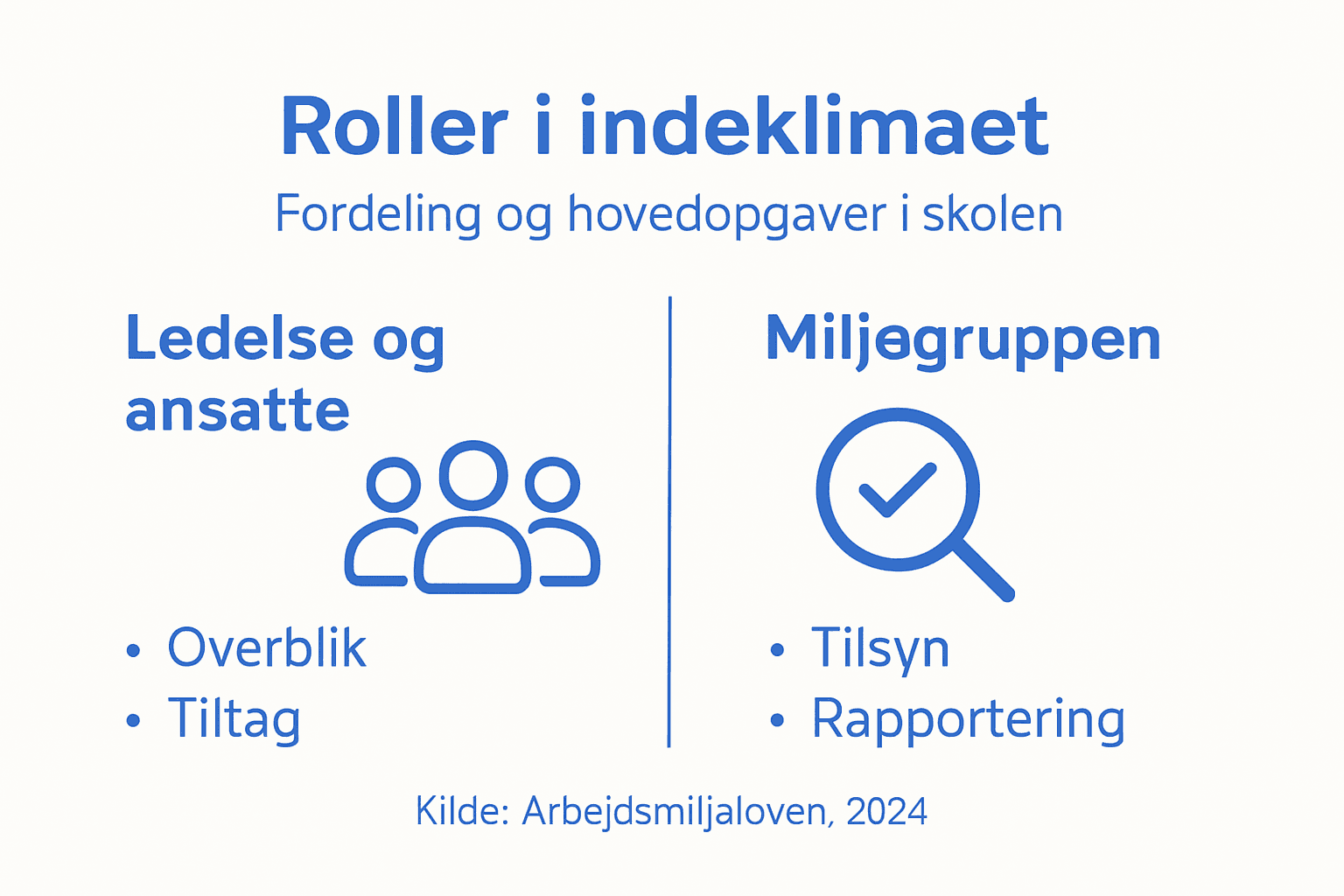
Responsibility for the school's indoor climate is complex and shared among several stakeholders, each playing a crucial role in ensuring a healthy and productive learning environment. Management has overall responsibility, but effective management requires close cooperation among all involved parties.
The main stakeholders and their specific roles include:
The primary areas of responsibility can be further specified:
Effective indoor climate work is about shared responsibility and ongoing dialogue.
The school's working environment groups serve as central coordinators between management, employees, and technical units. They have the following key tasks:
A well-functioning collaboration requires open communication, mutual respect, and a proactive approach to challenges.
Here is an overview of the most important stakeholders and their roles in working with the school's indoor climate:
| Stakeholder | Main task | Value-creating action |
|---|---|---|
| Management | Develops strategy and initiatives | Prioritizes resources |
| Employees | Observes and reports | Shares daily experiences |
| Working environment groups | Coordinates and solves problems | Ensures follow-up |
| Municipality | Supports and sets requirements | Allocates budget |
Pro-tip: Establish clear communication channels and quarterly meetings specifically dedicated to indoor climate discussions.
Systematic implementation of indoor climate strategies requires a coherent and structured approach that involves several technical and organizational elements. Effective monitoring involves continuous measurement, analysis, and adjustment of the school's physical environment.
Main strategies for implementation include:
Concrete implementation steps include:
Successful indoor climate improvement requires continuous attention and proactive action.
Municipal efforts for indoor climate management are based on strategic plans focusing on:
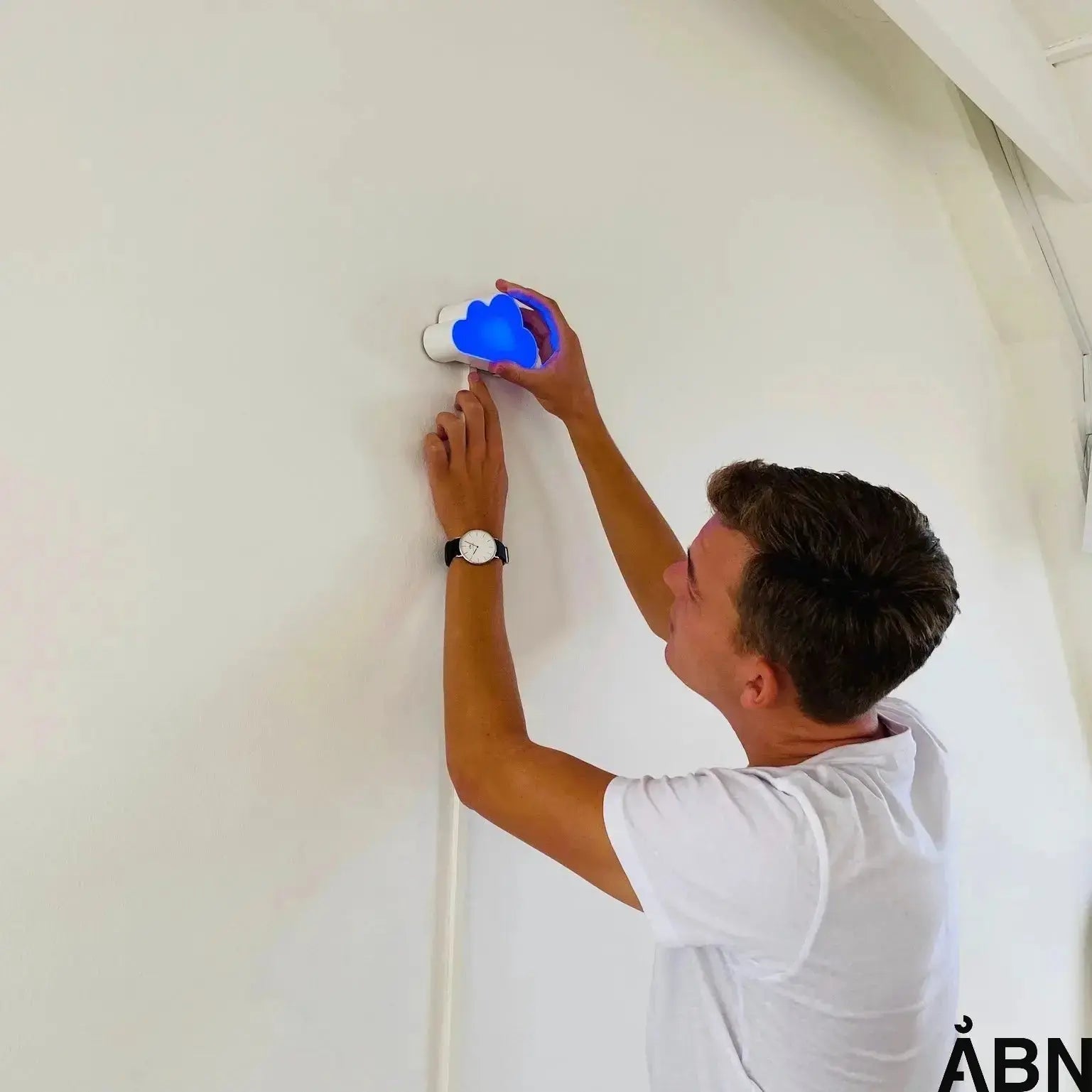
Technological solutions such as mobile air purifiers, CO2 sensors, and traffic light systems support practical implementation by providing real-time data and immediate feedback.

Pro-tip: Establish a digital dashboard that visualizes indoor climate parameters and makes the results immediately understandable to all stakeholders.
Municipalities' lack of strategic investments in indoor climate constitutes a critical barrier to improving schools' learning environments. The typical mistakes often reflect short-sighted and fragmented approaches to building maintenance and environmental optimization.
The main challenges include:
The most critical types of errors can be categorized as:
Continuous improvement requires systematic effort and strategic thinking.
Sustainable renovation strategies are key to lasting improvements, with a focus on:
Successful implementation involves combining technical solutions with organizational change management and continuous learning.
Below is a comparison of typical mistakes and sustainable improvement measures in school indoor climates:
| Typical mistakes | Long-term solutions |
|---|---|
| Lack of comprehensive plan | Strategic renovation plan |
| Fragmented effort | Interdisciplinary collaboration |
| Short-term economic focus | Long-term investments |
| Underestimation of technology | Modern ventilation systems |
| Absence of documentation | Continuous performance measurements |
Pro-tip: Establish a dedicated interdisciplinary task force that continuously evaluates and optimizes the school's indoor climate efforts.
The complex responsibility and role of indoor climate in schools require precise monitoring to ensure a healthy and productive learning environment. As the article emphasizes, it is crucial to coordinate among management, employees, and working environment groups to document and act on indoor climate problems such as high CO2 levels, inappropriate temperatures, and noise. To succeed in this important task, schools should invest in advanced and user-friendly measuring instruments that also facilitate collaboration and continuous follow-up.
At Aabn.io, you will find modern sensors and measurement solutions that specifically support the school's efforts to constantly monitor CO2, humidity, temperature, light, and noise through a unified platform. Their systems make it possible to react quickly and effectively to fluctuations in the indoor climate and support communication between all responsible stakeholders in the school environment. Seize the opportunity to convert theoretical knowledge into practice and ensure a better learning environment with clear documentation and real-time data.
Are you ready to focus on the school's indoor climate and take responsibility with professional solutions such as Skyen sensors for continuous monitoring? Visit Aabn.io today and start the journey towards a healthier school environment where everyone has optimal conditions for well-being and learning.
The responsibility for the indoor climate in schools is shared among management, employees, working environment groups, and the municipality. Management has overall responsibility, while employees observe problems and working environment groups coordinate solutions.
The primary indoor climate problems include high CO2 levels, temperature fluctuations, high noise levels, poor air circulation, and insufficient lighting.
Indoor climate quality can be measured with technical instruments such as CO2 sensors, thermometers for temperature recording, noise meters, and advanced particle sensors for air quality analysis.
To improve the indoor climate, schools can implement systematic measurement systems, continuously monitor indoor climate conditions, and incorporate technological solutions such as air purifiers and CO2 sensors.