Einkaufswagen
0
Hilfe zur Optimierung des Raumklimas

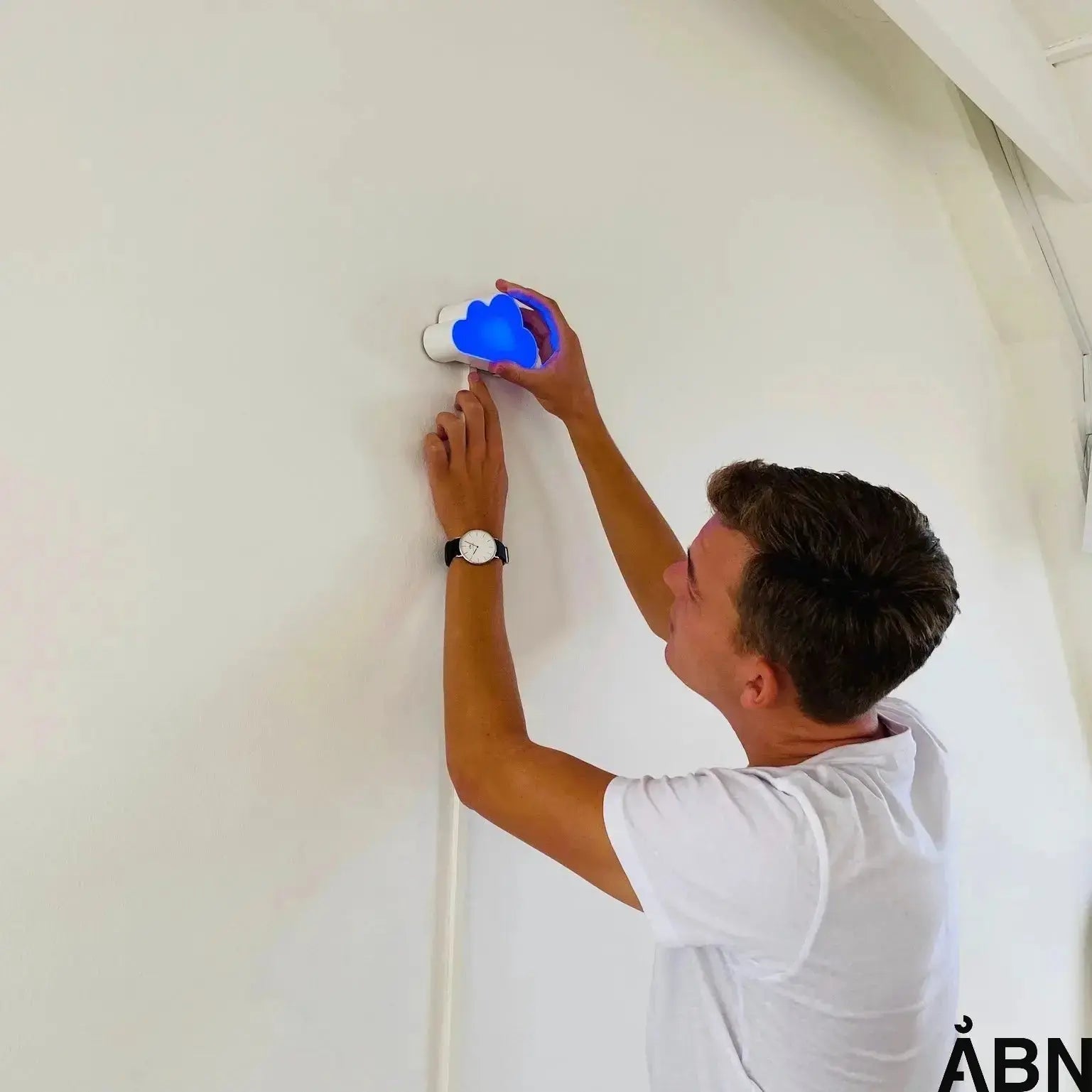




Over 30 percent of students daily experience symptoms such as fatigue and headaches due to poor indoor climate in schools. When the air is heavy and CO₂ levels become too high, it negatively affects both learning and well-being. With intelligent sensors, Danish facility managers get accurate data that reveals hidden problems and enables verifiable improvements, which can reduce absenteeism and create healthier learning environments.
| Point | Details |
|---|---|
| Importance of Sensors | Sensors measure critical indoor climate factors and improve well-being and health. |
| Types and Functions | Each type of sensor has specific functions that contribute to indoor climate optimization. |
| Role of Data | Sensor data enables real-time monitoring and automatic climate adjustment. |
| Implementation in Environments | Strategic placement and integration are crucial for efficient sensor operation. |
Indoor climate sensors are advanced IoT devices designed to measure and monitor various parameters in our indoor environments. These technological monitors collect precise data on key factors such as temperature, humidity, CO₂ level, and air quality, which directly affect our daily well-being and health.
According to a guide from WebuildDenmark on IoT and sensors, these sensors are crucial for optimizing building operations and indoor climate. They act as intelligent eyes that continuously record environmental conditions and provide valuable insight into the surroundings where we spend most of our time.
Technically, these sensors operate using advanced measuring devices that can detect even minimal changes in air composition and physical characteristics. They can be strategically placed in various rooms and areas, providing a detailed and nuanced picture of the indoor climate. Sensors can be integrated into existing building systems and communicate data in real-time, enabling quick response and optimization of indoor climate conditions.

Pro-tip: Place sensors at different heights and areas to get the most accurate and representative measurement of the indoor climate.
Indoor climate can be monitored using various specialized sensors, each measuring specific parameters crucial for our health and comfort. According to a knowledge center guide, central sensor types involve recording and analyzing the complex composition of the indoor climate.
The main types of sensors include:
These sensors continuously communicate data, allowing building managers to quickly react to changes in the indoor climate. They can be integrated into existing building systems, enabling intelligent indoor climate management through real-time monitoring and automatic adjustments.
Here is an overview of how different sensor types contribute to the indoor climate:
| Sensor type | Primary function | Effect on indoor climate |
|---|---|---|
| Temperature sensor | Measures room temperature | Better comfort and energy efficiency |
| Humidity sensor | Detects air humidity | Prevents mold |
| CO₂ sensor | Monitors carbon dioxide | Improves air quality and health |
| Motion sensor | Reacts to activity | Optimizes ventilation and consumption |
Pro-tip: Install sensors at different heights and zones to achieve a more representative and accurate measurement of the indoor climate.
Sensor data plays a crucial role in improving air quality by providing precise and immediate measurements of various indoor climate parameters. According to DTU, improving the indoor climate begins with systematic data collection and analysis, enabling intelligent and proactive management of our indoor environments.
The primary benefits of sensor data include:
Through continuous data collection and intelligent analysis, sensors can map complex patterns in air quality. This allows building administrators to make data-driven decisions that not only improve air quality but also create more comfortable and healthier indoor environments.
Pro-tip: Review sensor data monthly to identify long-term trends and patterns in air quality.
The implementation of indoor climate sensors in public institutions requires a strategic and systematic approach that considers the specific needs of different environments. The Danish Technological Institute has already demonstrated effective implementation methods by installing advanced VOC sensors that measure chemical compounds in learning environments.
The implementation process should follow these key steps:
The difference between implementation in schools, municipalities, and workplaces primarily lies in specific user needs. Schools, for example, focus on learning conditions, while workplaces prioritize employee productivity and health. Municipal implementations often require broader, more complex solutions covering multiple buildings and institutions.
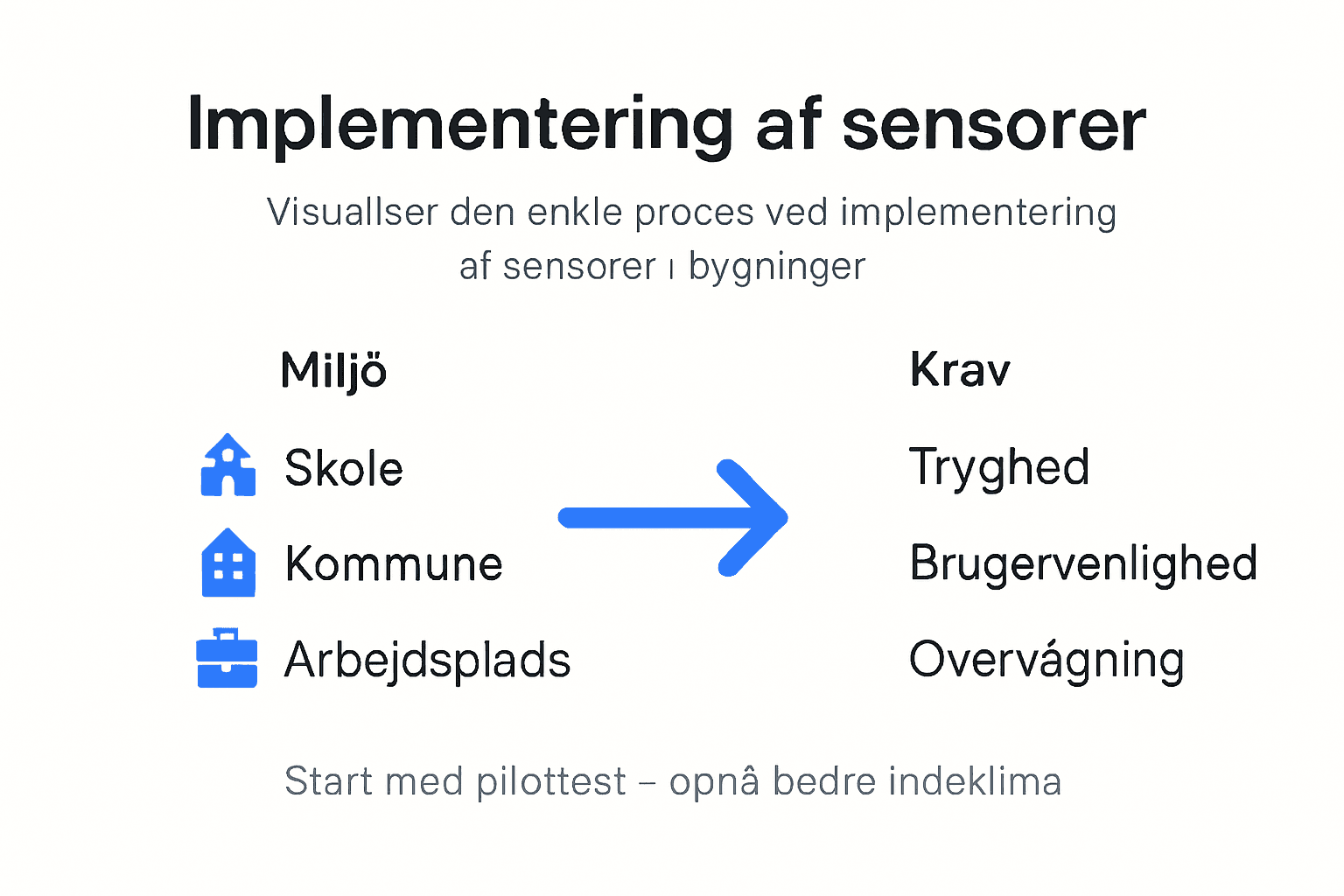
Here are differences in the implementation of sensors in various environments:
| Environment | Main purpose | Special requirements |
|---|---|---|
| Schools | Support the learning environment | Low noise, data protection |
| Workplace | Promote productivity and health | Flexible placement, user-friendly interface |
| Municipalities | Cover multiple institutions | Scalability, central control |
Pro-tip: Start with a pilot test in a single room or building to validate the effectiveness of the sensor solution before full implementation.
Indoor climate sensors can be powerful tools, but their effectiveness depends on correct implementation and management. According to WebuildDenmark, several critical risks are associated with sensor implementation that require careful attention.
Key risks and pitfalls include:
Optimal use of sensors requires a holistic approach where technical specifications, data management, and organizational understanding go hand in hand. It is not just about collecting data, but about translating this data into meaningful actions that improve the indoor climate and increase well-being and productivity.
Pro-tip: Establish clear guidelines for data interpretation and decision-making processes before sensors are implemented.
Indoor climate sensors are the key to creating healthy and comfortable environments in schools, workplaces, and municipal institutions. The challenge of measuring and monitoring parameters such as CO₂, humidity, and temperature can quickly become complex, but with the right solutions, you can ensure precise data that prevents poor indoor climate and improves well-being. If you want to avoid pitfalls such as inaccurate measurements and lack of integration, it is important to choose sensors that communicate effectively and can be implemented without technical barriers.
At aabn.io, we offer user-friendly and intelligent sensor solutions that make it easy to monitor and optimize the indoor climate in your institution or workplace. Our products like Skyen help you get real-time data on air quality, CO₂, TVOC, temperature, and humidity with a focus on easy implementation and reliable operation. Take the first step towards a better indoor climate and experience how precise measurement can lead to increased health and productivity.
Don't be overwhelmed by meaningless data. Get the tools to translate sensor data into concrete actions. Visit our page Indoor Climate Sensor Solutions and start monitoring your indoor climate today. Healthier air is just a click away.
Indoor climate sensors measure parameters such as temperature, humidity, CO₂ level, and air quality to improve our indoor environments.
Sensor data provides real-time measurements that enable automatic adjustment of ventilation and temperature, resulting in improved air quality.
The most important types of sensors include temperature sensors, humidity sensors, CO₂ sensors, and motion sensors.
It is important to conduct a needs analysis, choose the right sensors, optimize placement, and ensure data integration for effective implementation.