Cart
0
Help for optimizing the indoor climate

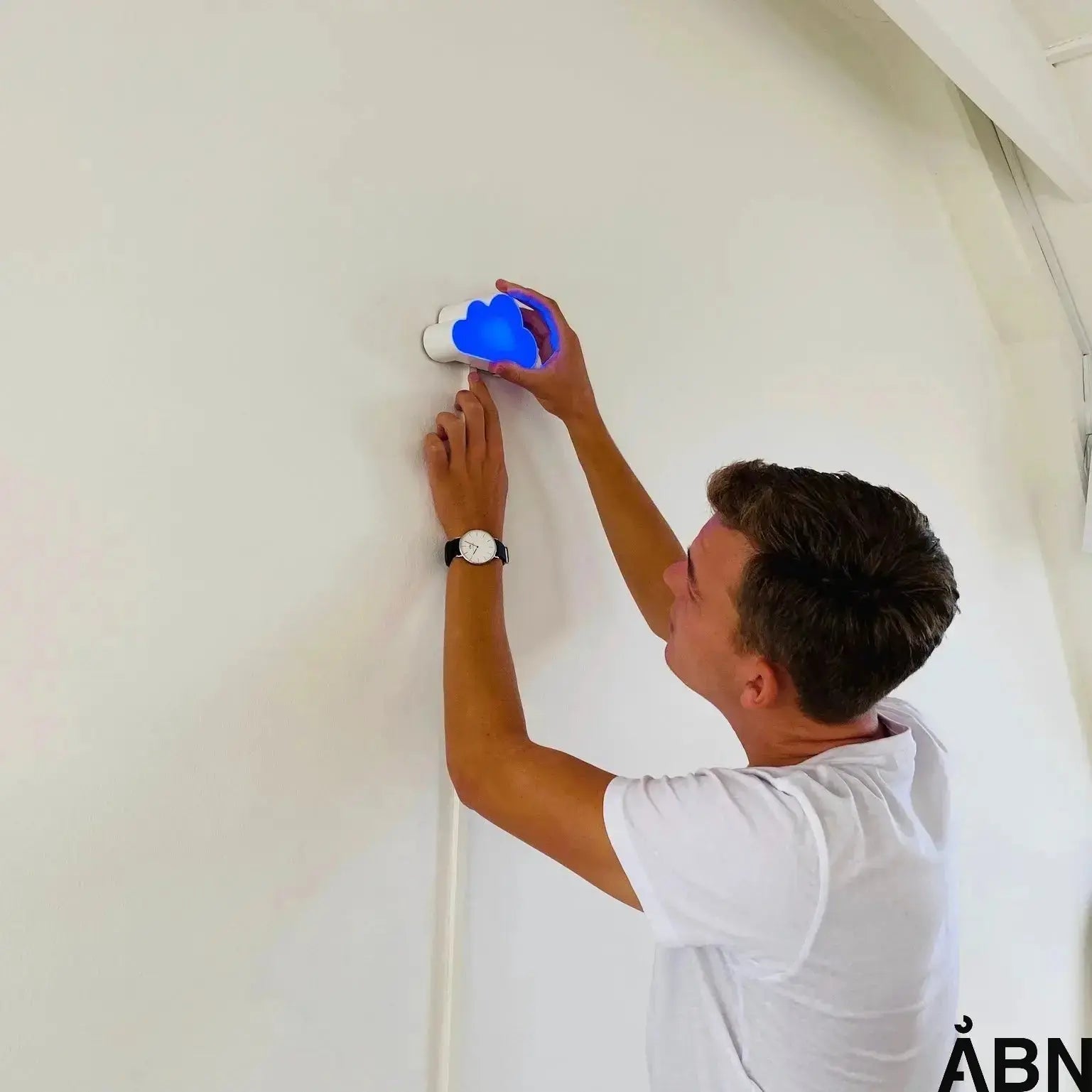




More than 60 percent of Danish school classes have excessively high CO₂ levels during a normal school day. When the air in the classroom becomes dense and heavy, both students' energy and learning ability quickly decline. As a school leader, you have a significant influence on how ventilation and continuous CO₂ measurement can create better conditions for health, well-being, and motivation in everyday life.
| Point | Details |
|---|---|
| The significance of CO₂ | CO₂ levels are an indicator of air quality and can affect students' learning ability and well-being. |
| The Role of Ventilation | Poor ventilation leads to high CO₂ levels, which can cause symptoms such as fatigue and reduced concentration. |
| Compliance with Legal Requirements | According to the Building Regulations, the CO₂ level must not exceed 1000 ppm, and regular monitoring is necessary. |
| Benefits of CO₂ monitoring | Monitoring CO₂ can provide early indication of ventilation problems and improve the indoor climate, as long as misconceptions about the gas's health effects are avoided. |
CO₂ is more than just an invisible gas in school premises. It is an important indicator of air quality and students' health. CO₂ levels can directly affect students' learning ability, making it crucial to understand its role in the indoor climate.
Many people misunderstand CO₂, believing that the gas itself is dangerous. The truth is more nuanced. High CO₂ concentrations are not directly toxic, but they signal poor ventilation. These high levels can cause fatigue, headaches, and reduced concentration in students. The more people in a room without sufficient air exchange, the faster the CO₂ level rises.
The key is not the CO₂ gas itself, but what it tells us about air quality. A poorly ventilated classroom does not only accumulate carbon dioxide, but also other invisible air pollutants such as harmful particles and chemicals. The importance of indoor climate for health and learning cannot be underestimated. Regular measurement and proper ventilation are key to ensuring a healthy environment for children.
Pro tip: Install CO₂ meters in classrooms to quickly identify rooms with poor air quality and implement immediate ventilation solutions.
CO₂ measurement in schools is crucial for ensuring a healthy indoor climate. CO₂ sensors are strategically installed to provide an accurate picture of air quality. Typically, these sensors are placed at a height of about 1.5 meters, away from doors and windows, ensuring a representative measurement of the air's composition.
Modern CO₂ sensors are advanced instruments that continuously monitor carbon dioxide concentration in a room. Sensor technology works using infrared measurement techniques, where the sensor detects the absorption of light by CO₂ molecules. The more CO₂ molecules, the more light is absorbed, providing an accurate reading of air quality. These sensors can be directly connected to ventilation systems, allowing automatic adjustment of air exchange when CO₂ levels rise.
There are various types of CO₂ sensors with varying accuracy and functionality. Non-dispersive infrared (NDIR) technology is considered the most reliable method, as it is less affected by other gases and provides more stable measurements. Some advanced sensors include additional functions such as temperature and humidity measurement, providing a more complete picture of the indoor climate.
Here is an overview of different CO₂ sensor types and their characteristics:
| Sensor Type | Measurement Principle | Advantage | Typical Application |
|---|---|---|---|
| NDIR (infrared) | Light absorption | Very precise measurement | Schools, offices, hospitals |
| Chemical sensor | Chemical reaction | Fast response time | Simple monitoring systems |
| Photoacoustic sensor | Sound from light absorption | Reliable over time | Industrial installations |
Pro tip: Calibrate your CO₂ sensors regularly to ensure maximum accuracy and reliability in your measurements.
CO₂ levels have a direct and significant impact on students' learning and well-being. High CO₂ concentrations can significantly impair students' educational performance by affecting their concentration ability and overall well-being.
Poor indoor climate with high CO₂ levels leads to several specific challenges for students. Symptoms of discomfort such as headaches, fatigue, and reduced concentration are common in poorly ventilated classrooms. These symptoms can directly threaten students' academic outcomes and mental health. Studies show that children in rooms with high carbon dioxide concentrations experience significantly reduced cognitive function and thus reduced learning potential.
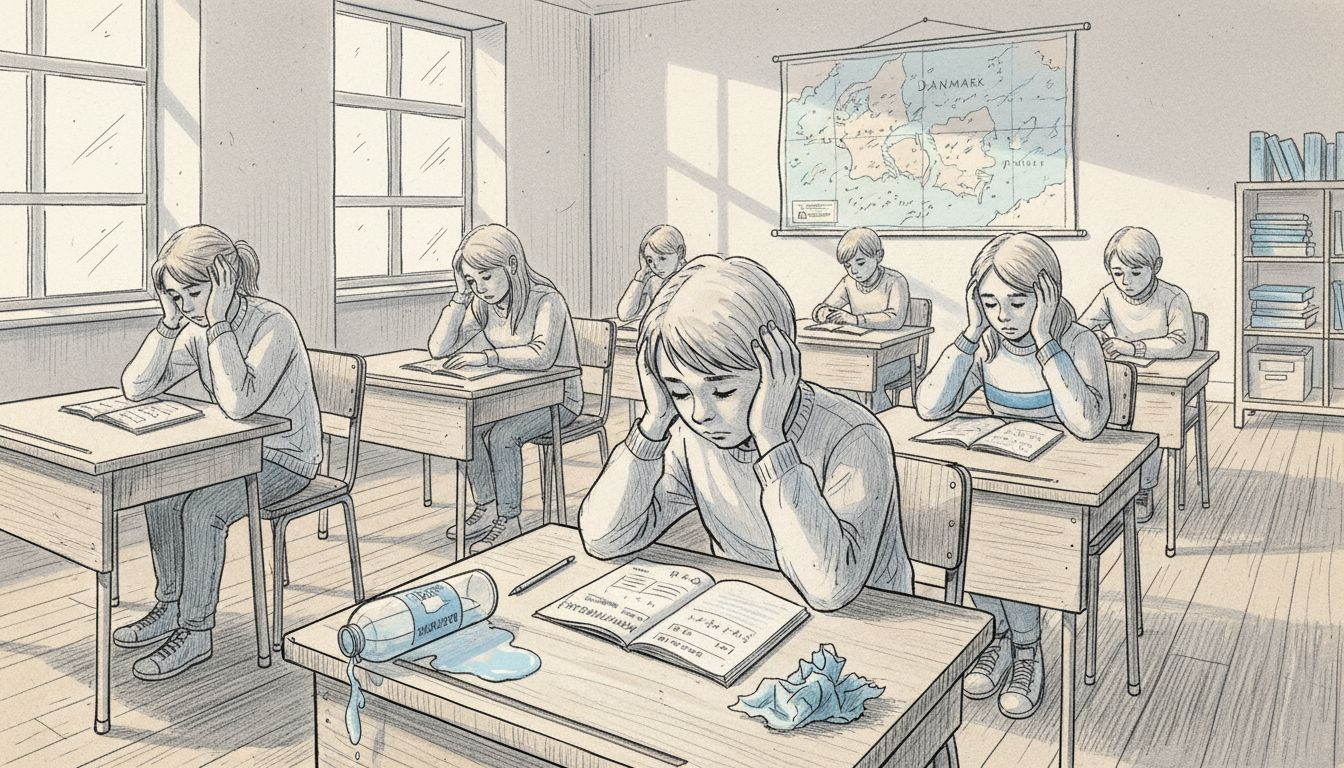
Municipalities are encouraged to prioritize ventilation as a strategic effort to improve the school environment. A good indoor climate is not just about air quality, but about creating optimal conditions for learning. Research documents that well-ventilated classrooms can reduce absenteeism, improve students' concentration, and thereby strengthen overall educational quality.
Pro tip: Use CO₂ meters to continuously monitor air quality and proactively adjust ventilation to ensure an optimal learning environment.
The Building Regulations set specific requirements for ventilation in Danish schools to ensure a healthy indoor climate. These legal guidelines aim to protect the health of students and staff through carefully regulated air quality standards.
The specific legal requirements precisely define that the CO₂ level in classrooms must not exceed 1000 ppm under design conditions. Ventilation systems must be equipped with both supply and extract air systems as well as heat recovery. Demand-controlled ventilation systems with CO₂ sensors are permitted, but there are requirements that the air volume during operating hours must not fall below a fixed minimum value.
The Prevention Package from the Danish Health Authority supplements the technical requirements with recommendations for continuous monitoring and improvement of the indoor climate. The legislation draws on both the Working Environment Act and the Building Regulations, creating a complete regulatory framework for ensuring healthy school environments. These regulations underscore the importance of proactive management of air quality and ventilation.
Below is a summary of legal requirements and recommendations for CO₂ and ventilation in schools:
| Aspect | Legal Requirements (Building Regulations) | Danish Health Authority Recommendation |
|---|---|---|
| Max. CO₂ level | 1000 ppm | Continuous monitoring |
| Ventilation type | Supply, extract | Regular maintenance |
| Minimum air volume | Fixed minimum | Proactive control |
| Monitoring requirements | Required for demand control | Review of the entire system |
Pro tip: Obtain a professional review of the school's ventilation system to ensure full compliance with applicable legal requirements and optimize indoor climate quality.
CO₂ monitoring is a crucial strategy for ensuring a healthy indoor climate. Monitoring allows for early detection of ventilation problems and can help improve air quality in schools and other institutions.
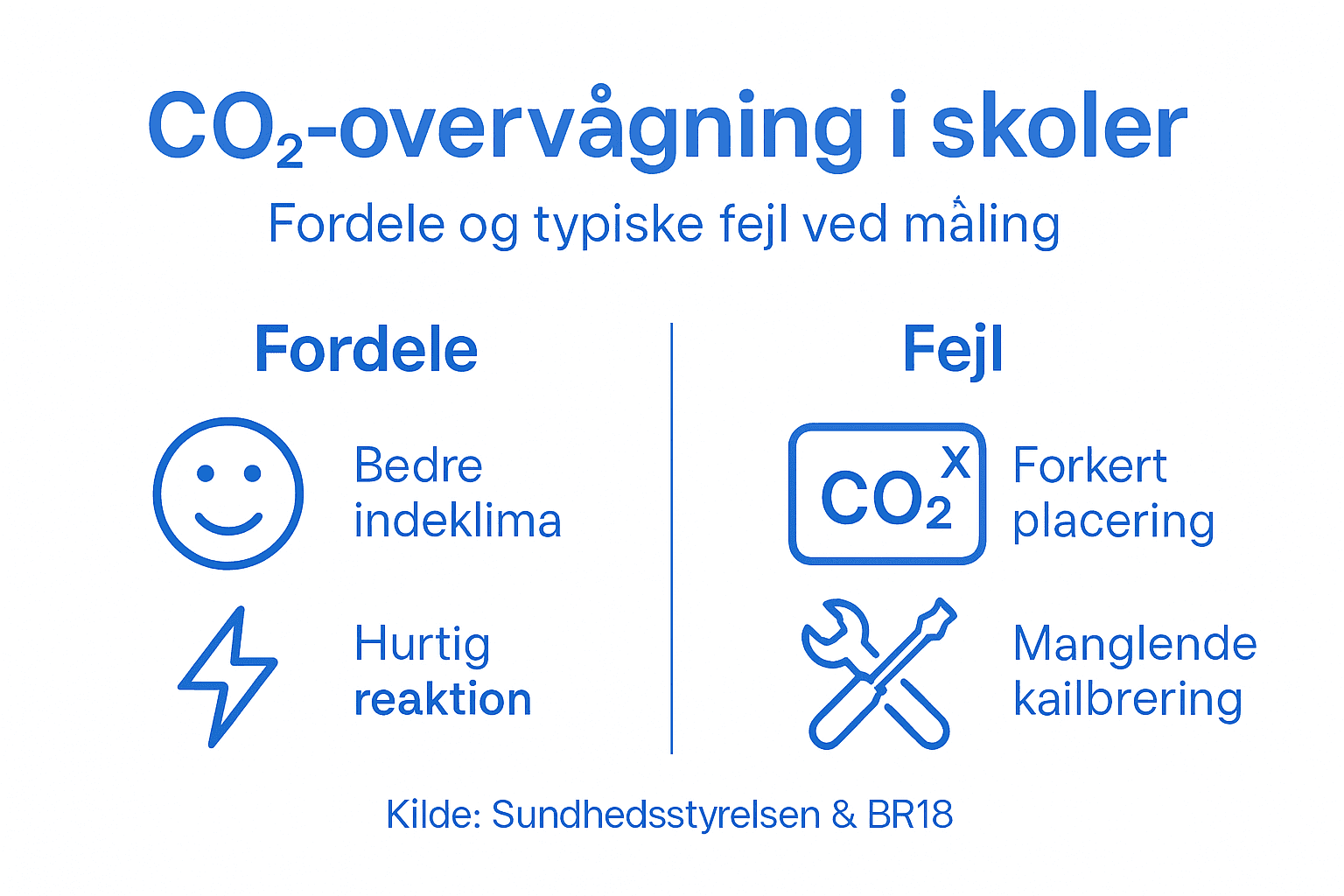
The primary benefits of CO₂ monitoring include automatic adjustment of ventilation systems and immediate identification of rooms with poor air circulation. However, common misconceptions can lead to misinterpretation of measurement results. Many people mistakenly believe that high CO₂ levels are directly harmful, when in reality they are merely an indicator of inadequate ventilation. The sensors serve as a proxy for air quality, not as a direct measure of health risk.
When correctly implemented, CO₂ monitoring can reveal complex ventilation patterns and variations in air quality. It is important to understand that CO₂ concentrations vary within the same room depending on factors such as people's location, activity level, and room size. Continuous monitoring provides a more nuanced picture of the indoor climate than isolated measurements.
Pro tip: Install CO₂ sensors strategically in different parts of the room to get a more representative picture of overall air quality.
A poor indoor climate characterized by high CO₂ levels can directly affect students' well-being and learning ability, as described in the article. Many schools face the challenge of ensuring correct ventilation and continuous measurement to avoid fatigue, headaches, and reduced concentration. This is where the importance of user-friendly and reliable sensors comes in. With the right technology, you can quickly identify and address air quality problems, ensure compliance with legal requirements, and create optimal conditions for both students and staff.
At aabn.io, we offer advanced indoor climate measurement solutions that make it easy to monitor CO₂, temperature, humidity, and air quality in real-time. Our Skyen device combines reliable sensor technology with intuitive data collection, providing you with a powerful tool for efficient ventilation and an improved school environment. Join many other municipalities and institutions by taking the first step towards a better indoor climate now.
Become part of the solution and take control of the indoor climate today. Visit aabn.io and invest in healthier, more productive learning environments with advanced CO₂ sensors and holistic solutions designed for schools.
Measuring CO₂ in schools is essential to ensure a good indoor climate, as high CO₂ levels can indicate poor ventilation, which negatively affects students' concentration and well-being.
High CO₂ levels can lead to fatigue, headaches, and reduced concentration, which can impair students' learning performance and general well-being.
CO₂ sensors measure the concentration of carbon dioxide in the air using advanced technologies such as NDIR, which detects light absorption from CO₂ molecules. The sensors can also be connected to ventilation systems for automatic air exchange.
According to the building regulations, CO₂ levels in classrooms must not exceed 1000 ppm. Ventilation systems must include both supply and exhaust air and be subject to continuous monitoring to ensure a healthy environment.