Cart
0
Help for optimizing the indoor climate

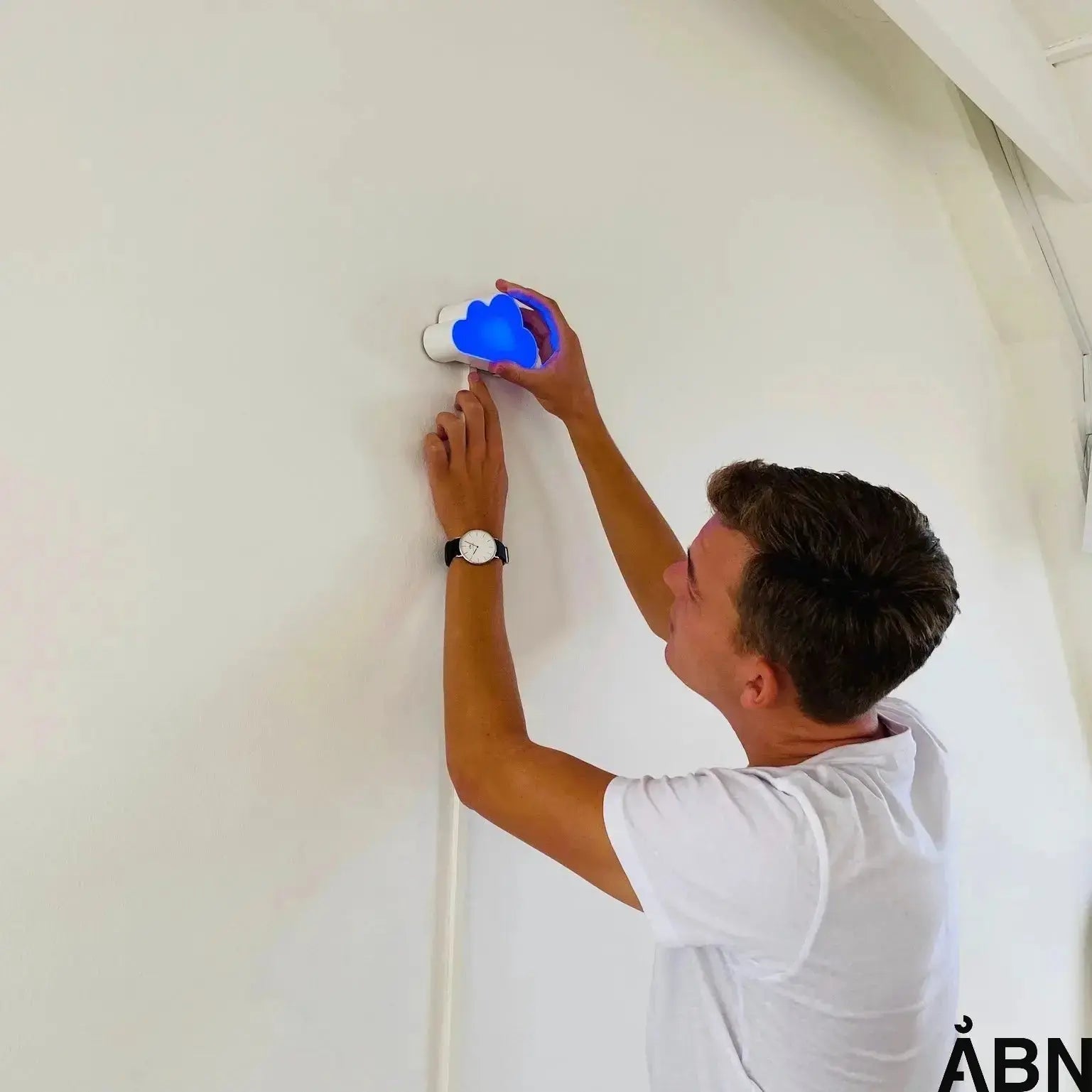




Poor indoor climate is a daily challenge for many school leaders in Denmark. Unhealthy air, high CO2 levels, and inadequate lighting can directly affect students' concentration and well-being, making the extent of the problem clear to both staff and parents. This article equips you with knowledge about the most critical challenges and practical solutions, so you can foster a healthy, productive learning environment.
| Point | Details |
|---|---|
| Poor indoor climate | Poor indoor climate significantly affects children's health and learning. |
| Critical factors | Air quality, temperature, and lighting are essential for ensuring well-being. |
| Regular monitoring | Implementing indoor climate meters can improve the environment by identifying problems. |
| Legal responsibility | Institutions are obliged to comply with Danish legal requirements for indoor climate. |
Poor indoor climate is a significant challenge for Danish schools and day-care institutions, which can have serious consequences for children's health and learning. Parents' concerns about indoor climate quality show that the problem is widespread and requires immediate attention.
Indoor climate challenges encompass several critical factors, including air quality, temperature, humidity, and lighting. Poor ventilation can lead to high CO2 levels, which directly affects children's concentration and general well-being. Excessive temperatures and insufficient air circulation can promote mold growth and increase the risk of respiratory infections.
When we look closer at the specific challenges, we discover that many institutions struggle with older building installations, inadequate maintenance, and limited resources to improve the indoor climate. Indoor climate meters can be an important part of the solution by providing precise data on air quality and helping institutions identify and address specific problems.
Pro-tip: Implement regular monitoring of indoor climate indicators to quickly identify and resolve potential health risks in your institution.
Indoor climate problems in institutions are complex challenges that can have significant consequences for children's health and learning. Critical indoor climate problems include several key factors that affect the overall environment in schools and day-care institutions.
Primary indoor climate problems include poor air quality with high CO2 levels, which can directly reduce children's concentration and mental performance. Chemical outgassing from building materials poses a serious health risk, where substances such as asbestos and PCBs can release harmful fumes. Mold growth is an additional critical problem that can trigger severe respiratory illnesses and allergic reactions in children and staff.
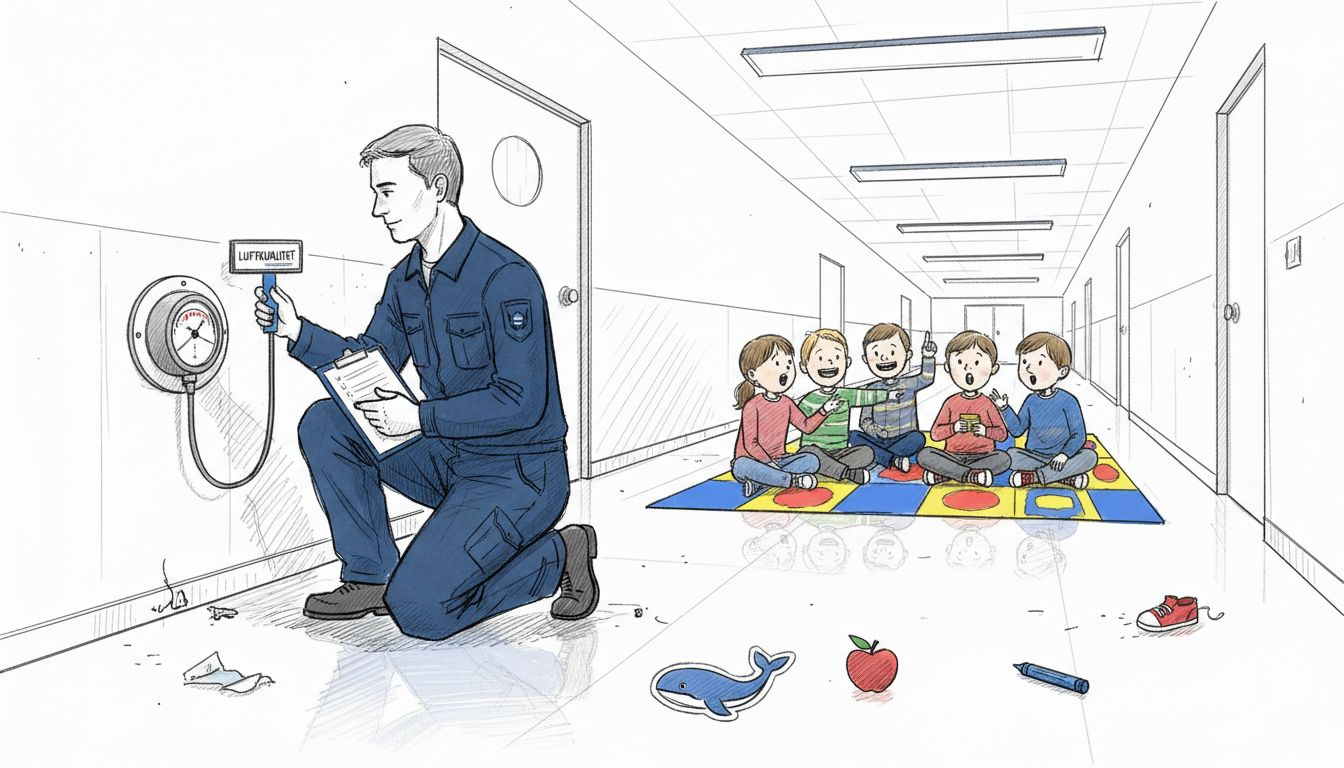
Temperature and humidity challenges also play a significant role. Schools' indoor climate challenges show that extreme temperatures - both too high and too low - can degrade the learning environment. Noise pollution and inadequate lighting complete the list of potential problems that can affect children's well-being and educational performance.
Here is a comparison of the most important indoor climate problems and their consequences for children and staff:
| Problem Type | Typical Cause | Consequences for Children | Impact on Staff |
|---|---|---|---|
| High CO2 | Poor ventilation | Reduced concentration ability | Increased fatigue |
| Mold | Moisture and poor maintenance | Allergies and respiratory problems | More frequent absenteeism |
| Chemical outgassing | Building materials, paint | Headaches and irritation | Discomfort and stress |
| Noise pollution | Traffic, open spaces | Learning disruptions | Stress and burnout |
| Poor lighting | Older installations | Fatigue and poor eyesight | Lower work efficiency |
Pro-tip: Conduct regular indoor climate surveys to quickly identify and resolve potential environmental risks in your institution.
Poor indoor climate in schools poses a significant threat to children's health and learning potential. High CO2 levels can lead to serious health consequences, including increased fatigue, headaches, and reduced concentration, which directly affects students' academic performance.
Research shows that CO2 concentrations above 1000 ppm significantly reduce students' cognitive functions. This includes impaired memory, slower reaction times, and diminished ability to focus in the classroom. The indoor climate's impact on school results emphasizes how crucial a healthy indoor climate is for children's overall educational outcome.
In addition to the direct health consequences, poor indoor climate can lead to increased absenteeism among both students and teachers. Temperature fluctuations, poor ventilation, and high noise levels contribute to a stressful learning environment, further compromising children's opportunities for optimal learning and personal development.
Pro-tip: Install CO2 monitors in classrooms to continuously monitor air quality and ensure a healthier learning environment.
Danish legal requirements regarding indoor climate provide clear guidelines for institutions' obligations to ensure a healthy and safe learning environment. These legal frameworks define specific standards for ventilation, temperature regulation, cleanliness, and air quality, which all public educational institutions must comply with.
Municipalities play a central role in supervising these legal requirements. Parent organizations' demands have further pushed for clear minimum standards and sufficient financial resources to implement necessary improvements. This involves systematic monitoring of indoor climate indicators, regular maintenance inspections, and the implementation of concrete action plans.
Institutional leaders have a direct responsibility to ensure that their buildings meet national health standards. This includes ongoing evaluation of air quality, temperature conditions, noise levels, and lighting. Non-compliance can lead to legal consequences and potential claims for damages if children's health and learning are demonstrably negatively affected.
Pro-tip: Develop an annual indoor climate action plan with specific measurement points and documentation routines to ensure full legal compliance.
Effective monitoring of indoor climate begins with systematic indoor climate measurement, which provides institutions with precise data on air quality, temperature, and other important environmental parameters. Modern technological solutions enable continuous monitoring through advanced sensors that can register CO2 levels, humidity, noise, and temperature in real-time.
The strategic improvement process includes several key steps. The first phase involves a thorough mapping of existing indoor climate conditions through detailed measurements. Next, the data is systematically analyzed to identify specific problem areas. CO2 visualization methods, for example, can be used to create a clear overview of air quality and highlight the need for ventilation improvements.
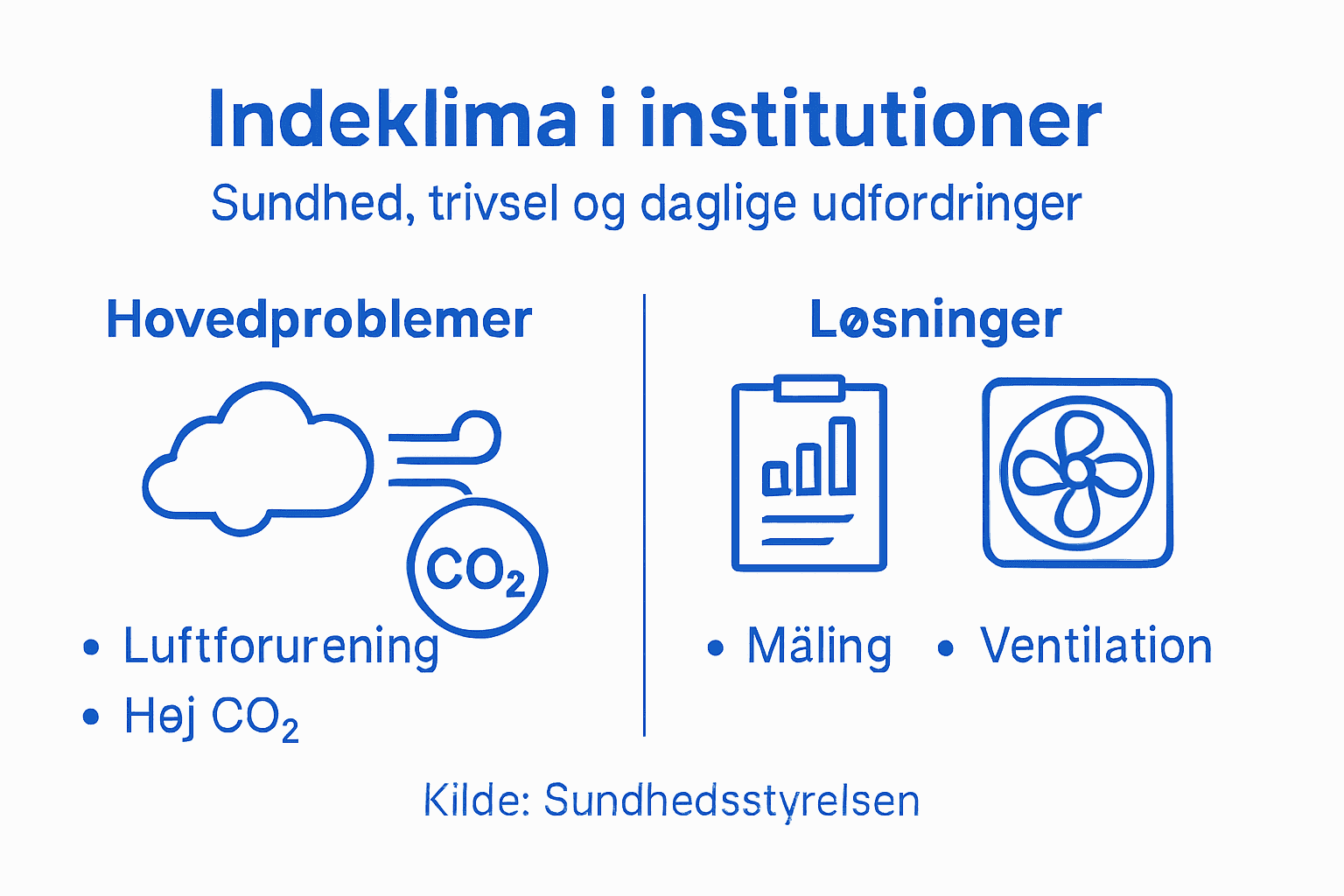
A holistic approach requires continuous monitoring and adjustment. This means not only installing sensors but also establishing clear protocols for data collection, analysis, and action plans. Institutions should implement regular evaluations where indoor climate data is compared with the experiences and well-being of staff and students.
Here are the most important methods for monitoring and improving indoor climate in institutions:
| Method | Advantage | Limitation | Typical Application Area |
|---|---|---|---|
| Continuous sensor measurements | Precise real-time data | Requires technical installation | Schools, day-care institutions |
| Manual climate survey | Easy to implement | May overlook time variations | Smaller locations |
| CO2 visualization dashboard | Overview for users | Investment in software | Larger institutions |
| Linking with well-being data | Connects environment and well-being | Requires anonymous data collection | Evaluation of learning environment |
Pro-tip: Create a digital dashboard that continuously visualizes indoor climate measurements, so management and staff can follow developments in real-time.
Poor indoor climate with high CO2 levels, mold, and poor lighting poses a real threat to both children's health and their ability to learn. It is therefore crucial to act quickly to ensure a healthy environment that promotes well-being and concentration. With precise measurement tools and continuous monitoring, it becomes possible to uncover and solve the complex indoor climate problems that many institutions experience.
At Aabn.io, you will find advanced sensors and user-friendly systems that measure CO2, humidity, temperature, noise, and much more. These tools help you gain an overview of your indoor climate and act effectively before problems become too large. See how systematic indoor climate monitoring can become your strongest tool for a better learning environment.
Take the first step towards a healthier and more productive indoor climate today and discover the many possibilities with Skyen - indoor climate solutions for institutions. Create better conditions for children and staff with easy access to data and insights that make a difference.
Poor air quality, high CO2 levels, mold, chemical outgassing from building materials, noise pollution, and inadequate lighting are among the most common indoor climate challenges in institutions.
Poor indoor climate can lead to increased fatigue, headaches, reduced concentration, and memory problems, which directly affect children's learning and academic performance.
Regular monitoring of the indoor climate, installation of CO2 monitors, improvement of ventilation and temperature regulation, and maintenance of building installations can help improve the indoor climate.
Effective monitoring can be achieved through systematic indoor climate measurements with modern sensors that register CO2 levels, humidity, noise, and temperature in real-time, as well as by establishing clear routines for data collection and analysis.