Cart
0
Help for optimizing the indoor climate

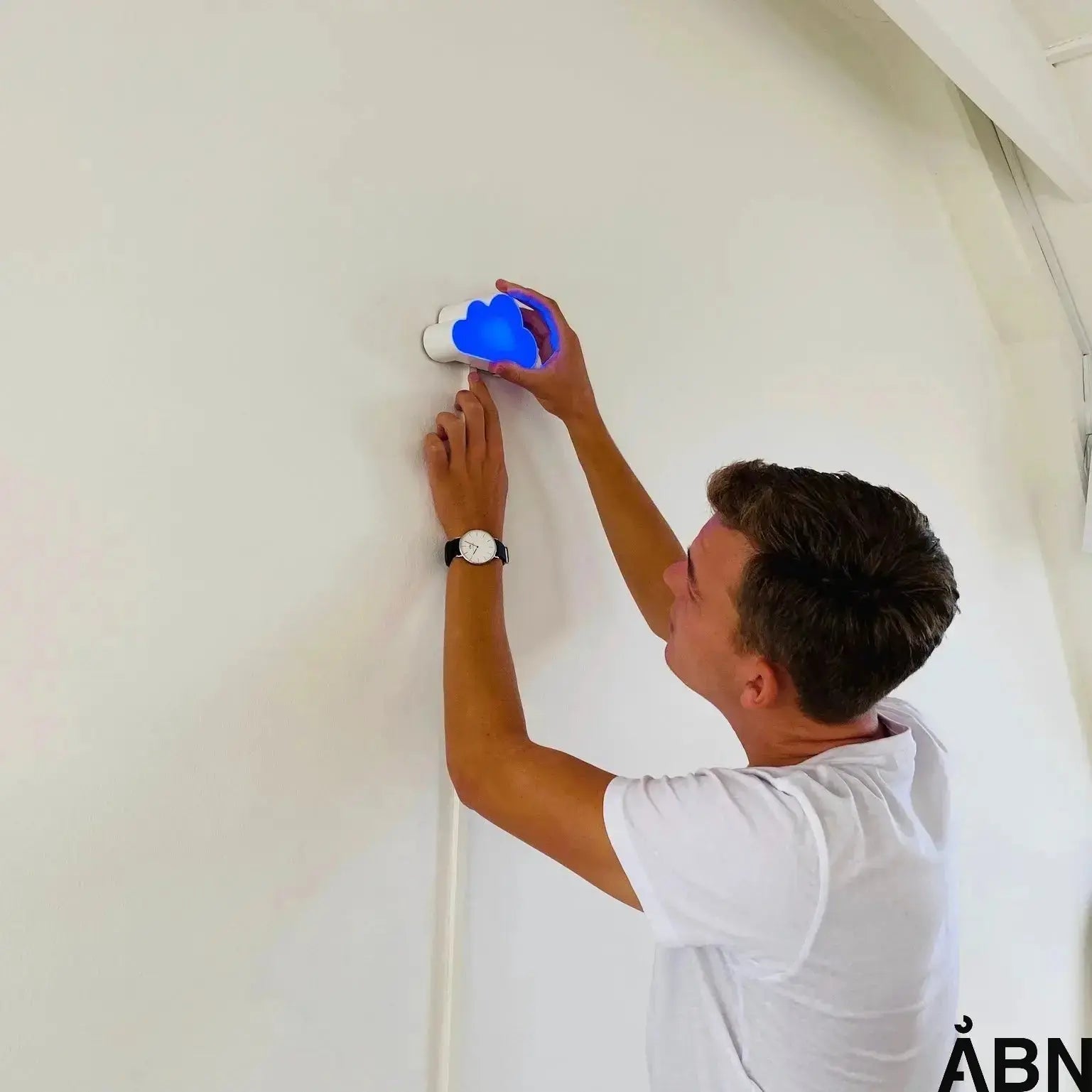




Many Facility Managers at Danish schools experience daily concerns about whether the indoor environment truly supports students' health and learning. A healthy working environment depends on several factors, with air quality having a direct impact on both concentration and well-being. Here, you will find concrete inspiration on how optimizing the indoor climate through ventilation, continuous measurement, and targeted behavior can elevate your school environment to the benefit of both students and staff.
| Point | Details |
|---|---|
| Indoor climate is crucial for learning | Poor air quality affects students' concentration and can lead to health problems. |
| Ventilation plays a key role | Effective ventilation systems are essential for maintaining good air quality in classrooms. |
| Regular monitoring is necessary | Systematic measurement of the indoor climate can identify problems and ensure compliance with legislation. |
| Behavioral changes can improve the indoor climate | Education and altered habits among students and staff contribute to better air quality and health. |
Indoor climate in schools is a crucial factor for children's health, well-being, and learning. Air quality refers to the atmospheric conditions surrounding students in their daily school environment, and it has a direct impact on their physical and mental well-being.
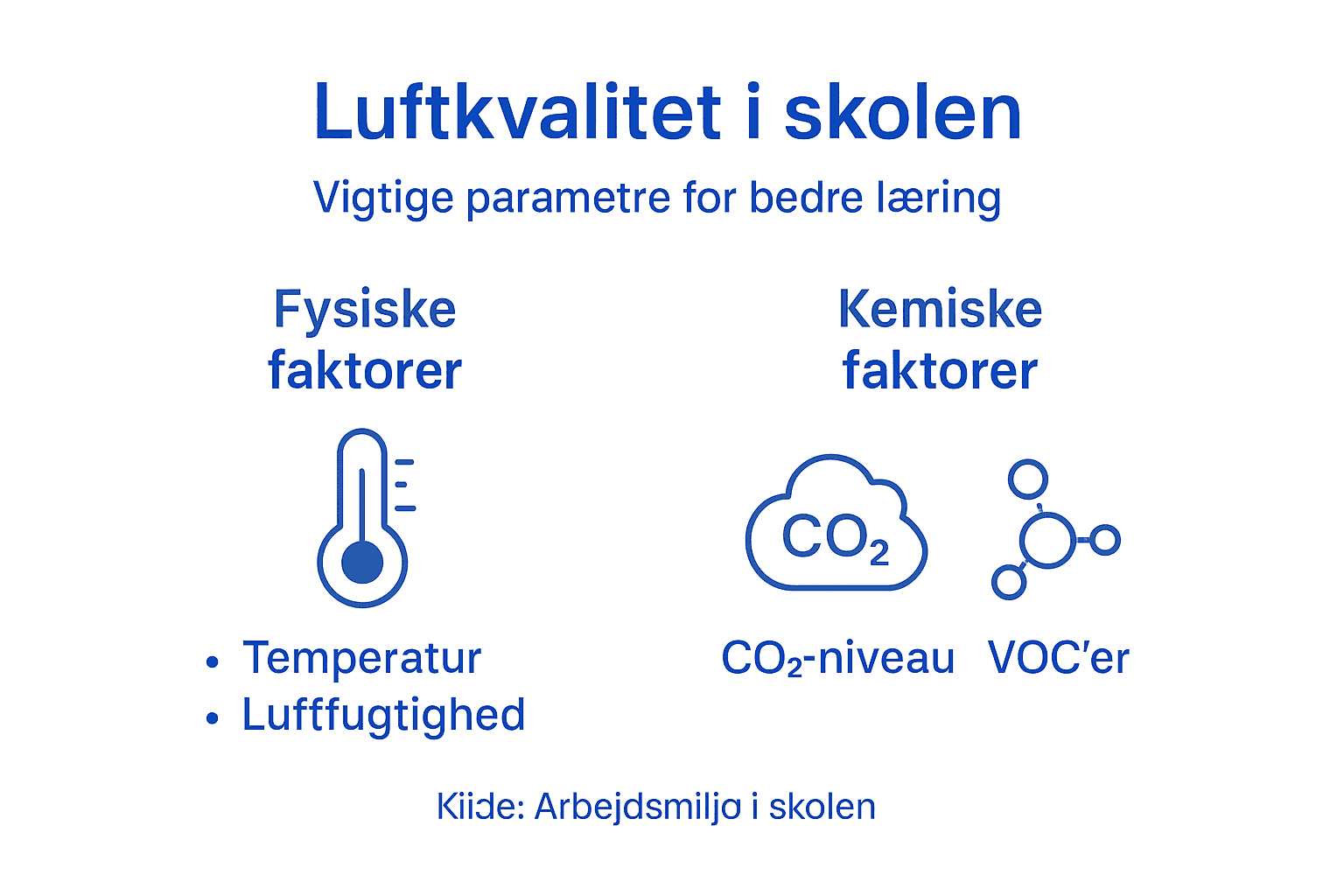
The basic components of a school's air quality include:
According to the Danish Health Authority's guidelines, poor air quality can have serious consequences for students' health and learning ability. Children exposed to inadequate ventilation and high CO2 levels may experience:
A good indoor climate is not just a health issue, but also a crucial factor for optimal learning and students' general well-being.
Ventilation plays a central role in maintaining good air quality. Modern school indoor climate strategies focus on implementing effective ventilation systems that continuously replace stale air with fresh, oxygen-rich air.
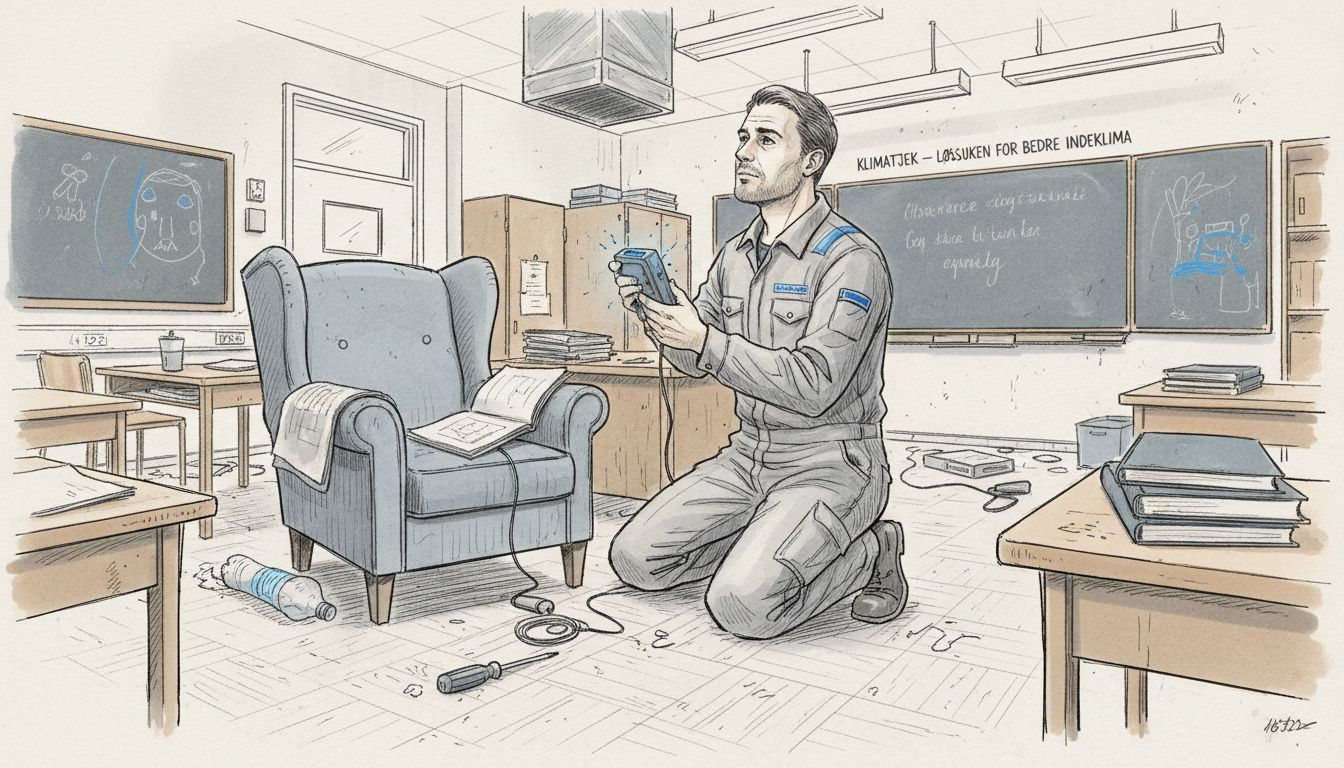
Pro-tip: Install CO2 meters in classrooms to continuously monitor air quality and adjust ventilation in real-time.
Indoor climate parameters are crucial factors that directly affect students' learning, health, and general well-being in the school environment. These complex environmental conditions encompass more than just temperature and air circulation.
The main parameters influencing learning outcomes include:
Research results from DTU show a significant correlation between poor air quality and reduced learning capacity. High CO2 levels can lead to:
Optimal indoor climate is not just a health issue, but a crucial prerequisite for effective learning.
Temperature and air circulation play a central role in students' mental performance. Too high or too low temperatures can impair students' attention and thus their ability to absorb new knowledge. An optimal room temperature between 20-22 degrees Celsius, combined with good ventilation, ensures the best conditions for learning.
Here is an overview of typical indoor climate parameters, their norms, and their most frequent impact on the learning environment:
| Indoor Climate Parameter | Typical norm in schools | Typical impact on students |
|---|---|---|
| CO2 concentration | Below 1000 ppm | Better concentration ability |
| Temperature | 20-22 °C | Increased comfort and focus |
| Humidity | 30-60 % | Lower risk of fatigue |
| Noise level | Below 35 dB in the room | Reduced distraction |
| Lighting conditions | 300-500 lux | Improved reading experience |
Pro-tip: Conduct regular measurements of classroom indoor climate profiles to identify and correct potential areas for improvement.
Air pollution in indoor environments constitutes a complex mixture of various pollutants that can affect human health and well-being. Understanding these types of pollution is crucial for creating a healthy work environment.
The main types of indoor air pollution include:
Technical guidelines for indoor climate measurements recommend systematic monitoring of these parameters through modern sensor systems. These advanced measuring devices enable:
Sensor-based monitoring is the key to transforming invisible environmental challenges into measurable, manageable data.
Chemical pollutants, also known as volatile organic compounds (VOCs), can originate from building materials, furniture, cleaning products, and electronic devices. These invisible substances can lead to short-term health problems such as headaches, fatigue, and respiratory irritations.
Pro-tip: Install multiparameter sensors that continuously measure various air quality parameters to gain a complete understanding of the indoor environment.
Legislation on air quality in Danish schools constitutes a complex set of regulations aimed at ensuring a healthy and optimal learning environment for children and young people. These standards are crucial for protecting the health of students and staff.
The main requirements for air quality include:
The Building Regulations' specific requirements define precise standards for indoor climate, including:
Legal requirements for air quality are not merely administrative regulations, but critical protective measures for children's health and learning.
The technical guidelines set detailed requirements for ventilation speed, air exchange, and documentation. Schools must be able to prove that their indoor climate meets the established standards through continuous measurements and registrations.
Pro-tip: Implement a systematic documentation system that continuously records and reports indoor climate parameters to ensure compliance with legislation.
Indoor climate optimization requires a holistic approach that combines technical solutions, continuous measurement, and conscious behavioral change. These elements are key to creating a healthy and productive learning environment.
Practical strategies for improvement include:
The effect of decentralized ventilation systems shows significant improvements in classrooms through:
Effective ventilation is not just about technology, but about creating a vibrant, healthy learning environment.
Behavioral changes play a crucial role in maintaining good air quality. This involves training students and staff to understand the connection between indoor climate and health, as well as implementing simple routines such as regular ventilation and conscious placement of furniture.
Below is a comparison of key initiatives for a healthier indoor climate in schools:
| Initiative | Required investment | Long-term effect |
|---|---|---|
| Sensor-based monitoring | Medium | Early troubleshooting and control |
| Ventilation modernization | High | Sustained good air quality |
| Staff training | Low | Increased awareness and behavior |
| Regular maintenance | Low to medium | Stable operation and lower risk |
Pro-tip: Establish an internal system for continuous monitoring and reporting of indoor climate parameters, involving management, teachers, and students.
Poor air quality poses a serious threat to learning, health, and general well-being in the school environment. The immediate and long-term consequences extend far beyond mere discomfort and can have significant impacts on student performance.
The main consequences of inadequate indoor climate include:
Studies of school indoor climate challenges reveal critical problems:
Poor air quality is not just an environmental problem, but a direct obstacle to optimal learning and personal development.
Typical mistakes that contribute to poor indoor climate include insufficient ventilation, inappropriate placement of furniture that blocks air circulation, and inadequate maintenance of ventilation systems. These factors can collectively create an environment that inhibits students' physical and mental performance.
Pro-tip: Conduct regular, thorough inspections of classroom indoor climate and implement immediate corrective actions for identified problems.
Poor air quality in schools leads to fatigue, reduced concentration, and increased absenteeism among both students and staff. When CO2 levels rise and ventilation is not optimal, the learning environment and health suffer. This is a challenge that requires precise measuring tools and continuous monitoring to effectively address the problem.
With the Skyen sensors from AABN, you gain control over indoor climate parameters such as CO2, TVOC, temperature, and humidity. These user-friendly tools enable you to identify and solve indoor climate problems in real-time, so both students and employees can work in a healthy and productive environment. Don't wait until problems escalate. Visit https://aabn.io and discover how you can make a measurable difference to the air quality in your institution today.
The most important factors include CO2 levels, ventilation conditions, temperature, humidity, dust particles, and lighting conditions.
Poor air quality can lead to reduced concentration, fatigue, more frequent absenteeism, and lower cognitive performance, all of which disrupt the learning process.
Regular measurement of CO2 levels, temperature, humidity, and noise levels are essential for identifying and correcting indoor climate problems.
Modern ventilation systems can effectively replace stale air with fresh air, reducing CO2 levels and creating a healthier learning environment.