Cart
0
Help for optimizing the indoor climate

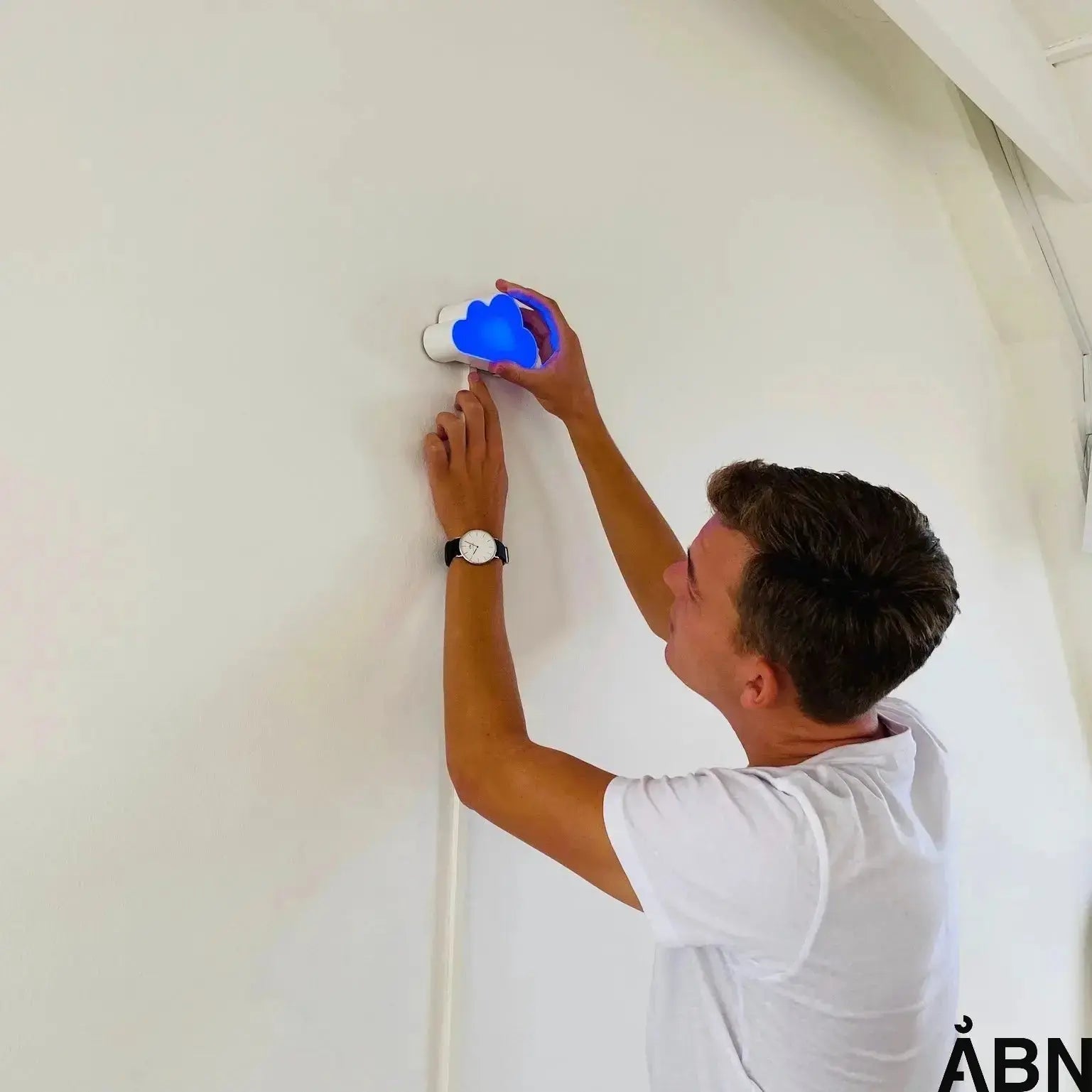




More than 80 percent of Danish school buildings experience periods of elevated CO₂ levels, which can impair both well-being and learning. As a healthy indoor climate is high on the agenda, systematic monitoring of CO₂ levels gains new importance. Here you will find clear steps to easily choose and use the right meters, place them optimally, and act on data to improve air quality in both schools and public institutions.
| Key Point | Explanation |
|---|---|
| 1. Choose accurate CO2 meter | An accurate CO2 meter is essential for monitoring air quality and ensuring a healthy indoor climate. |
| 2. Optimal meter placement | Place the meter centrally in the room to get representative measurements, away from direct air currents. |
| 3. Regular calibration | Calibrate the sensor regularly to maintain accurate measurements and performance. |
| 4. Perform systematic measurements | Measure CO2 levels at different times to identify patterns and air quality issues. |
| 5. Document and analyze data | Create a structured archive for measurements and analyze the results to implement improvements. |
When selecting the optimal CO2 meter for your building, there are several important factors to consider. A good CO2 meter is crucial for ensuring a healthy indoor climate and improving air quality. Precise sensor technologies can provide you with real-time data on air quality, which is essential for making the right decisions.
When evaluating different CO2 meters, you should focus on the following key criteria: sensor response time, precision, user-friendliness, and reporting capabilities. Some CO2 meters offer advanced features such as color-coded indicators, making it easier to read CO2 levels. Choose a meter that fits your specific building's needs, whether it's an office, school, or other public institution.
Among the most important features is the ability to export data, which allows you to document and analyze air quality over time. Some models offer wireless connectivity and app integration, which can significantly simplify monitoring.
Professional tip: Invest in a CO2 meter with automatic calibration to ensure continuous accuracy without tedious manual adjustments.
Here's a quick overview of key features of CO2 meters and their importance for the indoor climate:
| Feature | Description | Effect on indoor climate |
|---|---|---|
| Automatic calibration | Self-adjusts for accuracy without manual supervision | Consistent, reliable measurements |
| Data export | Ability to transfer data to digital systems | Easy documentation and analysis |
| App integration | Monitoring and access to measurements via smartphone | Quick insights, remote access |
| Color-coded indications | Visual warning of poor indoor climate | Quick response to problems |
When placing your CO2 meter in a room, there are several important considerations that can ensure precise and reliable measurements. Strategic placement of the meter is crucial for obtaining accurate results regarding air quality.
It is important to choose a location that represents the general air quality in the room. Place the meter in the center of the occupied zone, typically between 1.2 and 1.8 meters high, where people usually spend their time. Avoid placing it near windows, doors, ventilation systems, or other areas with direct air currents, as this can distort measurement results and give a misleading picture of the actual air quality.
Be aware of the room's specific characteristics. In offices, you should place the meter centrally, while in classrooms, several meters may be needed to cover the entire area. Avoid direct sunlight, heat sources, and areas with high air circulation, which can affect the accuracy of the measurements.
Professional tip: Regularly move your CO2 meter around the room to get a more complete picture of air quality and ensure representative measurements.
Here is a comparative overview of CO2 meter placement in different room types:
| Room Type | Recommended placement | Special considerations |
|---|---|---|
| Office | Middle of the occupied zone | Avoid near ventilation |
| Classroom | Several central points | Cover the entire area |
| Meeting room | Opposite the entrance door | Consider with many participants |
Proper calibration of your CO2 sensor is crucial for ensuring accurate and reliable air quality measurements. Calibration with reference gases is an important process that guarantees precise results in connection with indoor climate monitoring.

Most modern CO2 sensors offer automatic calibration, but it is still important to understand the basic principles. Choose a quiet area without direct air currents, and make sure to keep the sensor clean and free of dust or dirt that can affect the accuracy of the measurements. Some sensors require manual calibration using specific reference gases within different concentration ranges.
Be aware that calibration is not a one-time action. Regular maintenance and inspection are necessary to maintain the sensor's performance. Check the manufacturer's instructions for specific guidance on calibration frequency and method, as this can vary depending on the sensor type and application area.
Professional tip: Always keep a logbook of your sensors' calibrations so you can track any changes in measurement accuracy over time.
Regular CO2 measurements are crucial for ensuring a healthy indoor climate and identifying potential air quality problems in time. Systematic monitoring of CO2 levels provides you with detailed insight into air quality in different rooms and at different times.
Take measurements at different times of the day and in different rooms to get a complete picture of air quality. Pay special attention to areas with high human activity such as meeting rooms, classrooms, and open-plan offices. Use both stationary and portable meters for a thorough analysis. Document your results systematically so you can identify patterns and potential improvement efforts over time.
Remember to take measurements under consistent conditions to ensure comparability. Pay particular attention to factors such as occupancy rates, ventilation conditions, and activity levels in the room. Repeat measurements at regular intervals to track any changes and assess the effect of implemented indoor climate improvements.
Professional tip: Create a digital spreadsheet to record and compare your CO2 measurements so you can easily track the development of air quality over time.
After performing your CO2 measurements, the next critical step is to systematically analyze and document the results. Correct verification of documentation data ensures credibility and the possibility of future evaluation.
When reviewing your CO2 measurement results, pay attention to limit values and deviations. Compare the measurements with recommended indoor climate standards and identify areas where air quality can be improved. Create a structured digital archive with the date, time, location, measured values, and any notes for each measurement. This allows you to track changes over time and document the effect of any implemented improvements.
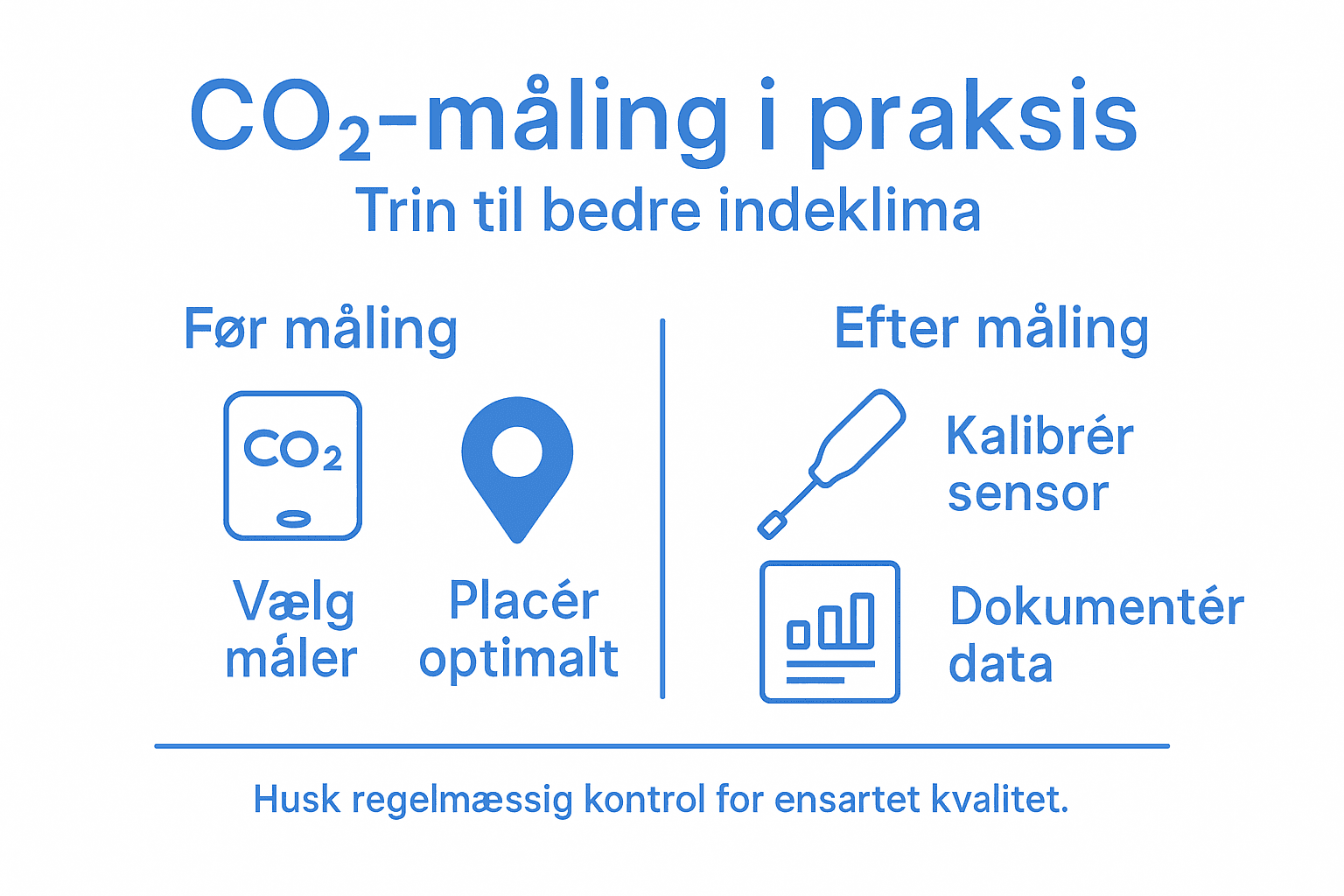
Be thorough and consistent in your documentation. Save the results in a format that can be easily shared and analyzed, such as a spreadsheet or database. Consider including additional contextual information such as the number of people in the room, ventilation conditions, and other relevant environmental factors.
Professional tip: Use color-coded graphs or diagrams to quickly visualize CO2 level changes and identify immediate areas for action.
After collecting CO2 measurement data, the next crucial step is to thoroughly analyze the results and identify concrete opportunities for improvement. Strategic data analysis and CO2 reduction initiatives provide a solid basis for making informed decisions.
Review your collected data focusing on patterns and repeated exceedances of CO2 limit values. Identify specific rooms or time periods with poor air quality. Consider immediate measures such as improved ventilation, adjusting occupancy rates, or implementing air purification systems. Compare your data with recommended indoor climate standards and prioritize areas where the potential for improvement is greatest.
It is important to document and follow up on your implemented improvements. Repeat measurements after changes have been made to verify the effect and ensure continuous improvement of the indoor climate. Create a dynamic system where data collection, analysis, and improvement are an ongoing process.
Professional tip: Involve employees or users of the premises in the process and establish a feedback mechanism that supplements your CO2 measurement data with subjective experiences of air quality.
Measuring CO2 correctly and acting on the results is crucial for ensuring a healthy and comfortable indoor climate in schools, offices, and public institutions. The article focuses on the challenge of accurate measurements, correct sensor placement, and the value of continuous monitoring to identify and improve air quality. When faced with challenges such as calibration, documentation, and data analysis, it can seem overwhelming to find the right tools to support effective efforts.
With Skyen, you get a user-friendly and intelligent platform that gathers measurements of CO₂, TVOC, humidity, light, noise, and temperature in one place. Here you can follow the development of the indoor climate in real-time and make proactive decisions based on data from precise sensors. Our solution simplifies documentation and analysis work, so both managers and users can easily take responsibility for a better working environment and a healthier indoor climate.
Take control of the indoor climate today and achieve the best results by combining your knowledge from the article with our innovative sensors and monitoring tools. Visit https://aabn.io/products/skyen and experience how you can make air quality more visible and manageable in your institution or company. Don't wait to create healthy environments for learning and work – start your improvement journey now.
Choose a CO2 meter based on factors such as sensor response time, precision, and user-friendliness. Also check for features like automatic calibration and data export to ensure continuous accuracy.
Place the meter centrally in the room, typically between 1.2 and 1.8 meters high, avoiding direct air currents from doors and windows. This ensures that the meter represents the general air quality.
Calibrate your CO2 sensor by ensuring it is clean and free of dust. Follow the manufacturer's recommendations for manual calibration, and record calibration intervals to maintain accurate measurements.
Perform regular measurements in different rooms and at different times of the day to get a comprehensive picture of air quality. Aim to document measurements at least weekly to detect patterns and problems.
Analyze your measurement data by identifying exceedances of CO2 limit values and focus on areas with poor air quality. Implement improvements such as better ventilation and repeat measurements after changes to evaluate the effect.
Create a structured digital archive where you record the date, time, location, and measured values. Use color-coded graphs to quickly visualize changes over time and identify areas for action.