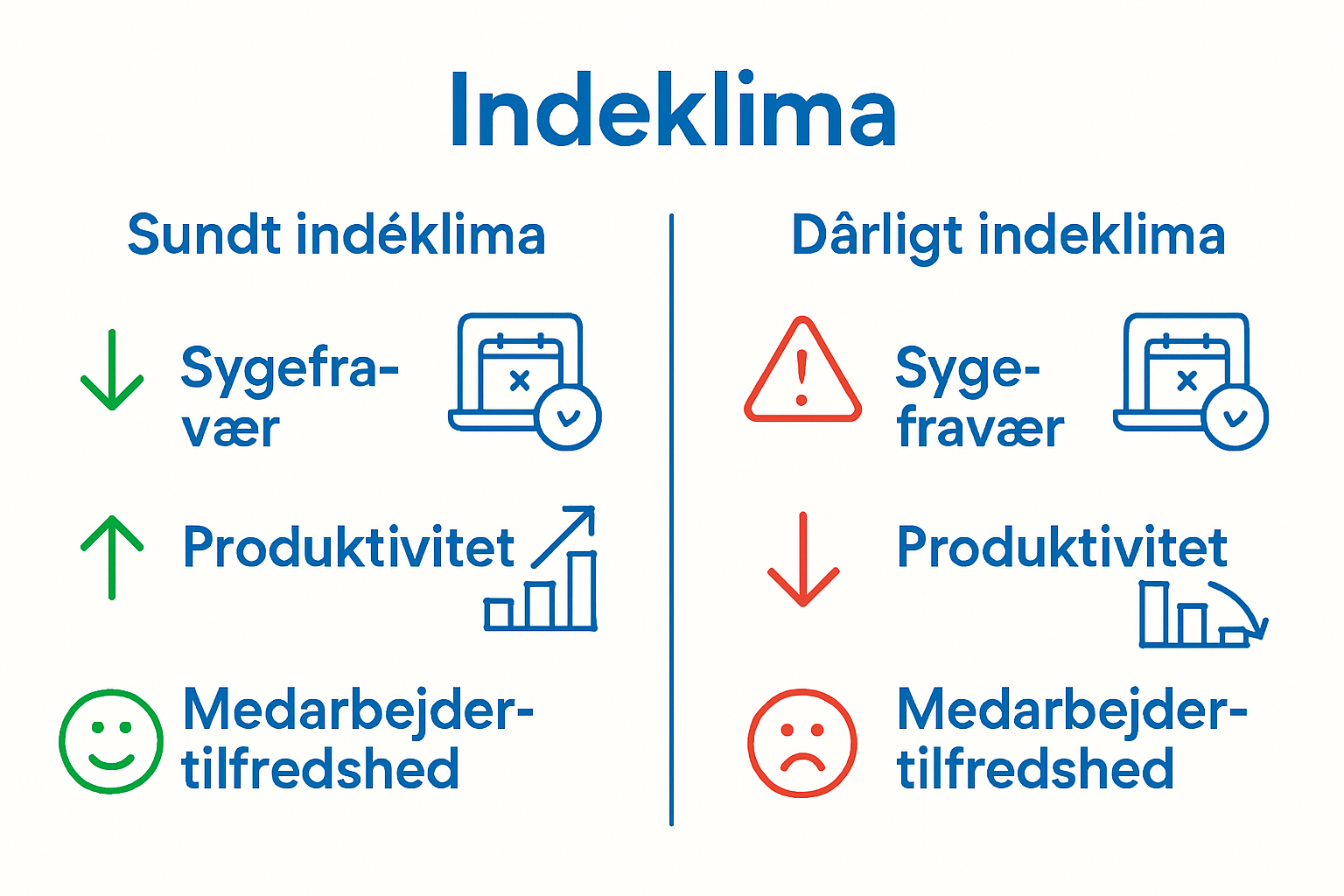
Over 30 percent of sick leave in Danish workplaces can be directly related to poor indoor climate. When the air feels heavy, the light is blinding, and the noise increases, both well-being and efficiency quickly decline. A balanced indoor climate is not only about comfort, but about the health and bottom line of the entire company. Here you will get concrete answers to why a healthy working environment makes a noticeable difference for both employees and the company's success.
Table of contents
Key points
| Point |
Details |
| The importance of indoor climate
|
A good indoor climate is a strategic investment that positively affects employee health and productivity. |
| Important indoor climate parameters
|
Air quality, temperature, humidity, noise level and lighting are essential for a healthy working environment. |
| Indoor climate monitoring |
Systematic measurement and monitoring ensures that the indoor climate meets legal requirements and optimizes employee well-being. |
| Implementation of improvements
|
Companies should actively invest in technical solutions such as ventilation systems and air quality improvements to create a better working environment. |
What does indoor climate mean in companies?
Indoor climate is about the overall environmental conditions in a workspace that directly affect the health, comfort and productivity of employees. It is not just about temperature, but a complex combination of factors such as air quality, temperature, humidity, noise levels and lighting.
According to ewii , a good indoor climate with optimal room temperature and CO2 levels is crucial for employee well-being and the company's earnings. This means that companies should not only consider indoor climate as an employee benefit, but as a strategic investment in employee efficiency and well-being.
The main components of a healthy indoor climate include:
-
Air quality : Low CO2 levels and minimal presence of harmful particles
-
Temperature : Comfortable and consistent room temperature between 20-22 degrees
-
Humidity : Optimal humidity between 40-60%
-
Noise level : Pleasant acoustic comfort without disturbing background noise
-
Lighting : Natural or artificial lighting that reduces eye strain
An optimal indoor climate can improve employees' ability to concentrate, reduce sick leave and create a more positive and productive work environment. It is fundamentally about creating physical settings that support people's natural needs for a healthy and comfortable work environment.
Important parameters for a healthy working environment
A healthy work environment is about more than just physical surroundings. It requires a thorough and systematic approach to ensuring employee well-being, health and productivity through careful monitoring and optimization of various indoor climate parameters.
When we talk about important parameters, we focus on six critical areas that together create the foundation for an optimal indoor climate. 7 important indoor climate measurements everyone should know shows how these parameters directly affect employee well-being and the company's overall performance.
The main parameters for a healthy working environment include:
-
Air quality : CO2 level, air purification and ventilation
-
Temperature : Consistent and comfortable room temperature
-
Humidity : Balance between dry and humid air
-
Noise level : Acoustic comfort and noise reduction
-
Lighting : Natural and artificial lighting
-
Ergonomics : Physical working conditions and layout
The right balance between these parameters can reduce sick leave, improve employee concentration and create a more productive and positive work environment. It is fundamentally about understanding that a healthy indoor climate is an investment in human resources, not just a cost.
Measurement and monitoring of indoor climate
Measuring and monitoring indoor air quality is a crucial strategic process for companies that want to ensure a healthy and productive working environment. It is not just about meeting regulatory requirements, but about actively identifying and improving the environmental factors that affect employee well-being and performance.

Indoor Climate Measurement: Everything You Need to Know About Monitoring emphasizes the importance of continuous and systematic monitoring of key indoor climate parameters. Modern technology makes it possible to make precise and continuous measurements that provide detailed insight into the workplace's environmental conditions.
The most important aspects of indoor climate measurement include:
-
Air quality measurements : CO2 level, particle concentration and air circulation
-
Temperature monitoring : Detection of temperature fluctuations and comfort zones
-
Humidity and acoustic measurements : Checking humidity and noise levels
-
Lighting analysis : Assessment of natural and artificial lighting
-
Ongoing data collection : Continuous recording and analysis of environmental parameters
Through systematic measurement and monitoring, companies can not only improve the working environment of their employees, but also achieve significant benefits such as reduced sick leave, increased productivity and better well-being. It is about transforming invisible environmental factors into concrete, manageable improvement potentials.
Legal requirements and guidelines for companies
Legal requirements and guidelines for indoor climate in Danish companies are complex and extensive, with the primary purpose of ensuring employee health, safety and well-being in the workplace. These regulations are designed to create uniform standards that protect employees' physical and mental well-being through clear, measurable criteria for the working environment.
Regulations for indoor climate in the workplace show that the legislation places specific requirements on companies regarding air quality, temperature, noise levels and ergonomic conditions. According to the Danish Working Environment Authority , the authorities emphasize that lifestyle factors such as smoking also have an impact on the working environment and may be subject to specific restrictions.
The main areas of regulatory requirements include:
-
Air quality : Limit values for CO2, ventilation and particle pollution
-
Temperature conditions : Acceptable temperature ranges and climate control
-
Noise level : Maximum noise limits and protective measures
-
Lighting conditions : Requirements for light intensity and light quality
-
Ergonomics : Standards for workplace design
-
Smoking policy : Restrictions and prohibitions on smoking indoors
For companies, adhering to these guidelines is not just about legal compliance, but about creating a healthy, productive and respectful work environment that prioritizes employee well-being and the company's overall performance.
Risks of poor indoor climate and typical mistakes
Poor indoor air quality is much more than just an unpleasant experience - it is a potential health threat with far-reaching consequences for employee well-being and corporate productivity. When the basic environmental conditions in a workspace fail, it can trigger a chain reaction of negative health and work consequences.
Report: The importance of air quality meters for sick leave shows how poor indoor air quality can directly impact employee health and the company's bottom line through increased sick leave and reduced performance. The most critical risks associated with an inadequate indoor air quality include:
Main risks of poor indoor climate:
Typical mistakes that lead to poor indoor climate include inadequate ventilation, uncontrolled temperature, high CO2 levels and insufficient humidity. These problems may seem small, but have the potential to create significant challenges for both employees and the company’s overall performance. The solution lies in proactive monitoring, continuous improvement and a strategic approach to indoor climate management.
Practical solutions and improvement measures
Improving the indoor climate requires a systematic and holistic approach, where companies actively work to identify and implement effective solutions. It is not just about technical adjustments, but about creating an overall environment that supports employee health and well-being.
How to effectively improve indoor climate emphasizes the importance of a strategic and targeted effort, where various technical and organizational measures interact. The most effective improvement measures focus on the following key areas:
Practical solutions for improving indoor climate:
The ultimate solution lies in a continuous and data-driven approach, where companies continuously measure, evaluate and adapt their indoor climate efforts. By combining technological solutions with employee engagement, companies can create a healthy, productive and inspiring work environment.
Take control of your business' indoor climate with intelligent solutions
Poor indoor climate can lead to increased sick leave and lower productivity as discussed in the article. For the company, it is crucial to monitor and improve key parameters such as CO2, temperature and humidity to ensure employee well-being and efficiency. This requires modern sensors and continuous data collection where precision and user-friendliness are in focus.
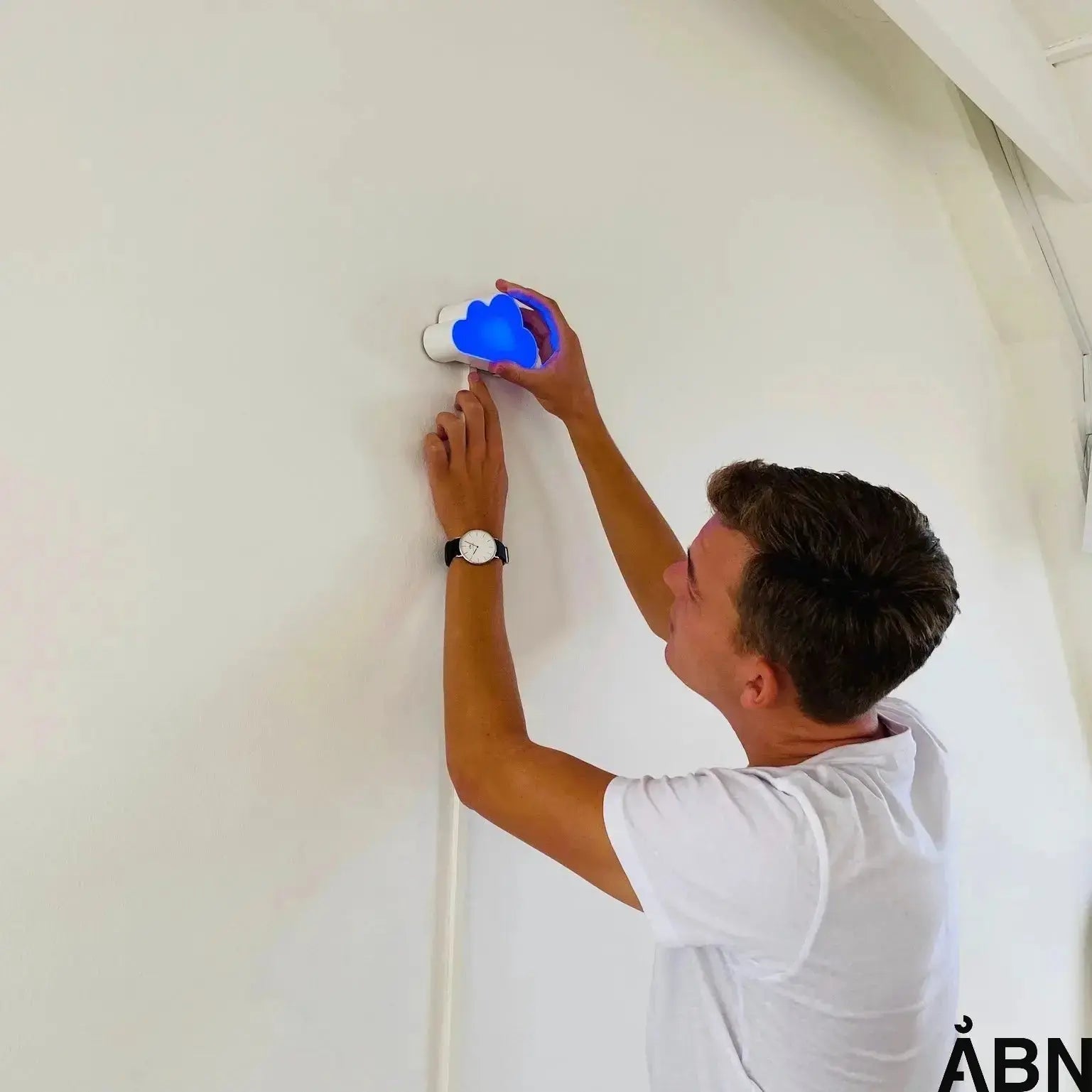
With the Cloud, you get a complete solution for continuous monitoring of the indoor climate in the workplace. The system measures important environmental factors and helps you detect problems early. Avoid typical mistakes such as insufficient ventilation and temperature fluctuations and create a healthy working environment with better concentration and fewer sick days.
Start improving your indoor climate now by exploring our easy-to-use sensor packages and learn more about effective indoor climate monitoring at https://aabn.io . Take control of your indoor climate today to ensure a healthy and productive workplace.
Frequently Asked Questions
What is indoor climate in companies?
Indoor climate refers to the environmental conditions in a workspace, including air quality, temperature, humidity, noise levels, and lighting, which affect employee health and productivity.
How can the indoor climate in the workplace be improved?
Improvements can include the installation of modern ventilation systems, intelligent climate control, the use of air purifiers, as well as activities to control noise levels and create comfortable working conditions.
What parameters should be monitored to ensure a healthy indoor climate?
Key parameters include air quality (CO2 levels, particle concentration), temperature, humidity, noise levels and lighting conditions. Regular monitoring of these factors is essential to ensure employee well-being.
What are the health risks of poor indoor air quality?
Poor indoor air quality can lead to frequent respiratory infections, headaches, difficulty concentrating, allergic reactions and chronic fatigue, as well as negatively impact productivity.
Recommendation