Imagine a classroom on a warm June day. The sun is shining through the windows, the air is still, and the temperature is creeping up above 26 degrees. The students become restless, their concentration drops, and the teacher struggles to keep their attention. Unfortunately, this scenario is not uncommon in Danish schools – and it is a problem. Excessively high temperatures in teaching environments affect well-being, health, and learning.
But it doesn't have to be that way. In this article, we delve into how to prevent temperature fluctuations in schools – and thus create better conditions for both students and teachers. We look at concrete solutions, strategies and technologies that can make a noticeable difference. And we show how you as a leader, facility manager or engaged parent can help shape the healthy learning environments of the future.
Why is temperature fluctuations a problem at school?
A stable and comfortable indoor climate is crucial for children's learning. According to Realdania and DTU's research, high temperatures directly affect students' concentration, energy levels and ability to learn. When the temperature exceeds 22-23 °C, many people begin to feel uncomfortable - and at even higher temperatures it becomes directly harmful to health, especially for children with asthma or other respiratory diseases.
It's not just about hot summers. Temperature fluctuations can also be a problem in the winter months – for example, when ventilation systems are not set correctly, or when overheating occurs in rooms with poor air circulation.
Climate change exacerbates the problem
Denmark's climate is changing. According to DMI , the average temperature has increased by 1-1.5 degrees over the past few decades. This means more hot days, more frequent heat waves and longer periods of heat – also in the spring and autumn months. Schools must therefore prepare for a future where temperature fluctuations will become more extreme and unpredictable.
5 effective ways to prevent temperature fluctuations at school
1. Intelligent ventilation and temperature control
Ventilation is the heart of any good indoor climate. An effective ventilation system doesn’t just provide fresh air – it also helps regulate the temperature. When the air circulates correctly, heat build-up and cold bridges are avoided. But this requires that the system is correctly dimensioned, maintained and adjusted to the school’s usage pattern.
At ÅBN, we work with solutions that make it possible to visualize and understand the indoor climate in real time. With our intuitive sensors and dashboards, schools can gain insight into how ventilation is working – and where adjustments are needed. This makes it easier to act proactively and ensure a stable temperature in the classrooms.
Read more about our technology on the Inside page .
2. CO₂ monitoring as a behavioral driver
The CO₂ level in a room is a good indicator of whether ventilation is adequate. When many people are in a room, CO₂ rises quickly – and so does the temperature. By installing CO₂ sensors that provide visual or auditory feedback, you can change the behavior of both students and teachers.
A green light signals that everything is OK. A red light means it's time to open the window or activate the ventilation. This type of behavior change is simple but effective – and it creates a shared understanding of how to take care of the indoor climate together.
You can read more about documented behavior change here .
3. Strategic sun protection and daylight regulation
The sun's heat is one of the primary sources of overheating in classrooms – especially in buildings with large south- and west-facing windows. Here, it is crucial to consider solar shading as an integral part of the school's architecture and operations.
These can be automatic curtains, external blinds or intelligent systems that adjust the light according to the position of the sun. This way you get the best of both worlds: plenty of daylight without overheating.
4. Municipal strategy and long-term planning
Preventing temperature fluctuations should not be left to chance. According to the Danish Health Authority's prevention package, municipalities should prepare action plans for indoor climate – with a special focus on schools and institutions.
It's about considering indoor climate at all levels: from new construction and renovation to daily operations. A good strategy includes both technical solutions, user behavior and ongoing evaluation. And it must be rooted in both management and practice.
5. Technology that makes the indoor climate understandable
One of the biggest challenges in managing indoor climate is that it is invisible. You can’t see air quality or feel CO₂ – and many people only notice the problem when it’s too late. That’s why visualization is crucial.
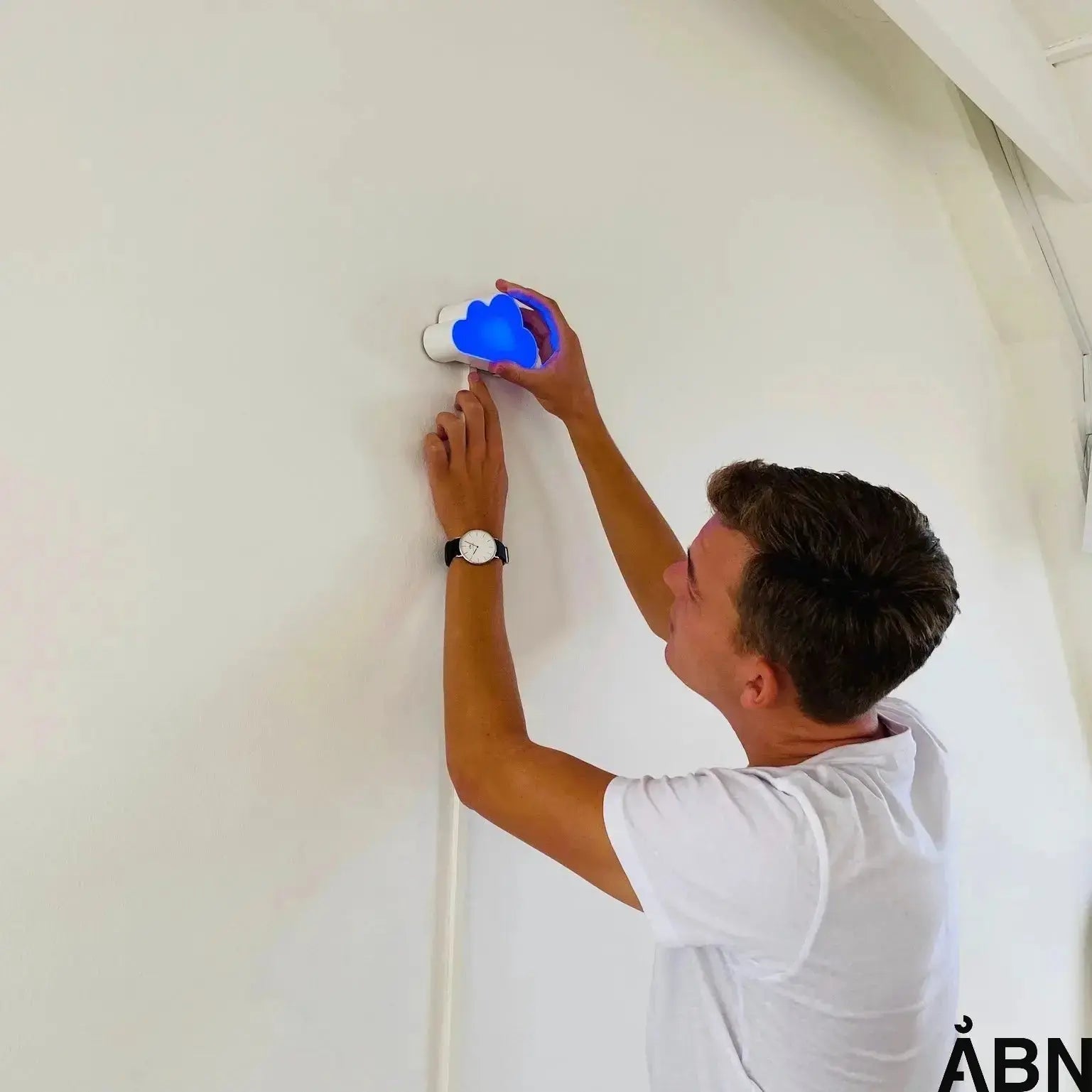
At ÅBN, we have developed The Cloud – a sensor that makes the indoor climate visible and understandable for both children and adults. The cloud changes color depending on temperature, CO₂ and humidity – and makes it easy to take action before problems arise. It is an educational and technological tool that creates ownership and awareness of the indoor climate in everyday life.
What does a future-proof school look like?
Preventing temperature fluctuations is not just about comfort – it is about creating healthy, safe and learning-friendly environments. A future-proof school:
- Has intelligent ventilation systems that adapt to the use of the room
- Uses CO₂ and temperature sensors to control behavior and operation
- Designed with a focus on daylight and sun protection
- Part of a municipal strategy for sustainability and health
- Uses technology to make indoor climate understandable and tangible
It's not science fiction – it's already possible today. And it starts with an awareness that indoor climate is not a luxury, but a necessity.
FAQ – Frequently asked questions about temperature fluctuations in schools
Why are temperature fluctuations particularly problematic in classrooms?
Because children are more sensitive to heat and bad air than adults. High temperatures can lead to fatigue, headaches, difficulty concentrating and impaired learning. A stable indoor climate is therefore crucial for both well-being and performance.
What is the optimal temperature in a classroom?
According to recommendations, the temperature in classrooms should be between 20 and 22 °C. At higher