Cart
0
Help for optimizing the indoor climate




Too high or low temperatures in a classroom can quickly be felt in both the concentration and energy levels of students and teachers. When comfort is lacking, learning and well-being decline, and indoor climate challenges are a widespread problem in over half of Danish schools, according to surveys. By measuring and regulating room temperature, facility managers can create an environment where students have the best conditions to perform and thrive.
| Point | Details |
|---|---|
| Optimal Temperature | The ideal room temperature is between 20-22 degrees to ensure a comfortable indoor climate. |
| Mental Performance | Temperatures outside the recommended range can reduce concentration and learning. |
| Monitoring | Regular temperature measurement is essential to maintain a healthy learning environment. |
| Legislation | Municipalities must follow guidelines for temperature standards in schools to ensure students' well-being. |
Room temperature is a crucial factor for our indoor climate, with a far greater significance than most people immediately imagine. Researchers have shown that temperature is not just about physical comfort, but directly affects our mental performance, concentration ability, and general health.
The optimal room temperature is typically between 20-22 degrees, but can vary depending on the season, activity, and individual preferences. Thermal comfort is not just about the temperature itself, but also about the interaction between humidity, air circulation, and personal sensitivity. The Danish Health Authority recommends paying attention to how temperature conditions can affect the occurrence of harmful microorganisms such as mold and dust mites.
In educational environments, the importance of temperature is particularly critical. Too low or too high temperatures can lead to decreased concentration, fatigue, and reduced learning. Studies show that students perform best at comfortable temperatures, where the body does not use unnecessary energy to regulate body temperature. Therefore, continuous measurement and adjustment of room temperature is a crucial strategy to create optimal learning conditions.
Pro-tip: Install a simple thermometer in the classroom and take regular measurements to ensure a comfortable and productive indoor climate.
Temperature measurement is a complex technical discipline with several advanced methods and solutions. Industrial temperature measurement systems use specialized sensors such as thermocouples and resistance thermometers, which can be inserted into special thermowells to ensure precise and reliable measurements.
Technical solutions vary depending on the application area. Modern temperature measurement equipment includes digital sensors, wireless measurement systems, and advanced transmitters that can convert raw temperature data into usable digital signals. Thermal indoor climate analyses use sophisticated simulation programs such as BSim to calculate complex temperature conditions in buildings, enabling more precise regulation of the indoor climate.
Technological advancements have made temperature measurement more accessible and accurate. Intelligent sensors can now measure temperature with micro-degree precision and integrate data into central control systems, allowing facility managers to continuously monitor and optimize the indoor climate. These systems can identify temperature variations in real-time and enable quick adjustments to ensure optimal comfort.
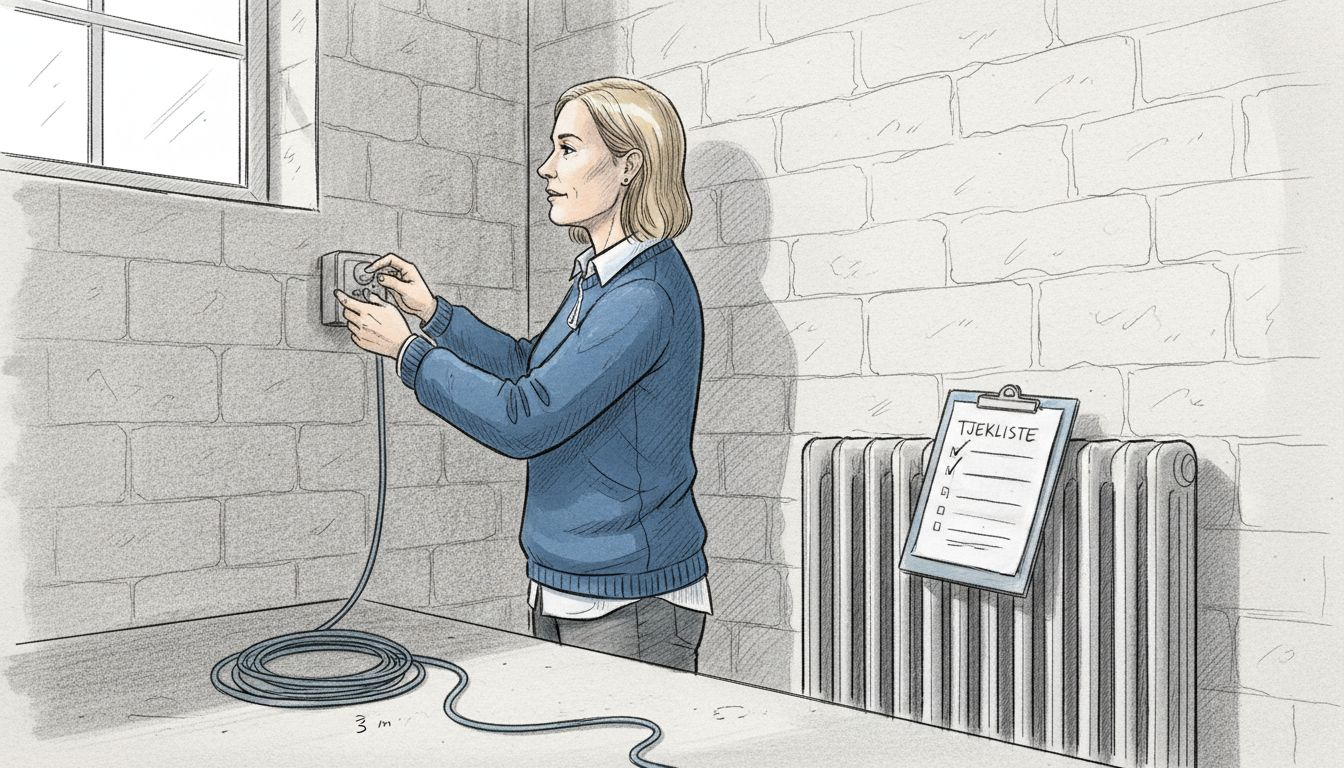
Pro-tip: Choose temperature measurement equipment with wireless data transfer and cloud integration to achieve continuous monitoring and rapid responsiveness.
Overview of measurement methods and their application:
| Measurement Method | Example | Area of Application | Advantage of the Method |
|---|---|---|---|
| Thermocouple | Industrial | Monitoring of hot pipe systems | Robustness and long lifespan |
| Resistance Thermometer | Residential/School | Precise measurement in classrooms | High accuracy in stable environments |
| Digital Sensors | Office/School | Wireless and cloud-based monitoring | Fast data collection and integration |
| Simulation Models | Building Design | Analysis of future temperature patterns | Possibility for indoor climate optimization |
Research studies on school indoor climate reveal serious consequences of inappropriate temperature conditions in educational environments. Temperature fluctuations can significantly impact students' learning, concentration, and general well-being, making it crucial to understand the specific effects.
At excessively high temperatures, students typically experience increased fatigue, reduced cognitive performance, and diminished learning capacity. The body's energy is spent on temperature regulation rather than mental processing, resulting in faster exhaustion and reduced attention. Bodily comfort is thus directly linked to mental well-being and learning potential.
Conversely, excessively low temperatures can lead to similar negative effects. Cold causes the body to expend energy to stay warm, which reduces mental capacity and increases the risk of physical discomfort. Studies show that temperatures below 20 degrees or above 26 degrees significantly impair students' performance by up to 20-30 percent, underscoring the importance of optimal temperature regulation in classrooms.
Pro-tip: Use mobile temperature monitors to continuously track classroom temperature conditions and make quick adjustments.
The Prevention Package for Indoor Climate constitutes the central legislative framework for temperature conditions in Danish schools. The Danish Health Authority has developed clear guidelines to ensure a healthy and safe learning environment, focusing on students' well-being and learning potential.
The legislative recommendations specify detailed requirements for temperature ranges. The temperature standard stipulates that classrooms should be kept at 20-22 degrees for sedentary activities and a maximum of 25 degrees for more active tasks. The Folketing's bill further demands municipal action and the establishment of action plans to ensure continuous monitoring and improvement of the indoor climate.
Municipalities play a crucial role in implementing these recommendations. They are obliged to supervise ventilation systems, ensure compliance with temperature limits, and take necessary measures if an educational environment does not meet the established standards. This includes regular measurements of CO2 levels, temperature, and air quality, as well as prompt action upon identifying deviations.
Pro-tip: Obtain the latest municipal guidelines for indoor climate and conduct a thorough evaluation of your current temperature conditions.
Operational responsibility for school indoor climate typically rests with municipal facility management departments, which play a critical role in ensuring an optimal learning environment. This responsibility extends far beyond simply maintaining buildings and includes a holistic approach to indoor climate management.
The most common mistakes arise from a lack of systematic maintenance. Operational errors include insufficient cleaning of ventilation systems, lack of regular technical inspections, and insufficient training of personnel in indoor climate conditions. These omissions can lead to significant problems with air quality, temperature regulation, and thus students' learning and health.
An effective strategy requires continuous monitoring, clear procedures, and active user involvement. This involves establishing fixed routines for temperature measurement, documenting indoor climate conditions, and prompt action upon identifying deviations. Management should ensure that all employees understand the importance of indoor climate considerations and have the competencies to act appropriately.
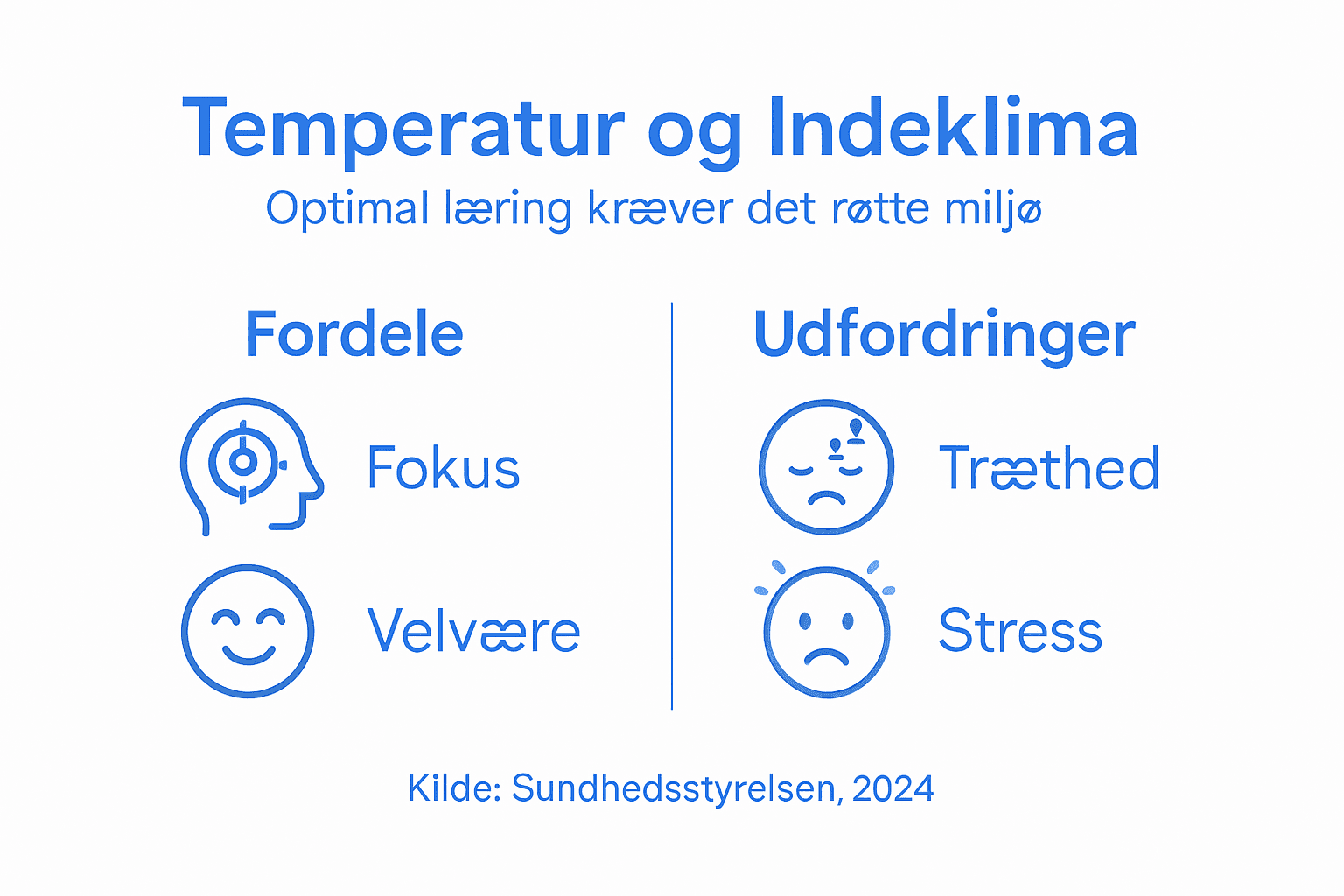
Here is a comparison of typical errors and their consequences for the school's indoor climate:
| Error Type | Typical Cause | Consequence for Indoor Climate | Prevention Strategy |
|---|---|---|---|
| Lack of Maintenance | Overlooked service schedule | Increased temperature fluctuations | Established service intervals |
| Lack of Staff Training | Unclear responsibilities | Poor air quality | Ongoing training programs |
| Insufficient Documentation | Manual routines | Delayed error correction | Digital log and reporting |
| Irregular Temperature Measurement | Lack of equipment | Uncertain comfort level | Fixed routine with measuring instrument |
Pro-tip: Establish a systematic annual cycle for indoor climate control with fixed monthly reviews and clear assignment of responsibilities.
Room temperature significantly influences students' concentration and well-being, as described in the article. The challenge of maintaining the recommended thermal comfort of 20-22 degrees can lead to reduced learning capacity and fatigue in educational environments. Therefore, it is important to have precise and continuous temperature measurements, as well as integration with other indoor climate parameters such as CO₂ and humidity.
With solutions from aabn.io, schools and institutions gain easy access to intelligent sensors that ensure exact temperature registration and easy monitoring of the entire indoor climate. Our system supports wireless data transfer and cloud integration, making it easy to make quick adjustments when necessary. Avoid common operational errors and optimize the learning environment with a smart temperature control tool that is easy to implement.
If you want to ensure a healthy and productive indoor climate in your classrooms, start today by exploring our temperature measurement equipment SkYEN and gain full control over room temperature while strengthening students' learning conditions. Take the first step towards a better indoor climate at https://aabn.io/products/skyen.
The optimal room temperature for learning is typically between 20-22 degrees, as this level supports better concentration and mental performance.
Too high temperatures can lead to increased fatigue and reduced cognitive performance, while too low temperatures can reduce mental capacity and lead to physical discomfort, negatively impacting learning potential.
Thermal comfort refers to a state where temperature, humidity, and air circulation are comfortable for individuals, which is crucial for students to focus and learn effectively.
Schools can monitor temperature by installing digital sensors and temperature meters that allow for continuous monitoring and quick adjustments to the indoor climate.