Cart
0
Help for optimizing the indoor climate




Poor indoor air quality causes a high number of sick days each year in both schools and workplaces. Many people experience tired heads and low energy without realizing that air quality is often the culprit. A thorough indoor air quality measurement can reveal unexpected problems in everyday life and make a noticeable difference to health and well-being. Here you will gain insight into measurement methods, the most important concepts and how to avoid typical mistakes when assessing indoor air quality.
The most commonly used measurement parameters for indoor climate
Legislation and standards for indoor climate measurement in Denmark
Benefits, challenges and typical errors in indoor climate measurement
| Point | Details |
| The importance of indoor climate measurement | Creates healthier and more productive indoor environments by monitoring air quality. |
| Key measurement parameters | Includes CO₂ levels, TVOC, humidity, temperature, noise levels and lighting conditions, all of which affect well-being and health. |
| Legislation and standards | Regulates the indoor climate and ensures health with specific limit values for air quality and ventilation. |
| Advantages and challenges | Improves health and productivity, but requires correct methods and equipment to avoid typical mistakes. |
Indoor air quality measurement is a systematic process of assessing and analyzing the air quality in indoor environments such as schools, offices, and other workplaces. This process is not just about measuring temperature or humidity, but about creating a healthier and more productive indoor environment.
Key concepts within indoor climate measurement include:
CO₂ level : Measures the amount of carbon dioxide in the air, which can indicate inadequate ventilation
TVOC (Total Volatile Organic Compounds) : Records the amount of volatile organic compounds
Humidity : Displays the relative humidity, which affects comfort and health
Temperature : Measures the perceived temperature in a given room
According to ÅBN's report on the importance of air quality meters, poor indoor climate can directly affect sick leave in schools and workplaces. Measurements of these parameters provide insight into air quality and enable concrete improvements.

To conduct an effective indoor climate measurement, specialized equipment is required that can continuously monitor and record the various parameters. Simple indoor climate measurement with INSIDE+ shows how modern technology can simplify this process, so that both schools and businesses can easily monitor their indoor climate.
When it comes to indoor air quality measurement, there are several key parameters that experts and healthcare professionals consistently examine to assess the air quality of indoor environments. These parameters provide a detailed picture of the conditions that affect our daily well-being and health.
The main measurement parameters include:
CO₂ level : Indicates air exchange and potential overcrowding
Temperature : Measures perceived thermal comfort
Relative humidity : Affects people's physical well-being
TVOC (Total Volatile Organic Compounds) : Detects potentially harmful chemical vapors
Noise level : Measures acoustic load in the room
Lighting conditions : Assesses light quality and its impact on human performance
Legislation and temperature limits play a crucial role in understanding these measurement parameters. Authorities have set specific standards that define acceptable levels for each parameter, helping organizations ensure a healthy indoor climate.
Experts recommend continuous monitoring of these parameters.
By actively using curtains and shutters for temperature regulation, companies and institutions can actively improve their indoor climate and create more comfortable and productive environments for employees and students.
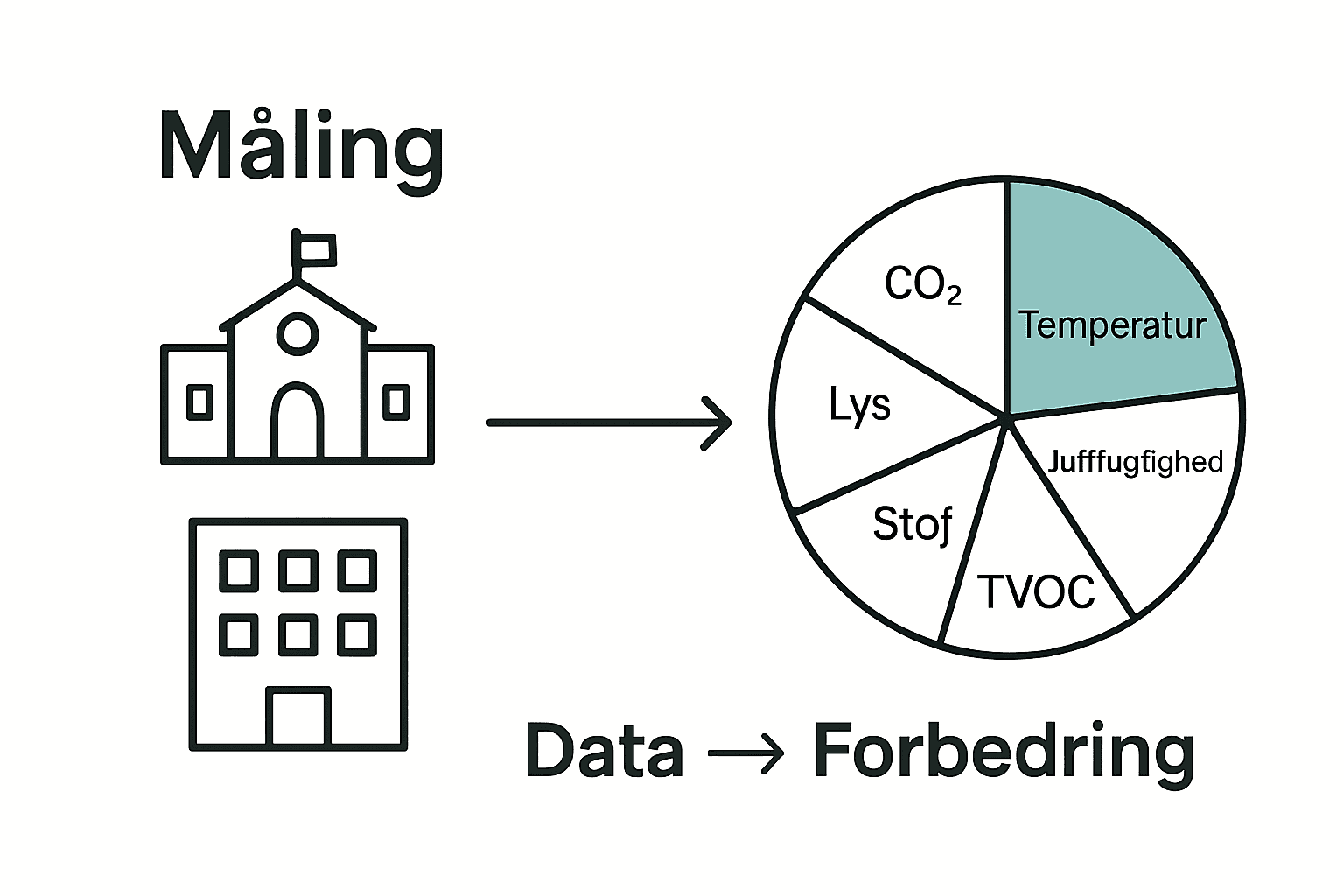
Indoor air quality measurement is a complex process that requires specialized equipment and precise measurement techniques. Modern technologies have made it possible to conduct detailed and precise measurements of indoor air quality using advanced sensors and data acquisition systems.
The main measuring equipment includes:
Multi-parameter sensors : Measures multiple air quality parameters simultaneously
CO₂ meters : Specifies the carbon dioxide concentration in the air
TVOC detectors : Detects volatile organic compounds
Temperature and humidity sensors : Assesses thermal conditions
Noise meters : Measures acoustic load
Light intensity meters : Evaluates light quality
How to Measure Your Indoor Climate with the SKY illustrates how modern technology can simplify and streamline indoor climate measurements. These systems enable continuous monitoring and data collection, allowing organizations to make informed decisions about their indoor environment.
Experts recommend a combined approach, using data from the SKY as a guide to action . This involves not just collecting data, but actively interpreting and implementing improvements based on the collected measurement results.
Indoor climate measurement in Denmark is subject to a complex regulatory framework aimed at ensuring health and well-being in public and private buildings. The authorities have established detailed guidelines that define acceptable standards for air quality, temperature, humidity and other key parameters.
The primary regulatory aspects include:
The Working Environment Act : Regulates indoor climate requirements in workplaces
Building regulations : Sets technical standards for ventilation
The Danish Health Authority's recommendations : Defines limit values for various environmental parameters
Building class 2020 : Sets stricter requirements for indoor climate in new construction
CO₂ and ventilation: Understanding the connection shows how legislation specifically focuses on ventilation quality as a key parameter for good indoor climate. Authorities require documentation and continuous monitoring of air exchange rates in different building types.
Activate Awareness: React to Data from the SKY emphasizes the importance of active data interpretation. Modern legislation calls not only for measurement, but also for action based on collected indoor climate data, creating a dynamic and responsive approach to building operations and human health.
Indoor climate measurement is a complex process with numerous potential benefits and corresponding challenges. When systematically and correctly implemented, it can improve health, productivity and general well-being in institutions and workplaces.
Main benefits include:
Health promotion : Identifies potential health risks
Productivity Improvement : Creates optimal working and learning environments
Documentation : Enables evidence-based decision-making
Economy : Reduces costs due to sick leave and poor indoor climate
10 Challenges with School Indoor Climate – and How to Solve Them with Data highlights the most critical challenges. Typical errors in indoor climate measurement include insufficient sampling, uncalibrated equipment, and lack of systematic data follow-up.
Guide: How to measure poor indoor air quality emphasizes the importance of continuous monitoring and proactive action. Successful indoor air quality measurement requires not only technical skills, but also a strategic approach to data interpretation and implementation of improvements.
Poor indoor air quality in schools and workplaces can lead to increased sick leave and reduced well-being among both students and employees. When you read about the importance of parameters such as CO₂ levels, TVOC and humidity in indoor air quality measurement, it becomes clear how crucial accurate measurement and monitoring are to creating a healthy environment. Many people experience challenges in measuring correctly and translating data into concrete improvements.
At AABN you will find user-friendly sensors and advanced measuring equipment that make it easy to monitor all the important indoor climate factors continuously. With our technological solutions, you can act on real-time data and optimize the indoor climate effectively. Read more about how you can measure your indoor climate with SKYEN and get a practical guide to improving the indoor climate. Seek solutions that ensure better learning and working environment today and experience the noticeable difference for both health and productivity.
Take the next step towards fresher and healthier air by visiting AABN's website and find the perfect solution for your school or workplace.
Indoor climate measurement includes several parameters such as CO₂ level, temperature, relative humidity, TVOC (Total Volatile Organic Compounds), noise level and lighting conditions.
Indoor climate measurement is important because it can identify health risks, improve productivity and create a better indoor climate, which can reduce sick leave and increase well-being.
Typical measurement equipment includes multi-parameter sensors, CO₂ meters, TVOC detectors, temperature and humidity sensors, noise meters and light intensity meters.
Effective monitoring requires the use of advanced sensors to continuously measure air quality and analyze data regularly to make informed decisions about improvements.