Cart
0
Help for optimizing the indoor climate




Poor indoor air quality can reduce productivity by up to 10 percent and significantly increase sick leave. Many people experience challenges such as tired employees, headaches or a heavy indoor climate in Danish workplaces and schools. By mapping air quality and involving the entire organization, you not only get solutions to visible problems but also tools for lasting improvement that create a healthier indoor climate for everyone.
| Key point | Explanation |
|---|---|
| 1. Map the indoor climate thoroughly | Start by recording key measurement data for CO2, temperature and humidity to identify challenges. |
| 2. Set concrete goals | Define SMART goals for the indoor climate, such as a maximum CO2 level of 1000 ppm. |
| 3. Choose reliable sensors | Choose sensors that can measure multiple indoor climate parameters accurately and efficiently. |
| 4. Involve key stakeholders | Include management and employees to ensure broad support and commitment to the initiative. |
| 5. Monitor and adjust the policy | Review data regularly to assess the impact and make necessary adjustments to the strategy. |
When you begin implementing an indoor climate policy, it is crucial to understand your current situation. Mapping is about systematically identifying existing conditions and potential problems in your indoor environment. European trends in indoor climate show that thorough documentation is the key to effective improvement.
Begin the process with a comprehensive review. This involves measuring key parameters such as CO2 levels, temperature, humidity and noise levels. Use reliable measurement tools and take measurements at different times and locations to ensure representative data. Pay particular attention to areas with high human activity such as classrooms, offices or common areas.
Remember to document your findings thoroughly. Create a detailed overview with specific measurement results that can form the basis for your future efforts. Reports on the importance of air quality meters emphasize how important it is to have accurate data as a starting point for improvements. By systematically mapping, you will be able to identify specific challenges and subsequently design targeted solutions.
When working on implementing an indoor climate policy, it is crucial to define precise and measurable goals. The purpose is to create a systematic basis for improving the indoor climate through well-considered data collection and analysis. Simple indoor climate measurement with test procedures shows how important it is to choose the right parameters.
Your most important measurement parameters should include CO2 levels, temperature, humidity, noise levels and air quality. Each parameter provides unique insights into the overall indoor climate. Be specific by setting concrete limit values for each parameter, for example a maximum CO2 level of 1000 ppm in classrooms or an optimal room temperature between 20 and 22 degrees.
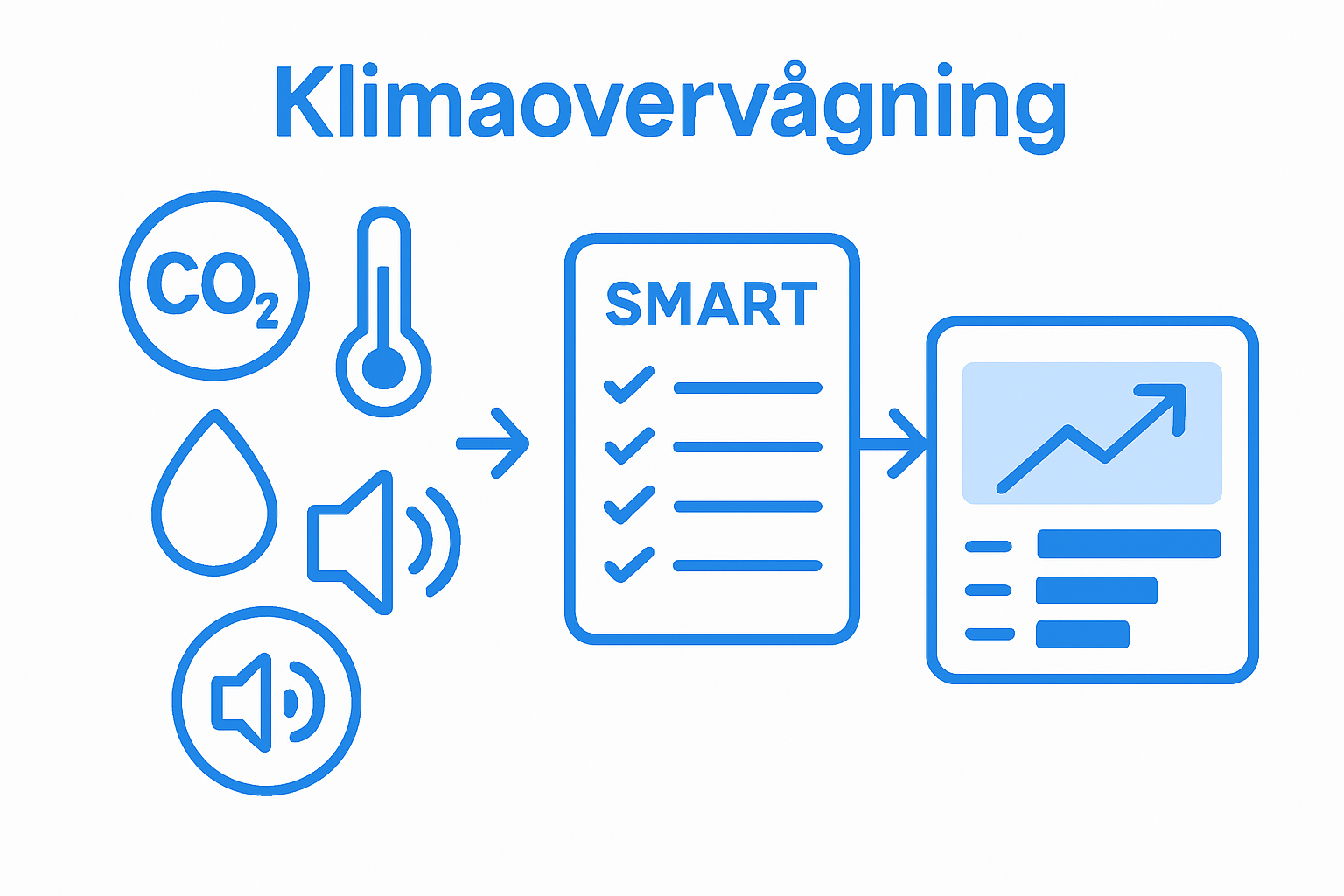
Remember that your goals should be SMART (specific, measurable, achievable, realistic and time-bound). By setting clear, quantifiable goals, you create a solid foundation for your indoor climate policy and enable ongoing evaluation and improvement of your efforts.
When choosing sensors for indoor climate measurement, it is crucial to find technology that delivers reliable and detailed data. Using advanced indoor climate sensors like SKYEN can give you a complete overview of your indoor climate quality.

Choose sensors that can measure multiple parameters simultaneously, such as CO2 levels, temperature, humidity, noise levels, and air quality. Make sure the sensors have high accuracy, easy installation, and the ability to collect data continuously. Also consider compatibility with existing systems and ease of use for your employees.
It’s important to choose implementation tools that not only collect data, but also help you interpret and act on the results. Look for solutions with user-friendly dashboards, automatic alerts, and recommendations for improvements so you can actively work on your indoor climate.
Experiences from Norway and Sweden on indoor climate initiatives emphasize the importance of systematic stakeholder involvement. Successful implementation of an indoor climate policy requires active participation from all relevant parties.
The start of a good process is to identify and involve key stakeholders from different organizational levels. This means management, employees, health and safety representatives, technical staff and possible external advisors. Create a multidisciplinary group that can contribute different perspectives and ensure a broad understanding of the effort.
Research projects at VIA University College show that successful implementation is about more than just technical solutions. Establishing clear communication channels, regularly updating on progress and making the results visible are crucial to maintaining commitment and support for your indoor climate policy.
Indoor climate measurement is about more than just data collection . It is about systematic evaluation and continuous improvement of your indoor climate policy through thorough analysis and response to the collected data.
Establish regular data review routines. For example, set up quarterly meetings where you review your indoor climate measurements together and identify patterns or recurring challenges. Look for specific parameters such as CO2 levels, temperature and humidity and assess whether they meet your original goals.
Enabling awareness through data response is crucial. When you discover deviations from your standards, you must not only record them but also act quickly. Implement concrete adjustments to your layout or ventilation systems and follow up afterwards to ensure that the changes have the desired effect.
Mapping and improving indoor climate requires more than good intentions. The challenge lies in identifying the right measurement parameters such as CO2, temperature and humidity, and ensuring reliable data collection. Many organizations experience difficulties in translating insights into concrete actions and keeping all stakeholders engaged. This is where advanced sensors and user-friendly tools come into the picture.
With SKYEN indoor climate sensors, you get accurate measurements that help you monitor your indoor climate continuously and make it easy to respond quickly to deviations. The sensors collect data on multiple parameters simultaneously and present them in clear dashboards, so you can anchor your efforts organizationally and adjust your policy on an ongoing basis. Do you want to ensure a healthy indoor climate for employees and students while experiencing fewer sick days and greater well-being? Visit aabn.io now and experience how modern indoor climate solutions can create visible results for your institution or company.
Get an overview, take control and implement successful solutions today.
To map the current indoor climate, you need to measure CO2 levels, temperature, humidity and noise levels. Use reliable measurement tools and document the results thoroughly so you have a clear overview of the existing conditions.
You should choose measurement parameters such as CO2 levels, temperature, humidity, noise levels and air quality. Set specific thresholds for each parameter to ensure that your goals are clear and measurable.
Choose sensors that can measure multiple parameters simultaneously and have high accuracy and ease of use. Make sure the sensors can also be integrated with existing systems so you can easily collect and analyze data.
Identify and engage key stakeholders from different organizational levels, such as management and employees. Create a multidisciplinary group and establish clear communication channels to ensure everyone has understanding and support for the effort.
Establish regular data review routines, such as quarterly meetings to analyze indoor climate measurements. Identify patterns and adjust your efforts if measurement results do not meet established goals.
The key steps include mapping existing conditions, establishing goals, selecting sensors, involving stakeholders, and monitoring effects. Follow this structure to ensure thorough and effective implementation.