Cart
0
Help for optimizing the indoor climate




High CO₂ levels can reduce concentration by up to 20 percent in classrooms, directly impacting both well-being and learning. As a facility manager in a Danish school, you are responsible for creating the best conditions for students and staff. With the right professional indoor climate consulting, you gain insights and solutions that make it possible to prevent problems and ensure optimal conditions for everyone in the building.
| Point | Details |
|---|---|
| Professional Indoor Climate Consulting | Aims to improve health and well-being in institutions through systematic analysis and intervention. |
| Core Activities | Investigations include air quality measurement, CO₂ analysis, and evaluation of ventilation systems. |
| Types of Consulting | Indoor climate consulting includes mapping measurements, detailed analyses, and continuous monitoring. |
| Implementation | Execution requires a systematic approach and staff involvement for effective improvement. |
Professional indoor climate consulting is about more than just measuring air quality. It is a comprehensive effort aimed at improving health and well-being in schools and institutions through systematic analysis and intervention. Indoor climate consultants work strategically to identify and solve complex indoor climate challenges.
When discussing professional consulting, it refers to a thorough and methodical approach. This typically involves the following core activities:
The report on the significance of air quality monitors shows that systematic indoor climate management can significantly reduce absenteeism. Consultants use specialized indoor climate monitors to create an evidence-based foundation for their recommendations.
Professional consulting ultimately aims to create optimal learning and working environments through data-driven solutions. This requires technical expertise, thorough analysis, and a holistic approach that views the indoor climate as an integral part of the building's overall health profile.
Pro-tip for leaders: Start with a thorough indoor climate mapping. The initial measurements provide the most important foundation for future improvements.
Indoor climate consulting encompasses various specialized methods for assessing and improving air quality in schools and institutions. Professional indoor climate measurements are a complex process that requires technical expertise and advanced equipment.
The main types of consulting and measurement methods include:
CO2 measurements form a central part of indoor climate consulting. These measurements provide important insights into air quality and ventilation conditions in buildings. Experts use advanced sensors that can detect even small changes in air composition.
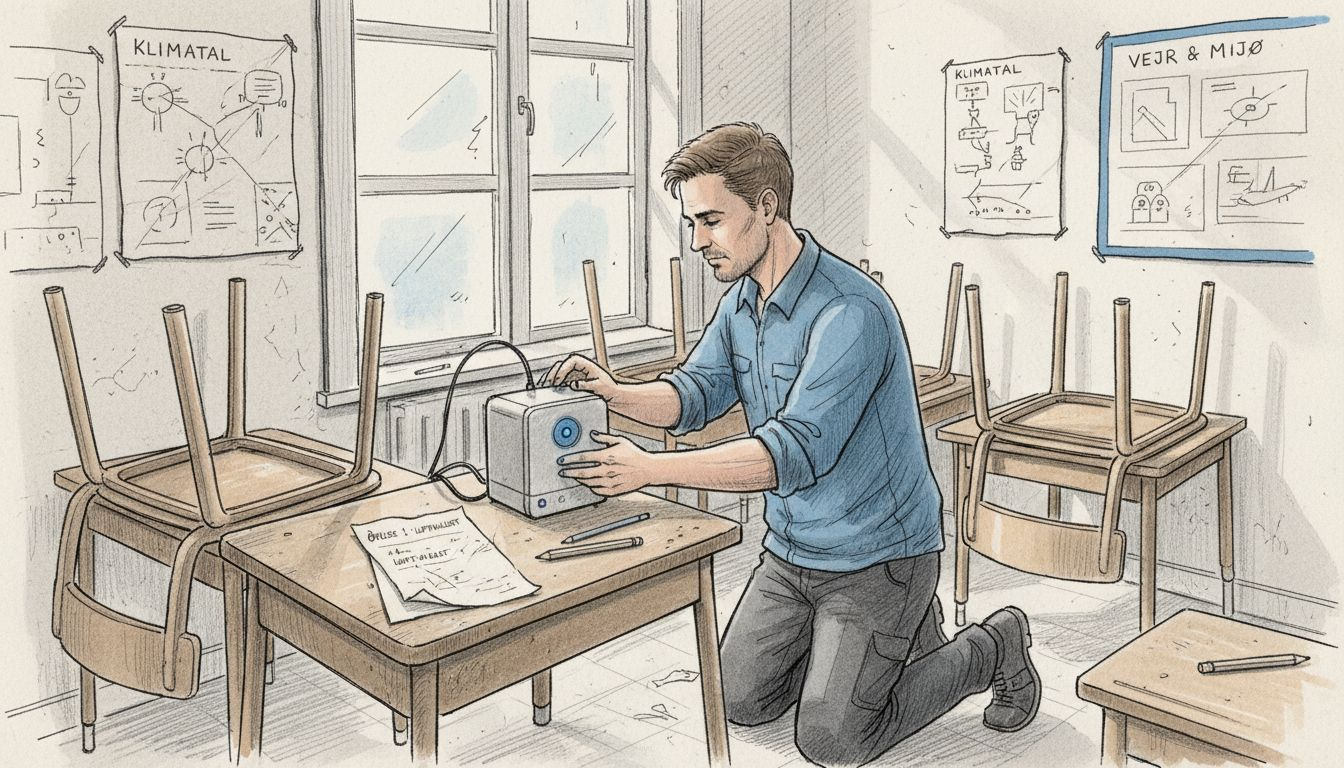
The consulting process is typically divided into several phases: initial investigation, data collection, analysis, recommendations, and follow-up. The goal is always to create the best possible conditions for learning and well-being through systematic improvement of the indoor climate.
Pro-tip for leaders: Always choose certified consultants with proven experience in institutional indoor climate. The quality of your consulting determines the quality of your improvements.
Here's a comparison of the most commonly used consulting and measurement methods:
| Method | Purpose | Benefit |
|---|---|---|
| Mapping measurements | Identify general problem areas | Quick status of indoor climate |
| Detailed analyses | In-depth understanding | Identifies specific sources |
| Continuous monitoring | Continuous data input | Detects trends and fluctuations |
| Behavioral analysis | Assess user influence | Supports behavioral change |
| Technical advice | Practical improvement measures | Tailored solutions |
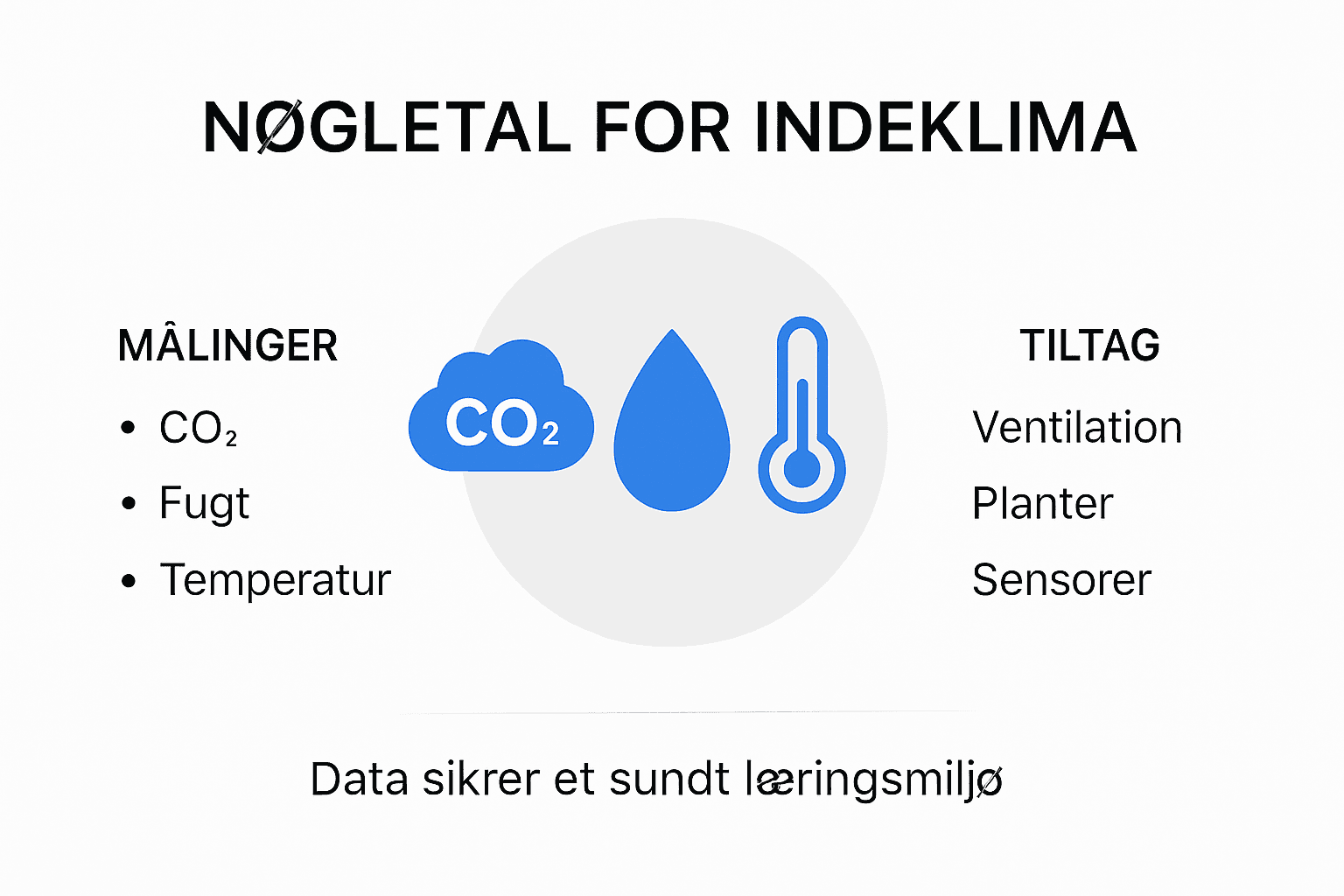
The quality of the indoor climate depends on several crucial parameters, of which CO₂ level, humidity, and temperature are the most important. CO₂ and ventilation play a central role in assessing a healthy indoor climate in schools and institutions.
Key measurement areas for indoor climate include:
Humidity can be stabilized through strategic methods, such as using specific plants or controlled ventilation systems. Optimal humidity is typically between 40-60%, which reduces the risk of both dehydration and mold growth.
There are clear legal limits for humidity levels that institutions must comply with. These guidelines ensure a healthy indoor climate and prevent potential health risks associated with inappropriate humidity levels.
Here is an overview of the key parameters for a healthy indoor climate and their impact:
| Parameter | Ideal Level | Effect on Indoor Climate |
|---|---|---|
| CO₂ concentration | Below 1000 ppm | High concentration leads to fatigue |
| Relative humidity | 40-60 % | Too high/low humidity causes health issues |
| Temperature | 20–22°C | Too low/high temps reduce comfort |
| Particle concentration | Low | Few particles reduce allergy risk |
| Noise level | Below 55 dB | Noise negatively affects concentration |
Pro-tip for leaders: Install intelligent sensors that continuously monitor your indoor climate. Early detection of imbalances can prevent long-term health problems and improve learning outcomes.
Implementing indoor climate improvements requires a systematic and strategic approach. Municipalities can find specific financing models to support these important projects in schools and institutions.
The implementation process typically includes the following key steps:
CO₂ levels can be prevented through strategic interventions, such as improved ventilation, regular breaks, and awareness of air quality. Successful implementation requires close collaboration between management, employees, and technical consultants.
Practical implementation involves translating technical recommendations into concrete, sustainable improvements that create an optimal learning environment. This includes both technical solutions and cultural changes within the organization.
Pro-tip for leaders: Actively involve employees and students in the process. The more ownership, the more effective the implementation.
Indoor climate consulting places clear demands on both institutions and consultants. The new EU requirements for measuring and controlling the indoor climate sharpen the focus on systematic and professional handling of indoor climate challenges.
Responsibilities for indoor climate consultants include:
The Danish Working Environment Authority's temperature requirements serve as an important reference point for the consulting process. Collaboration between institutions and consultants requires mutual trust, open communication, and a shared understanding of the objectives.
Effective collaboration involves ongoing dialogue, regular reporting, and a proactive approach to improving the indoor climate. Working Environment Authority injunctions regarding indoor climate underscore the importance of professional and systematic efforts.
Pro-tip for leaders: Choose consultants with documented experience and a track record within your specific institution type. Certifications and references are important evaluation criteria.
The focus of indoor climate consulting on CO₂ levels, humidity, and temperature is crucial for ensuring a safe and productive learning environment. If you struggle to manage complex indoor climate problems or want systematic monitoring, advanced sensors and measuring equipment provide a solid data foundation. At aabn.io, we offer user-friendly solutions that make it easy to continuously track indoor climate parameters and act quickly to prevent fatigue and absenteeism.
Take control of your indoor climate with professional tools that support the recommendations provided by indoor climate consultants. With Skyen, you get smart technology to measure CO₂, humidity, and temperature, which facilitates dialogue with consultants and ensures optimal implementation. Visit https://aabn.io/products/skyen and start your journey towards better air quality and a healthier learning environment today.
Professional indoor climate consulting includes a thorough analysis of the indoor climate in schools and institutions, including air quality measurement, assessment of ventilation systems, and development of improvement strategies to create a healthy learning environment.
Several measurement methods are used, such as mapping measurements, detailed analyses, continuous monitoring, behavioral analysis, and technical advice to evaluate and improve air quality.
The most important parameters for a healthy indoor climate include CO₂ level, relative humidity, temperature, particle concentration, and noise level, all of which play a role in comfort and health.
Implementing indoor climate improvements requires a systematic approach that includes mapping, data collection, identification of challenges, solution design, implementation, and continuous monitoring.