Cart
0
Help for optimizing the indoor climate




One in three schools in Denmark experiences problems with poor indoor climate, which can significantly hinder both well-being and learning. For many school leaders, this means daily challenges ranging from difficulty concentrating to higher absenteeism among students and staff. Here, you'll find concrete insights to help you create healthier environments and strengthen the institution's professional quality.
| Point | Details |
|---|---|
| Healthy indoor climate is essential | A healthy indoor climate supports well-being and learning for both children and staff in institutions. |
| Air quality is critical | Optimal air quality reduces absenteeism and improves concentration. |
| Regular measurements recommended | Conduct frequent indoor climate measurements to monitor and improve the environment. |
| Investments yield significant benefits | Improvements in indoor climate can lead to economic and social gains, such as lower absenteeism and higher productivity. |
A healthy indoor climate in institutions is about creating optimal physical conditions that support well-being, learning, and health for both children and staff. The framework for a good indoor climate includes several important parameters that directly influence well-being and performance.
The central elements of a healthy indoor climate include:
Air quality is particularly crucial. A poor indoor climate can lead to increased absenteeism and reduced concentration in children and staff. Certifications like the Nordic Swan Ecolabel ensure that institutions meet high standards for environment and health through specific requirements for ventilation, acoustics, and daylight conditions.
Pro-tip: Use simple CO2 measurements to continuously assess and improve the air quality in your institution.
An optimal indoor climate depends on several interconnected factors that directly affect human health, comfort, and performance. Key indoor climate parameters include temperature, air quality, noise level, lighting, and ventilation.
Temperature and drafts are fundamental elements. A comfortable temperature between 20-22 degrees Celsius without bothersome air currents ensures optimal comfort. Poor placement of ventilation systems can create uncomfortable drafts that reduce well-being and concentration.
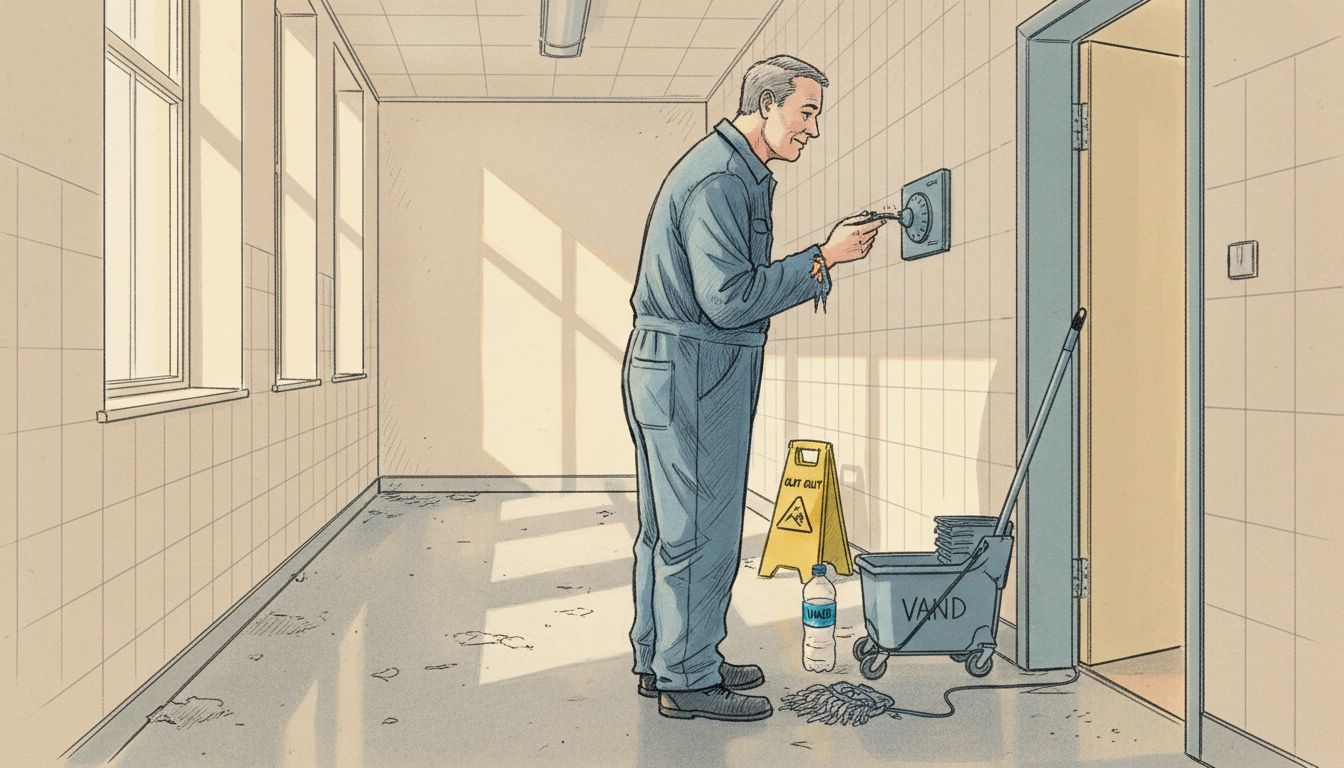
Air quality plays a crucial role. High CO2 levels, the presence of harmful particles, and microorganisms can lead to fatigue, headaches, and reduced learning ability. Regular air exchange, filtration, and control of air purity are therefore critical.
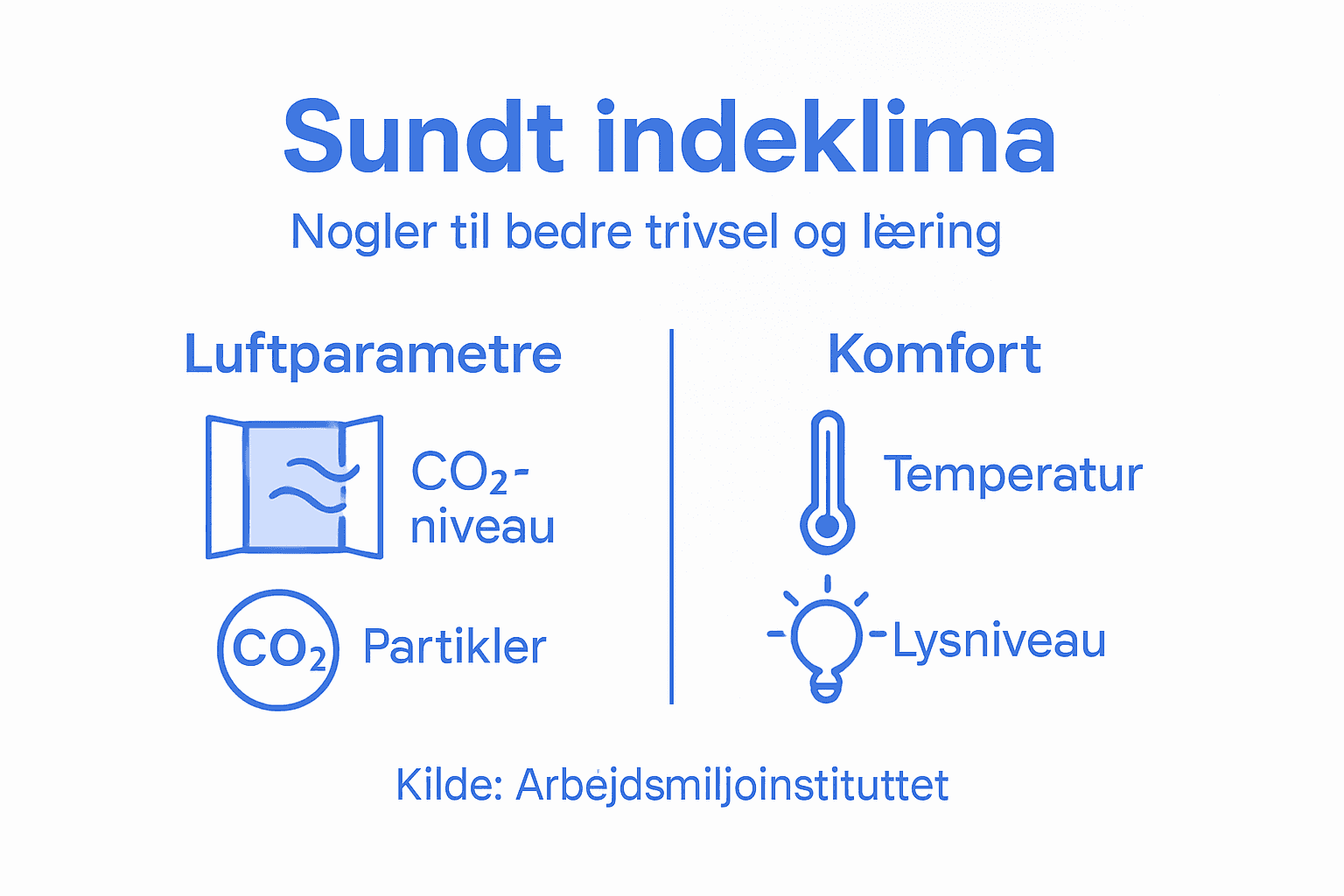
Lighting is not just about sufficient brightness, but also about the quality of light. Daylight is preferred as it supports our natural circadian rhythm and improves mood and productivity. Artificial lighting should be designed to minimize glare and fatigue.
Pro-tip: Install simple CO2 sensors that provide immediate feedback on air quality and help optimize ventilation in real time.
The indoor climate has a profound impact on children's learning, health, and overall well-being in institutions. The physical environment of the learning space plays a crucial role in how children thrive, learn, and develop.
Poor indoor climate can lead to serious consequences. High CO2 levels, insufficient ventilation, and lack of daylight can result in increased fatigue, reduced concentration, and more frequent absenteeism. Children spend a large part of their day in institutions, which underscores the importance of a healthy environment.
Physical parameters such as temperature, air quality, and noise level directly affect children's psychological and physical well-being. A well-designed learning environment not only promotes health but also supports social relationships and learning potential. Good acoustic conditions, comfortable temperature, and clean air create the foundation for optimal learning and well-being.
Pedagogical leadership largely involves creating the right conditions for children to develop. A well-considered indoor climate is not just a matter of physical facilities, but an investment in children's future health and educational potential.
Pro-tip: Conduct regular indoor climate measurements and involve both children and staff in improvements to ensure an optimal learning environment.
The Danish and European legislative landscape sets clear requirements for the indoor climate in educational institutions with the aim of protecting children's health and learning potential. EU legislation on building regulations establishes detailed standards for ventilation, air quality, and environmental conditions in schools.
National guidelines focus on several key parameters, including:
School boards and management have a legal responsibility to ensure that these standards are met. Guides for school boards provide concrete support to translate legislative requirements into practical improvements in the indoor climate.
Certification schemes such as the Nordic Swan Ecolabel serve as additional quality assurance, setting stricter requirements than minimum standards and thereby promoting an even healthier learning environment.
Pro-tip: Conduct an annual systematic review of your institution's indoor climate documentation to ensure full legal compliance.
In Danish educational institutions, a range of complex indoor climate problems occur that can significantly affect children's learning and well-being. Integrated management systems offer modern solutions to these challenges.
The main challenges include:
Technological solutions include intelligent sensor systems that can monitor and adjust indoor climate parameters in real time. These systems enable demand-controlled ventilation, optimal temperature regulation, and continuous air quality control. Digital solutions allow institutions to create dynamic, adaptable learning environments.
The most effective approach is a holistic strategy that combines technical solutions with ongoing human attention and adaptation.
Pro-tip: Implement monthly indoor climate reviews with both technical measurements and user experiences to continuously improve the learning environment.
Here is an overview of practical strategies for improving indoor climate and their typical effects:
| Action | Short description | Expected effect |
|---|---|---|
| CO2 sensors | Monitors air quality automatically | Reduces fatigue and headaches |
| Demand-controlled ventilation | Adjusts airflow as needed | Improves concentration and learning |
| Daylight control | Optimal use of natural light | Increases mood and focus |
| Acoustic improvements | Sound insulation and noise reduction | Reduces disturbances and stress |
| Regular measurements | Systematic indoor climate monitoring | Early problem detection |
Improving the indoor climate represents a strategic investment with significant economic and social benefits for society as a whole. Sustainable building solutions can create substantial positive changes on multiple levels.
The primary economic benefits include:
At the societal level, an improved indoor climate means more efficient resource utilization. Less absenteeism means fewer costs for the healthcare system, while better learning conditions can increase overall educational quality. Children and young people who thrive in healthy environments generally perform better academically and socially.
Technological investments in indoor climate also create a positive ripple effect through innovation, green technology development, and increased focus on sustainability. Municipalities and institutions that prioritize these improvements appear progressive and forward-thinking.
Here is a comparison of the societal benefits of investing in a healthy indoor climate:
| Benefit Type | Economic Significance | Social Significance |
|---|---|---|
| Reduced absenteeism | Lower substitute costs | Improved well-being for children and employees |
| Increased productivity | More effective teaching | Higher academic level |
| Energy savings | Reduction of operating costs | Less environmental impact |
| Innovation | Promotes green technology | Strengthens the institution's profile |
Pro-tip: Conduct a cost-benefit analysis that highlights the long-term economic benefits of indoor climate investments for decision-makers.
A healthy indoor climate is crucial for children's concentration, health, and general well-being as described in the article. Challenges with high CO2, insufficient ventilation, and uneven temperatures can lead to fatigue, headaches, and reduced learning. Therefore, it is essential to have precise and easy solutions for measuring and managing key indoor climate parameters such as CO2, temperature, sound, and light.
At Aabn.io, we offer user-friendly and effective sensor solutions that help institutions systematically monitor and optimize their indoor climate. With products like Skyen, you get full control over air quality and environmental conditions in your vicinity. Our sensor kit makes it easy to identify problems and act quickly, so you can confidently create the best conditions for both children and staff.
Do you want to ensure that your institution meets both legislation and children's needs for a healthy learning environment? Visit aabn.io and find out how our innovative solutions can make a difference today. Take the first step towards a fresher and more productive indoor climate now.
A healthy indoor climate includes optimal air quality, comfortable temperature, sufficient daylight, low noise levels, good ventilation, and control of microorganisms and airborne particles.
A poor indoor climate can lead to increased fatigue, reduced concentration, and more frequent absenteeism, which negatively affects children's learning and well-being.
The use of CO2 sensors for continuous monitoring and demand-controlled ventilation can help improve air quality and thereby well-being and learning.
There are requirements for maximum CO2 levels, ventilation systems, minimum standards for daylight, and noise levels that institutions must comply with to ensure a healthy indoor climate.